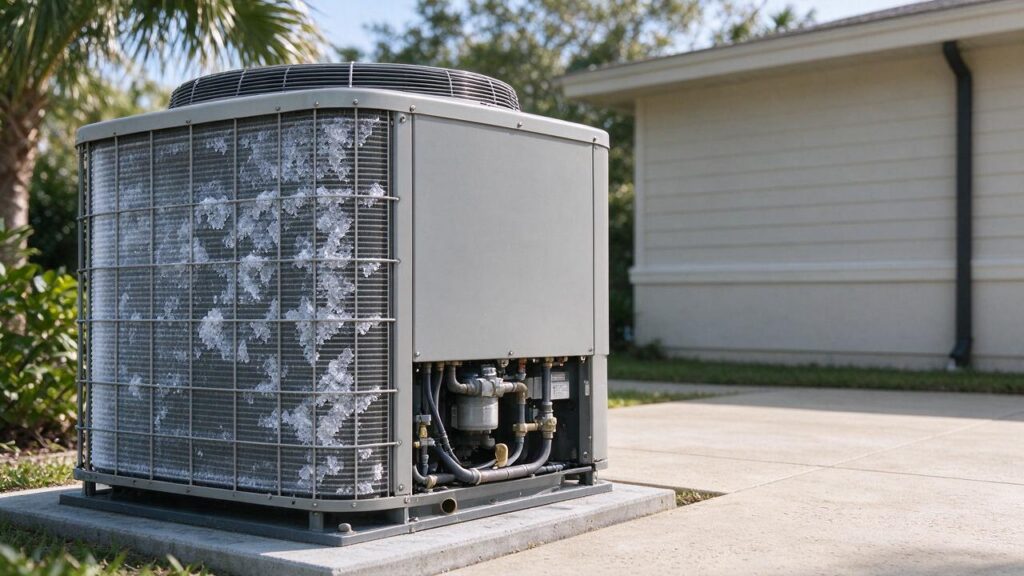
Air handler vs fan coil is a comparison between two kinds of indoor cooling equipment. Both move air across a coil. But the real question for most homeowners is simpler: when airflow or cooling feels wrong, is the cause something you can safely observe, or something only a qualified HVAC technician can measure? The honest answer is that the same symptoms — weak airflow, warm air, or ice on refrigerant lines — can come from a clogged filter, a blower problem, a control fault, or a refrigerant issue. You cannot tell which from the symptom alone. This guide walks through safe observations, clear stop signs, and the evidence a technician needs before any repair or replacement decision.
When to Stop the System and Call for Help
Some conditions end the diagnostic conversation right away. If you notice any of the following, shut the system off at the thermostat and request qualified help:
- Smoke or a smell of electrical burning from vents or equipment
- Repeated breaker trips
- Water touching electrical parts or unsafe dripping near the air handler
- Severe or sudden mechanical noise
- An outdoor fan that is not spinning while the system runs
These are safety stop signs, not diagnosis clues. Velocity offers 24/7 repair availability. Same-day dispatch may be available when a technician is free. Velocity also states it does not add a separate night or weekend service charge, so waiting to call does not save money on after-hours fees.
Why Airflow and Frozen Coils Are Linked
An air handler or fan coil needs steady airflow across its coil. When airflow drops — often from a loaded filter or a blocked return — the coil can get cold enough for moisture to freeze on it. A frozen coil cuts cooling even more. If the system keeps running, it can shut down. Carrier’s guidance describes this airflow effect, the chance of a shutoff, and the need for proper thawing and diagnosis rather than a quick restart.
The key point: a frozen coil is a symptom with many possible causes. Low airflow is one. Refrigerant issues are another. Neither can be confirmed without measurements.
Safe Observations You Can Make Now
Before calling, you can gather useful, safe facts. Do not open panels, test electrical parts, or handle refrigerant. Those steps belong to a qualified technician. Safe observations include:
- Check whether the filter is visibly loaded with dust and needs replacement.
- Note whether supply airflow feels weak, uneven, or absent at the vents.
- Look for ice or frost on refrigerant lines or the indoor coil area — without touching anything.
- Confirm the thermostat setting and mode are what you intend.
- Write down when the symptom started and whether it is new or recurring.
These notes take a few minutes. They give a technician a much better starting point. ENERGY STAR’s maintenance checklist draws a clear line between homeowner tasks — filters, drains, and visual checks — and professional work on coils, controls, and blower parts.
Safe Thawing: Where the Line Is
If you find ice on the system, the safe homeowner step is to stop cooling and let the ice melt on its own. Carrier’s guidance on frozen coils points to thawing and diagnosis limits. Running the system while it is iced can make things worse. The underlying cause still needs a professional look. Do not use sharp objects to chip ice. Do not apply heat. Do not restart the system over and over to “test” it. If the system refreezes after a restart, that pattern is worth reporting to your technician.
What a Qualified Technician Measures
A diagnosis needs measurements homeowners cannot safely take. A qualified technician typically checks:
- Airflow and blower performance across the coil
- Refrigerant pressures and charge, using EPA-certified handling practices when refrigerant work is done
- Electrical parts and controls
- Coil condition and drain function
When refrigerant work is involved, EPA-certified handling practices apply. When equipment is still under manufacturer coverage, warranty-aware repair practices apply. Warranty terms and registrations vary by equipment and paperwork, so coverage should be confirmed, not assumed.
Three Decisions That Change the Next Step
As you observe and report, three questions shape the path forward:
- Airflow issue or refrigerant/control issue? A loaded filter points toward an airflow cause. Weak cooling with a clean filter may point elsewhere. Only measurements confirm which.
- Safe shutdown or continued operation? The stop signs above mean shut down now. Mild symptoms without safety concerns may allow limited use while you schedule service.
- One-time symptom or recurring pattern? A single frozen-coil event after a forgotten filter is different from a system that ices again and again. Repeat patterns usually justify a fuller diagnostic evaluation.
Preventing Repeat Problems
Prevention follows the same homeowner-versus-professional line. Homeowner tasks include regular filter checks and replacement, keeping returns and supplies clear, and watching for early symptoms. Professional maintenance covers coil cleaning, drain and control checks, and blower inspection — the items ENERGY STAR assigns to a servicing technician. Florida’s cooling demand means systems run long hours. But every building and system is different, so maintenance frequency should match your equipment and usage, not a universal rule. If you want a professional set of eyes on the system, air conditioning maintenance is the right starting point.
When It Becomes a Repair-versus-Replacement Talk
No symptom automatically means replacement. That talk usually starts when a technician’s measurements show a major part failure, when repairs would repeat and grow, or when warranty coverage and equipment age change the economics. Bring your observations, the technician’s findings, and any warranty paperwork to that discussion. If a repair is the right call, air conditioning repair service can address the confirmed cause, and you can request service when you are ready.
The symptom tells you something is wrong. Only measurements tell you what. Keep the system off when safety signs appear, gather safe observations, and let a qualified technician confirm the cause before you approve any repair.
Frequently Asked Questions
How do I know whether this needs service?
Any safety stop sign — smoke, burning smell, repeated breaker trips, unsafe water contact, severe noise, or a non-spinning outdoor fan — means stop the system and call now. Weak airflow, warm air, or ice without those signs still warrants a service visit. The cause cannot be confirmed from symptoms alone.
What information should I gather before calling?
Note when the symptom started, whether it is new or recurring, whether the filter is loaded, whether airflow feels weak or absent, and whether you saw ice on lines or the coil. Also note the equipment’s rough age and any warranty paperwork you have.
Can a homeowner safely fix this?
Homeowner-safe steps are limited to filter checks and replacement, visual observation, and shutting the system down. Opening energized equipment, testing capacitors, bypassing safety controls, and handling refrigerant are not safe homeowner tasks. They require a qualified technician.
What does a technician check?
Expect checks of airflow and blower performance, refrigerant pressures, electrical parts and controls, and coil and drain condition. These measurements separate the possible causes that share the same symptoms.
When does this become a repair-versus-replacement decision?
When measurements show major part failure, when repairs would repeat, or when warranty status and equipment age change the economics. That decision should follow a confirmed diagnosis, not the symptom alone.