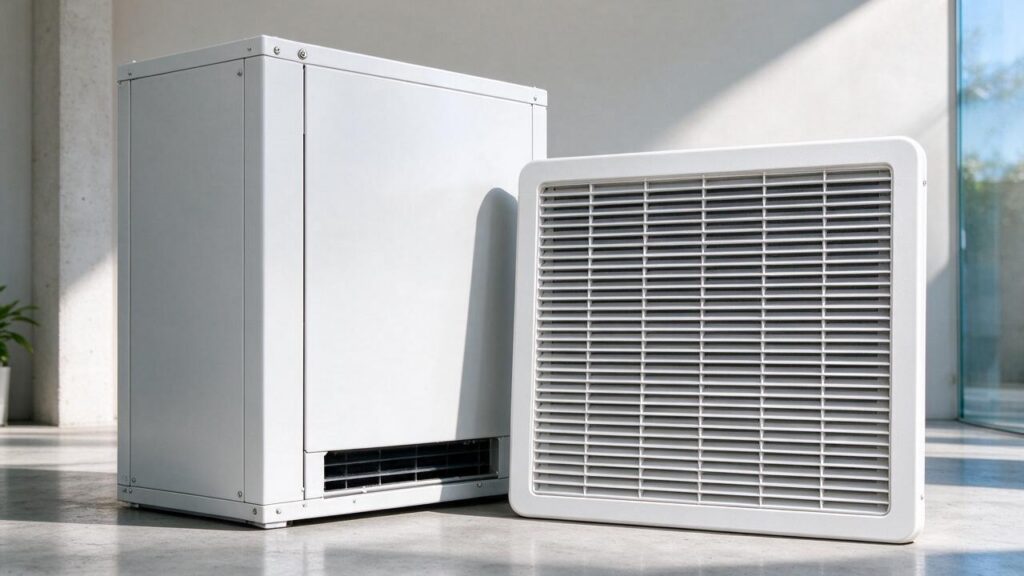
Air handler sweating means moisture on the outside of your indoor unit. It usually points to extra condensation, and it can have more than one cause. High indoor humidity, restricted airflow, or a refrigerant problem are all possible. You can safely observe a few things yourself. But finding the real cause takes a qualified HVAC technician with the right tools. This guide explains what the symptom means, what is safe to check, and how to pick your next step.
What Air Handler Sweating Means
When the metal cabinet and connected lines collect water droplets, the surface is colder than the dew point of the nearby air. Moisture in the air turns to liquid on the cold metal. In a hot, humid state like Florida, cooling systems run long hours against heavy moisture. That makes this a common thing for homeowners to notice.
The symptom itself is not a diagnosis. Sweating can come from conditions around the equipment, such as humidity in the space. It can also come from how the system runs, such as airflow through the coil. Over time, it can waste energy or let water drip where it should not. The U.S. Department of Energy’s cooling guidance stresses that good care keeps a cooling system running well. That is why unexplained moisture is worth checking rather than ignoring.
Leaving the cause alone can lead to water damage near the unit, lower efficiency, and strain on parts. None of these is certain from the symptom alone. That is why a clear next step matters.
Safe Observations You Can Make
Before calling for service, a few visual checks are safe and useful. Do not open panels, remove covers, or touch electrical parts. Just look and note:
- Filter condition: If your filter looks loaded with dust, or has not been changed lately, note that. Restricted airflow is one possible cause of coil condensation. Filter care is a homeowner task in ENERGY STAR’s maintenance guidance.
- Where the moisture shows up: Is it on the cabinet, on the larger insulated line, or near the drain? Location is a useful fact for the technician.
- Water where it should not be: Look for drips, stains, or standing water near the unit. Do not touch anything wet near electrical equipment.
- Insulation condition: Note if insulation on visible lines looks damaged, missing, or wet.
- Recent changes: Note when the sweating started, if it is constant or comes and goes, and any recent work or thermostat changes.
These are facts, not conclusions. Write them down. They will make any service call faster and more accurate.
Stop and request qualified help if you notice smoke, a smell of electrical burning, repeated breaker trips, water touching electrical equipment, severe or new noises, or an outdoor fan that is not spinning. Turn the system off at the thermostat and wait for a technician.
What Changes the Answer
The right next step depends on conditions, not on the symptom label. Factors that change the decision include:
- How long and how bad: Light, occasional moisture is a different situation than heavy, constant condensation with water pooling nearby.
- Care history: A system with current filter changes and routine professional care — the kind ENERGY STAR’s checklist describes — presents differently than a neglected one.
- Age and repair history: Older equipment with a pattern of past repairs points to a different talk than a newer system with its first symptom.
- Cooling changes: Weak airflow, longer run times, or uneven cooling along with sweating adds context a technician will want.
- Safety signs: Any item from the stop list above comes first. Shut the system down and request help.
No single factor decides the outcome. Florida’s cooling demand means systems here work hard. But every building, system, and set of conditions is different. Do not assume your case matches someone else’s.
What a Qualified Technician Evaluates
Confirming the cause takes measurements and checks a homeowner cannot safely do. A qualified technician may look at:
- Airflow across the coil, including filter and blower condition
- Refrigerant pressures and charge — work that requires EPA-certified refrigerant handling practices
- Drainage and condensate handling
- Insulation and duct conditions around the air handler
- Electrical parts and controls
- Overall operation against expected cooling-cycle performance
This is why the symptom alone cannot give you a diagnosis. Two systems can sweat for totally different reasons and look the same from the outside. The technician’s measurements turn guesses into a confirmed cause.
Your Next Decision: Maintenance, Repair, or Replacement
Once a technician has found the cause, the decision usually falls into one of three paths:
- Maintenance: If the cause is care-related — such as a loaded filter or overdue cleaning — routine care may fix it. Regular professional maintenance supports efficiency and reliability, in line with Department of Energy cooling-maintenance guidance. Learn more about air conditioning maintenance.
- Repair: If a specific part or condition is confirmed, a targeted repair is often the path. Velocity offers 24/7 repair availability, and same-day dispatch may be available when a technician is free. Velocity does not add a separate night or weekend service charge. When manufacturer coverage is still active, warranty-aware repair practices apply. See air conditioning repair.
- Replacement: If the evidence supports it — for example, when a confirmed problem meets old equipment and a repair history — the findings become the basis for a repair-versus-replacement talk. That choice should rest on measured evidence, not on the sweating alone.
Ask for the confirmed diagnosis in writing, what caused it, and what each option fixes. That keeps the decision grounded in evidence.
Getting Ready for a Service Call
A short list makes the call more useful:
- When the sweating started, and if it is constant or comes and goes
- Where the moisture shows up (cabinet, lines, drain area)
- Filter condition and the date it was last changed
- Any changes in cooling, noise, or run times
- Any safety signs you saw, and whether you shut the system off
When you are ready, you can request service and share these notes with the scheduler.
Focused FAQs
How do I know if air handler sweating needs service?
Treat it as a reason to look into, not an emergency by itself. If you see smoke, burning smells, repeated breaker trips, water near electrical parts, severe noise, or a non-spinning outdoor fan, stop the system and get qualified help. Otherwise, make safe notes and book a professional check to confirm the cause.
What should I gather before calling about air handler sweating?
Note when it started, where the moisture shows up, filter condition, any performance changes, and any recent maintenance or thermostat changes. These facts help the technician narrow the possibilities faster.
Can a homeowner safely fix air handler sweating?
Homeowner-level care, such as replacing a filter, is safe and fine. Finding the cause is not a homeowner task. Do not open energized equipment, test capacitors, bypass safety controls, or handle refrigerant. Those jobs need qualified professionals.
What does a technician check for air handler sweating?
Typical checks include airflow, filter and blower condition, refrigerant pressures, drainage, insulation, electrical parts, and overall cooling-cycle operation. The goal is to replace guesses with a confirmed, measured diagnosis.
When does air handler sweating become a repair-versus-replacement question?
When a technician’s confirmed findings — along with equipment age, repair history, and overall condition — show that repair is no longer the practical path. That choice should follow evidence from an evaluation, never the symptom alone.