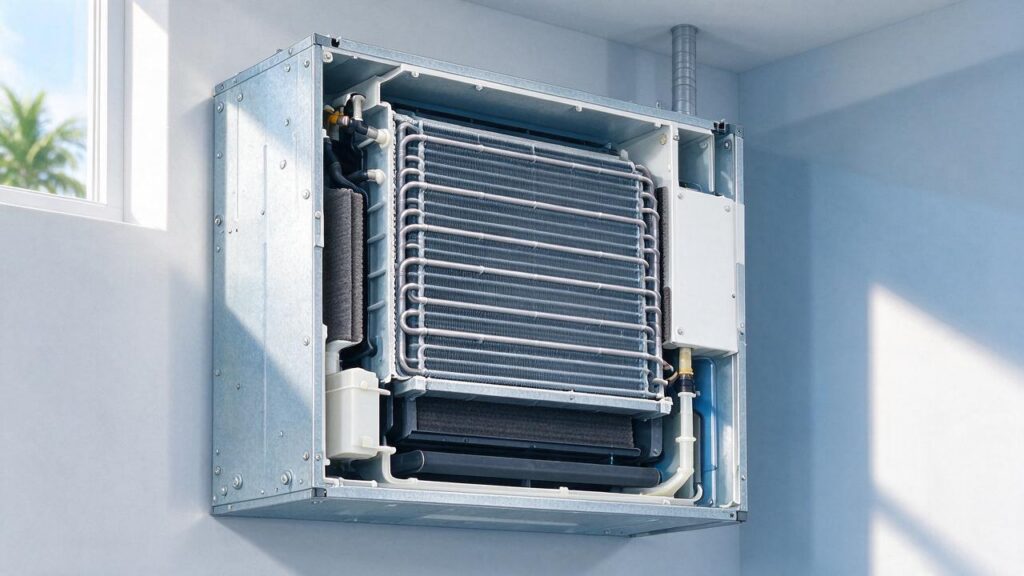
Water around or under your air handler can come from several causes. The symptom alone does not tell you which one applies to your system. The safest first step is to stop running the system. This limits water damage. Then make only simple visual notes and have a qualified HVAC technician find the source. Some causes involve refrigerant. Refrigerant handling belongs to trained, certified technicians under EPA rules.
This guide covers what the symptom can and cannot prove, which observations are safe to collect, what a technician measures before any repair decision, and how to get ready for the call.
What Air Handler Leaking Water Can and Cannot Prove
An air handler is the indoor part of a cooling system. During normal operation, moisture collects on the cold coil. It drains away through a condensate drain. When water shows up where it should not, something in that moisture path may have changed. Or the way the system runs may have changed.
Here is the key boundary: the water itself does not confirm a diagnosis. Possible causes include a blocked or damaged condensate drain path. A frozen coil that melts and overflows is another. Other equipment conditions are possible too. Any of these stay open until a qualified technician measures the system. Guessing at the cause can backfire. Adding refrigerant or clearing a drain without confirming the cause can leave the real problem in place. It can even create a new one.
Safety Stop Signs: When to Shut Down and Call
Stop the system and request qualified help right away if you notice any of these:
- Smoke or a smell of electrical burning
- Repeated breaker trips
- Water touching electrical parts in an unsafe way
- Severe or unusual noise
- An outdoor fan that is not spinning
These signs call for professional attention. They are not a cue for more homeowner troubleshooting.
Safe Observations You Can Make Before Service
You do not need to open equipment or test parts to gather useful information. Safe, useful notes include:
- Where the water is appearing and roughly how much
- Whether the system is cooling normally, weakly, or not at all
- Whether you can see ice on the coil, refrigerant lines, or nearby piping
- When the leaking started, and whether it runs all the time or in cycles
- Any recent service, filter changes, or changes in how the system runs
Do not open energized equipment. Do not test capacitors, bypass a safety control, or try to handle refrigerant. Those steps belong to a qualified technician.
Why Refrigerant Is Not a DIY Adjustment
Some sources of water around an air handler relate to how the cooling cycle is running. Refrigerant may come up in the conversation. Under EPA Section 608 rules, refrigerant handling belongs to trained and certified technicians. That is not a formality. Handling refrigerant without certification is unsafe and against the rules. Adding refrigerant without finding the underlying cause treats a symptom, not the problem.
If a low refrigerant condition is suspected, the right order is clear. First locate and address the cause. Then restore the charge as part of certified work. A homeowner does not need to figure this out in advance. It is exactly the kind of question the technician’s measurements answer.
What a Technician Checks Before Any Refrigerant Work
Before proposing a repair, a qualified technician verifies the actual condition of the system. The symptom alone is not enough. That check can include:
- Confirming the source and path of the water
- Checking whether the coil is frozen or has been freezing
- Measuring system performance to tell a low-performance symptom from a confirmed refrigerant issue
- Inspecting the condensate drain path and related parts
- Checking electrical and mechanical conditions that only trained technicians should evaluate
These checks separate plausible causes from a confirmed diagnosis. They are also the evidence behind any repair proposal.
Repair Source Versus Adding Refrigerant
One key decision after diagnosis is where the fix lies. It may be a repair at the source, such as a drain or component problem. Or refrigerant work may genuinely be part of the answer. These are different decisions with different requirements. Refrigerant work carries EPA certification requirements. Warranty-aware repair practices apply when manufacturer coverage is still active. A repair proposal should state what was measured, what was found, and what the recommended work addresses.
Documentation Questions to Ask Your Technician
Before approving work, it is fair to ask:
- What did the measurements show, and what confirmed the diagnosis?
- Is any refrigerant work involved, and how is it handled under certification rules?
- Does any part of the repair touch existing manufacturer warranty coverage, and what paperwork is needed?
- What happens if the repair is delayed?
Warranty terms and registrations vary by equipment and documentation. Confirm the details for your system rather than assuming coverage.
Preparing for the Service Call
Velocity offers 24/7 repair availability. Same-day dispatch may be available when a technician is free. Velocity states it does not add a separate night or weekend service charge. When you request service, having your notes ready shortens the diagnostic talk:
- Where and when the water appears
- Whether cooling performance changed
- Any ice you saw, and where
- Equipment details, if you have them handy
You can request service or learn more about air conditioning repair to take the next step.
Focused FAQs
How do I know whether air handler leaking water needs service?
Water where it should not be is a reason to have the system checked. If you also see smoke, electrical burning, repeated breaker trips, unsafe water contact, severe noise, or a non-spinning outdoor fan, stop the system and request qualified help right away. Otherwise, shut the system down to limit damage. Schedule a diagnosis rather than waiting to see if it clears up on its own.
What information should I gather about air handler leaking water before calling?
Stick to safe observations. Note where the water appears, roughly how much, and when it started. Note whether cooling performance changed and whether you can see ice on the coil or refrigerant lines. Add any recent service or filter changes. Do not open equipment or test parts to gather more detail.
Can a homeowner safely fix air handler leaking water?
The safe homeowner role is narrow. Stop the system, make visual observations, and arrange qualified service. Do not open energized equipment, test capacitors, bypass safety controls, or handle refrigerant. Refrigerant handling belongs to trained, certified technicians under EPA rules. The underlying cause also needs to be confirmed before any repair. A DIY fix based on the symptom alone risks addressing the wrong problem.
What does a technician check for air handler leaking water?
A technician verifies the water source and path. They check whether the coil is frozen. They measure system performance to tell a low-performance symptom from a confirmed refrigerant issue. They also inspect the condensate drain path and related parts. Those measurements, not the symptom, set the diagnosis and the repair proposal.
When does air handler leaking water become a repair-versus-replacement conversation?
That talk follows diagnosis, not the symptom. Once a technician has measured the system and found the confirmed cause, the findings shape the choice. Equipment condition and any active manufacturer warranty coverage also play a role. Warranty terms and registrations vary by equipment and documentation. Confirm the specifics before deciding.