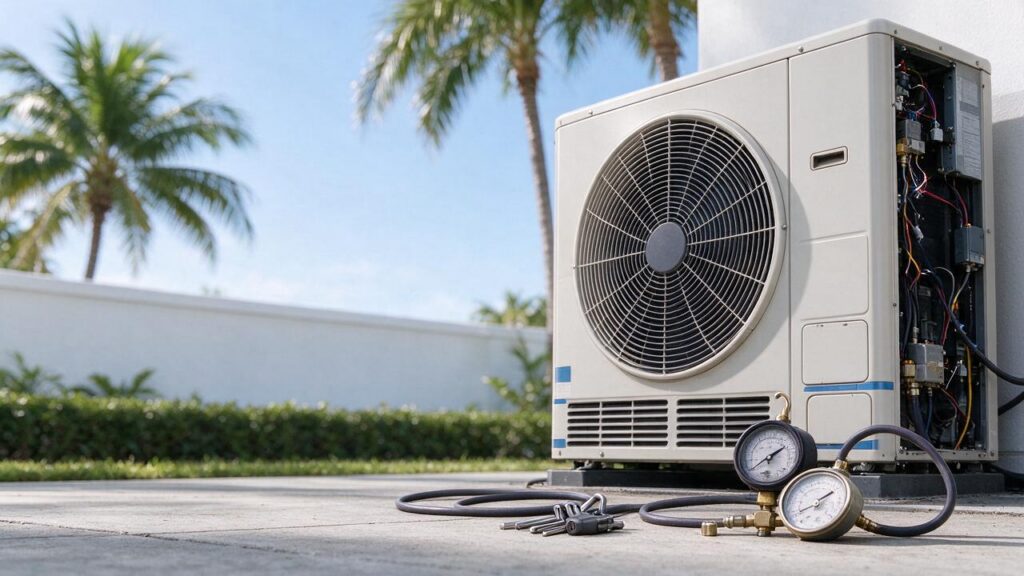
Air handler condensation problems mean moisture is showing up where it should not be. You might see water around the indoor unit, on the cabinet, or near the drain line. More than one cause is possible. A clogged drain, restricted airflow over the coil, or a refrigerant issue can each play a role. No single symptom confirms any one of them. The safe next step is to note what you can see without opening or testing anything. Stop the system if water is near electrical parts or if other warning signs appear. Then have a qualified HVAC technician measure the system before any repair decision is made.
This guide separates what you can safely observe from what only a technician can diagnose. That way, you can describe the problem clearly and pick a sensible next step.
What Air Handler Condensation Problems Actually Mean
Your air handler is the indoor part of your cooling system. During normal cooling, warm humid air passes over a cold coil. Moisture then condenses out of the air. This is expected. That moisture is supposed to drain away through a condensate drain line.
Condensation becomes a problem when it shows up in the wrong place or in odd amounts. Signs include water dripping from the cabinet or vents, standing water around the unit, heavy moisture on the outside of the equipment, or a drain line that no longer moves water. The U.S. Department of Energy’s home cooling guidance explains how the cooling cycle and routine maintenance work together. ENERGY STAR’s maintenance checklist draws a clear line between tasks homeowners handle, like filters and drains, and checks that belong to a professional, such as coils, controls, and blower parts.
Important: A visible symptom is an observation, not a diagnosis. Several different faults can produce the same moisture pattern. Only measurements by a qualified technician can confirm the actual cause.
Safe Observations You Can Make Before Service
You do not need tools or training to gather useful information. Stick to what you can see, hear, and safely reach:
- Where the moisture appears: under the unit, on the cabinet, at the drain line opening, or near a vent.
- Whether water is dripping, pooling, or absent: an actively dripping unit behaves differently from one with a dry drain line.
- Filter condition: a loaded filter restricts airflow. That is one condition linked to coil icing and excess condensate. Check it only if the filter sits in an accessible return or slot.
- Drain line outlet: if the drain line ends outdoors or at a visible drain, note whether water flows during operation.
- Unusual sounds or smells: musty odors or gurgling near the air handler are worth noting.
- Thermostat behavior: note whether the system cools at all, short-cycles, or runs nonstop.
Write these down with rough dates. This record helps the technician and saves you from reconstructing events later.
Stop Signs: When to Shut the System Down and Call for Help
Stop the system and request qualified help right away if you notice any of the following:
- Smoke or a smell of electrical burning
- Repeated breaker trips
- Water touching electrical parts, outlets, or wiring
- Severe or new loud noises
- An outdoor fan that is not spinning while the system runs
Do not open panels, test electrical parts, bypass safety controls, or handle refrigerant. Those tasks require qualified service.
Conditions That Change the Next Decision
The same visible moisture can lead to different next steps based on context:
- How long it has been happening: a new drip after a filter change is a different situation from months of unnoticed moisture.
- Whether cooling performance changed: weak cooling alongside moisture points to a different picture than moisture with normal cooling.
- Filter and drain history: when the filter was last replaced, and whether the drain line has ever been flushed, both matter.
- Recent service or equipment changes: new installs or recent repairs can shift which causes are more plausible.
- Whether water has reached finished surfaces or electrical areas: active water damage raises urgency.
Florida’s long cooling seasons mean systems run heavily and produce a lot of condensate. Even so, every building, system, and humidity condition is different. No universal claim applies to every home.
What a Qualified Technician Evaluates
When a technician arrives, expect the diagnosis to rest on measurements, not the symptom alone. Typical verification includes:
- Inspecting and, if needed, clearing the condensate drain and drain pan
- Checking airflow, filter condition, and blower operation
- Measuring refrigerant pressures and temperatures — work done under EPA-certified refrigerant handling practices
- Inspecting the coil for restrictions, dirt, or ice
- Verifying controls, safety switches, and drainage slope or routing
Warranty-aware repair practices apply when manufacturer coverage remains active. Warranty terms and registrations vary by equipment and documentation, so keep your equipment records on hand.
Choosing Your Next Step
Once the cause is confirmed, the decision usually falls into one of three paths:
- Maintenance: if the evidence points to a loaded filter or a clogged drain, cleaning or replacement within the homeowner-versus-professional maintenance boundary may resolve it.
- Repair: if a specific component has failed or a drainage fault is confirmed, a targeted repair is typically the path. Velocity offers 24/7 repair availability, and same-day dispatch may be available when a technician is free. Velocity states that it does not add a separate night or weekend service charge.
- Repair-versus-replacement evaluation: replacement enters the talk only when evidence supports it — for example, when a technician’s findings show the repair path no longer makes sense for the equipment’s condition. That call should rest on measured findings, not on the moisture symptom alone.
How do I know whether air handler condensation problems need service?
Any unexplained moisture around the air handler warrants attention. If water is reaching electrical parts, floors, or finished surfaces, or if you notice burning smells, repeated breaker trips, severe noise, or a non-spinning outdoor fan, stop the system and request qualified help right away. Otherwise, gather safe observations and schedule service.
What information should I gather before calling?
Note where the moisture appears, whether water is dripping or pooling, filter condition, whether the drain line outlet is flowing, any odd sounds or smells, thermostat behavior, and when the symptoms started. This record shortens the diagnostic visit.
Can a homeowner safely fix air handler condensation problems?
Some maintenance tasks, like replacing an accessible filter, fall within homeowner boundaries per ENERGY STAR’s maintenance guidance. Diagnosing and repairing the cause of condensation requires opening equipment, testing parts, or handling refrigerant. A qualified technician should do that work.
What does a technician check for air handler condensation problems?
Expect checks of the condensate drain and pan, airflow and filter condition, blower operation, the coil, refrigerant pressures under EPA-certified handling practices, and drainage routing and controls. The confirmed cause comes from these measurements, not from the visible symptom.
When does this become a repair-versus-replacement conversation?
Only when a technician’s measured findings support it — such as evidence that a repair path no longer fits the equipment’s condition. The moisture symptom alone never justifies a replacement decision.