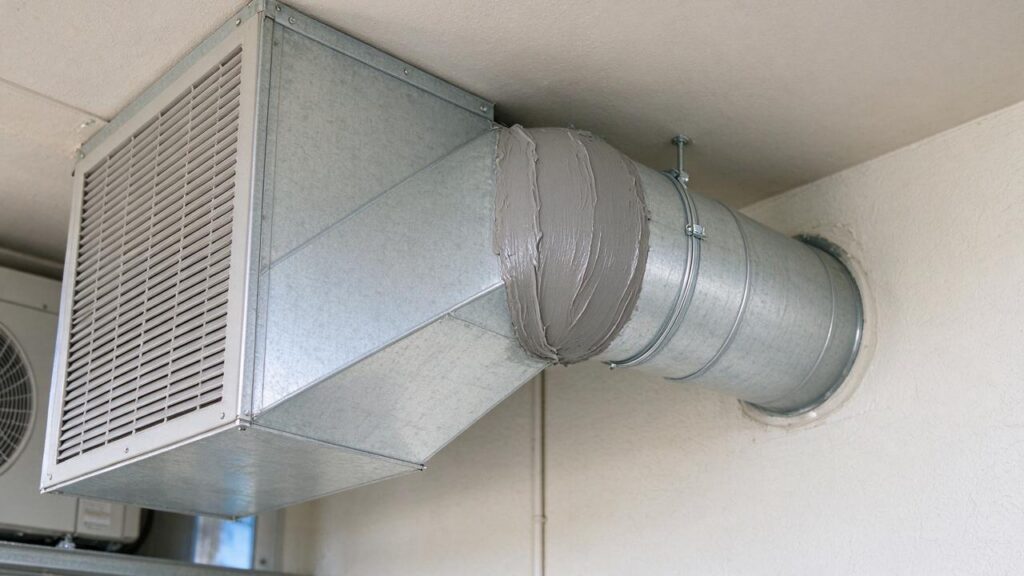
Air handler airflow adjustment means changing how much air your indoor unit moves through your home. Weak or uneven airflow can come from something simple, like a clogged filter or blocked vents. It can also come from something that needs a qualified HVAC technician, such as a blower problem, duct restriction, or a cooling-capacity issue. You cannot tell which one applies from the symptom alone. What you can do safely is observe, note a few facts, and stop the system if you see warning signs. Those signs include smoke, electrical burning smells, repeated breaker trips, or water where it should not be.
What Air Handler Airflow Adjustment Actually Means
Your air handler is the indoor part of your cooling system. It pulls air in, pushes it across the cooling coil, and sends it through your ducts and vents. “Airflow adjustment” refers to how that air volume is set or corrected. The goal is for the system to move the amount of air it was designed to move.
In practical terms, airflow affects three things. It shapes how evenly each room cools, how hard the equipment works, and how well moisture is removed from the air. In a hot climate like Florida, systems run long hours during cooling season. Restricted airflow tends to show up quickly as comfort problems. That said, every home and system is different. No single airflow symptom means the same thing in every building.
How Airflow Affects Cooling
The cooling cycle depends on the right amount of air crossing the coil. When airflow is too low, the system may struggle to deliver cool air where you need it. When airflow stays restricted for a long time, the equipment can be forced to run under strain. This is why maintenance groups such as ENERGY STAR include filter and blower checks in their home maintenance guidance. The U.S. Department of Energy also stresses maintenance as part of keeping cooling systems operating as intended.
Two things follow from this, and they shape the rest of this page:
- Immediate comfort effects: weak airflow from vents, rooms that will not cool evenly, or a system that seems to run constantly.
- Longer-term equipment risks: sustained operation under poor airflow can contribute to wear. Only a technician’s measurements can confirm whether that is happening in your system.
Symptom Differences: What You May Notice
Observations are useful. Conclusions drawn from observations alone are not. Here are common observations and the range of plausible causes behind them:
| Observation | Possible causes (not a diagnosis) | General direction |
|---|---|---|
| Weak airflow from supply vents | Clogged filter, blocked vents, duct restriction, blower issue | Often starts with air-distribution checks |
| Some rooms cool, others do not | Vent positioning, duct balance, system capacity relative to the home’s load | Air-distribution issue versus cooling-capacity question |
| System runs long without reaching the set temperature | Airflow restriction, cooling-capacity shortfall, control or equipment issue | Needs technician measurement to separate |
| Weak airflow plus ice or heavy condensation at the indoor unit | Restricted airflow is one possibility among several | Schedule qualified service |
The key distinction is between an air-distribution issue and a cooling-capacity issue. With a distribution issue, air is being produced but not delivered well. With a capacity issue, the system is not producing enough cooling. Both can look similar from inside the house. Only measurements can separate them.
Safe Homeowner Checks
These are observations and simple steps within typical homeowner maintenance boundaries. None of them involve opening panels, testing electrical parts, or handling refrigerant.
- Check the filter. A loaded filter is one of the most common causes of reduced airflow. If it is visibly dirty, replace it with the correct size and rating for your system.
- Look at your vents. Confirm supply and return vents are open. Make sure furniture, rugs, or curtains are not blocking them.
- Check the thermostat settings. Confirm the mode, fan setting, and schedule are what you intend.
- Listen and note. Note any new or severe noises. Note whether airflow seems weak at all vents or only some.
- Write down what you observe. Record filter condition, which rooms are affected, when the problem started, and anything unusual. This is exactly the information a technician will want.
Stop and request qualified help if you notice smoke, an electrical burning smell, repeated breaker trips, water contacting anything electrical, severe noise, or an outdoor fan that is not spinning. Carrier’s homeowner guidance treats a non-spinning outdoor fan and related electrical symptoms as situations for professional service. The same boundary applies here: do not open energized equipment or attempt electrical testing yourself.
What a Qualified Technician Measures
When a technician evaluates airflow, the visit goes beyond the symptom. Typical verification includes:
- Airflow and static pressure measurements to determine whether the blower is moving the air the system was designed to move, and whether restrictions exist in the duct system.
- Temperature split checks to compare air temperature entering and leaving the system. This helps separate an air-distribution problem from a cooling-capacity problem.
- Blower and motor condition checks, since a blower that is underperforming can mimic a filter or duct problem.
- Coil and filter condition, because a dirty coil restricts airflow just as a dirty filter does.
- Refrigerant-related checks when needed. Any refrigerant work must be performed with EPA-certified refrigerant handling practices. It is not a homeowner task.
This is why the symptom alone cannot produce a diagnosis. Weak airflow at the vents fits several different underlying conditions. The measurements above are what distinguish them.
Maintenance and Prevention
Steady airflow depends heavily on routine maintenance. Within safe homeowner boundaries:
- Replace or clean filters on the schedule your system and household conditions call for. Check them regularly rather than assuming a fixed interval fits your home.
- Keep supply and return vents unobstructed year-round.
- Keep the area around the indoor unit clear and dry.
Professional maintenance covers what homeowners should not do themselves. That includes coil cleaning, blower inspection, drain and control checks, and electrical verification. ENERGY STAR’s maintenance checklist draws this line between homeowner tasks and professional tasks. Scheduling professional maintenance before heavy cooling season is a reasonable step for Florida households, though the right timing depends on your system and usage.
Choosing the Next Step
Three questions usually decide the path forward:
- Is anything unsafe? If yes, stop the system and request qualified help now.
- Is it a maintenance-level issue? A dirty filter or blocked vent is a safe, low-cost check you can complete yourself.
- Do the symptoms persist after safe checks? If airflow problems continue with a clean filter and open vents, the next step is a professional airflow evaluation rather than more guessing.
Velocity offers 24/7 repair availability, and same-day dispatch may be available when a technician is available. Velocity states that it does not add a separate night or weekend service charge. Warranty-aware repair practices apply when manufacturer coverage remains active. Warranty terms vary by equipment and documentation, so coverage should be confirmed for your specific system.
How do I know whether air handler airflow adjustment needs service?
If symptoms persist after you have confirmed a clean filter, open vents, and correct thermostat settings, service is the appropriate next step. Immediate service is warranted for smoke, burning smells, repeated breaker trips, unsafe water contact, severe noise, or a non-spinning outdoor fan.
What information should I gather about air handler airflow adjustment before calling?
Note the filter’s condition and age, which rooms or vents are affected, when the symptom started, any unusual noises, thermostat settings, and whether the problem is constant or intermittent. This shortens the diagnostic visit and helps the technician move to measurements sooner.
Can a homeowner safely fix air handler airflow adjustment?
Safe homeowner steps include replacing a dirty filter, opening blocked vents, and verifying thermostat settings. Anything involving opening equipment panels, electrical testing, capacitors, safety controls, or refrigerant requires a qualified technician.
What does a technician check for air handler airflow adjustment?
A technician measures airflow and static pressure, checks the temperature split, and inspects the blower, filter, and coil. The evaluation determines whether the issue is air distribution or cooling capacity. Refrigerant checks, when needed, are performed under EPA-certified handling practices.
When does air handler airflow adjustment become a repair-versus-replacement conversation?
That conversation follows evidence, not the symptom. If measurements show that a component cannot be restored to proper operation cost-effectively, or if the system’s condition and age make repeated repairs likely, a technician or estimator can lay out repair and replacement options with the supporting data. No one should promise that outcome from a symptom description alone.