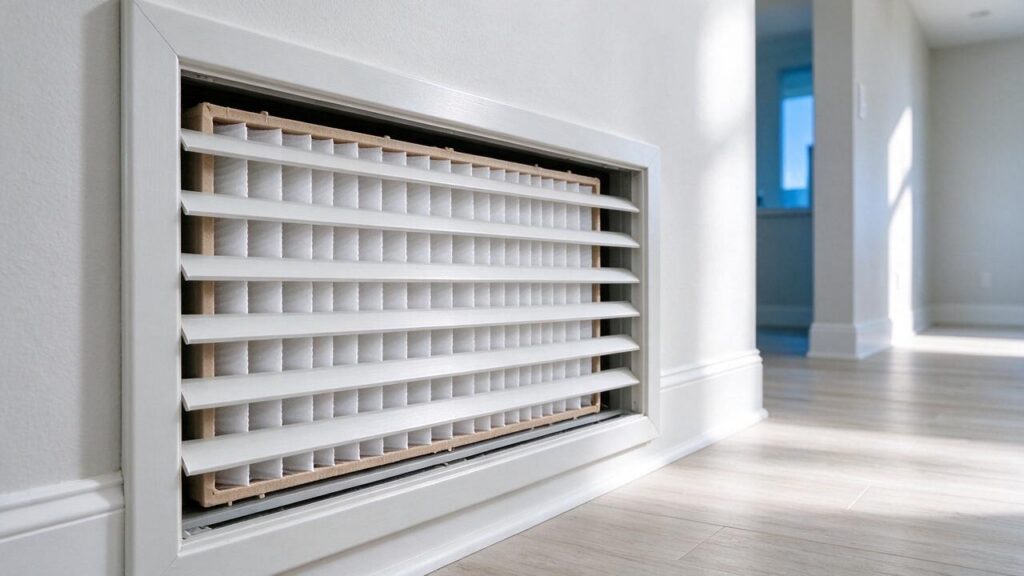
Air duct sealing means closing leaks and gaps in the ductwork that carries cooled air through your home. It can be part of the answer when rooms feel uneven or vents seem weak. But those same signs can also come from a clogged filter, a blocked vent, or an equipment problem. That is why the safe first step is observation, not repair. Note what you can safely see. Then let a qualified HVAC technician measure the system before any sealing decision is made.
How Airflow Affects Cooling
Your air conditioner does not cool a room directly. It cools air. The blower pushes that air through supply ducts into your rooms. Return ducts pull air back to be cooled again. The U.S. Department of Energy’s cooling guidance describes this cycle as the base of how a cooling system works.
When ducts leak, cooled air escapes into attics, crawl spaces, or wall cavities. It never reaches the vent. When ducts are restricted, the system works harder to move the same air. Either way, the cooling your equipment makes is not fully delivered where you want it. In a hot-climate state like Florida, systems run long hours, so that delivery gap can show up as rooms that never quite catch up. But the exact impact depends on each building’s duct design and condition. There is no universal rule.
Symptom Differences: What You Can Observe Versus What You Cannot Diagnose
Some signs are safe and useful to notice. Others need measurement you cannot do from the living room.
Observable signs worth noting
- Weak or reduced airflow from one or more supply vents
- Rooms that cool unevenly compared with the rest of the home
- A filter that is visibly loaded with dust
- Visible gaps, disconnected sections, or crushed flexible duct in accessible areas such as an attic or garage, viewed without moving insulation or entering confined spaces
- Registers that seem to deliver little air even when the system runs
What these signs do not tell you
Weak airflow at a vent does not confirm a duct leak. It could reflect a filter restriction, a closed or blocked register, a return-air problem, a blower issue, or something else. Uneven cooling does not by itself prove duct leakage either. Treat every observation as a possibility until a qualified technician measures the system. Do not diagnose a failed part from a symptom alone.
Safe Homeowner Checks Before Service
These steps gather useful facts without opening equipment or touching electrical parts:
- Check the thermostat settings. Confirm the system is set to cool and the setpoint is where you intend.
- Inspect the filter. A clogged filter restricts airflow through the whole system. ENERGY STAR’s maintenance checklist places filter checks among routine homeowner tasks for this reason.
- Walk the vents. Confirm supply registers are open and not blocked by furniture, rugs, or curtains. Note which rooms feel weak or warm.
- Look, don’t climb. If ductwork is visible from a safe spot, note obvious gaps or disconnected sections. Do not enter attics or crawl spaces, move insulation, or handle duct materials.
- Write down what you find. Which vents are weak, which rooms lag, when the pattern started, and whether the filter was recently changed.
Stop and request qualified help if you notice smoke, an electrical burning smell, repeated breaker trips, unsafe water contact with equipment, severe or sudden noise, or an outdoor fan that is not spinning. Carrier’s safety guidance for outdoor-fan problems draws a clear line: electrical parts, capacitors, and refrigerant are not homeowner-service items. Do not open energized equipment, test capacitors, bypass a safety control, or handle refrigerant.
What a Qualified Technician Measures
A real duct-sealing decision rests on measurements, not impressions. A technician or estimator can verify:
- Static pressure and airflow through the duct system, which shows whether the blower is moving the air the ducts can handle
- Duct leakage, using test methods that measure how much conditioned air escapes the duct system
- Return-air condition, since undersized or leaking return paths cause symptoms that mimic supply-side problems
- Filter, coil, and blower condition, to rule out restrictions before blaming the ducts
- Refrigerant charge and electrical components, which only EPA-certified practices may address when refrigerant work is done
This is the difference between a plausible cause and a confirmed diagnosis. If leakage testing shows meaningful duct losses, sealing becomes a justified repair. If the real cause is a restriction or an equipment issue, sealing alone would not solve the problem.
Conditions That Change the Next Decision
The right next step depends on what the observations and measurements show:
- Filter or vent restriction versus equipment issue: If a loaded filter or blocked register explains the symptom, replacing the filter or clearing the vent is safe maintenance. If symptoms persist after that, the cause lies deeper and needs professional diagnosis.
- Air-distribution issue versus cooling-capacity issue: If the equipment runs but air is not delivered well, ductwork is a candidate. If the air delivered is not cold enough anywhere in the home, the question shifts toward the cooling equipment itself.
- Safe maintenance versus repair work: Filter changes and vent clearing are homeowner tasks. Duct sealing, duct repair, and any refrigerant or electrical work belong to a qualified technician.
Maintenance and Prevention
Once the duct question is settled, routine care keeps airflow where it should be. ENERGY STAR’s maintenance checklist frames this as a split job. Homeowners handle filters and keep drains and vents clear. Professional maintenance covers coils, controls, and blower checks. A few habits matter most:
- Replace or clean the filter on the schedule your system and filter type call for
- Keep supply and return vents unobstructed year-round
- Schedule professional maintenance so coils, controls, and the blower are checked by someone qualified to do it
Warranty-aware repair practices apply when manufacturer coverage remains active. Warranty terms and registrations vary by equipment and documentation, so keep your records available.
When to Call and What to Have Ready
If your safe checks do not resolve the symptom, or if any safety stop sign appeared, it is time for a professional evaluation. Velocity offers 24/7 repair availability, and same-day dispatch may be available when a technician is available. Velocity states that it does not add a separate night or weekend service charge.
Before the call, have this ready:
- A list of weak vents and uneven rooms
- When the symptoms started and whether anything changed recently
- The last time the filter was changed
- Any visible duct observations you noted safely
You can request air conditioning repair or schedule air conditioning maintenance, or request service directly through the contact page.
Focused FAQs
How do I know whether air duct sealing needs service?
You do not decide that from symptoms alone. Weak vents, uneven rooms, and visible gaps are reasons to have the system evaluated. But only measured duct leakage confirms that sealing is the right fix. Start with safe checks, then request a professional evaluation if symptoms persist.
What information should I gather about air duct sealing before calling?
Note which vents are weak, which rooms cool unevenly, when the pattern began, the filter’s condition and last change date, and any duct sections you could safely see. This short list gives the technician a starting point and shortens the diagnostic visit.
Can a homeowner safely fix air duct sealing?
No. Sealing ductwork is professional work, often in attics or crawl spaces and sometimes near electrical parts. Safe homeowner actions are limited to filter changes, clearing vents, and visual checks from accessible areas. Do not open energized equipment or attempt duct repairs yourself.
What does a technician check for air duct sealing?
A qualified technician measures static pressure and airflow, tests duct leakage, inspects return-air paths, checks the filter, coil, and blower for restrictions, and verifies refrigerant and electrical conditions using EPA-certified practices where refrigerant work is involved.
When does air duct sealing become a repair-versus-replacement conversation?
That shift happens when measurements show the duct system’s condition or design cannot support the equipment’s airflow needs, or when other major components are also failing. It is a decision made from technician findings and proposal evidence, not from symptoms seen at the vents.