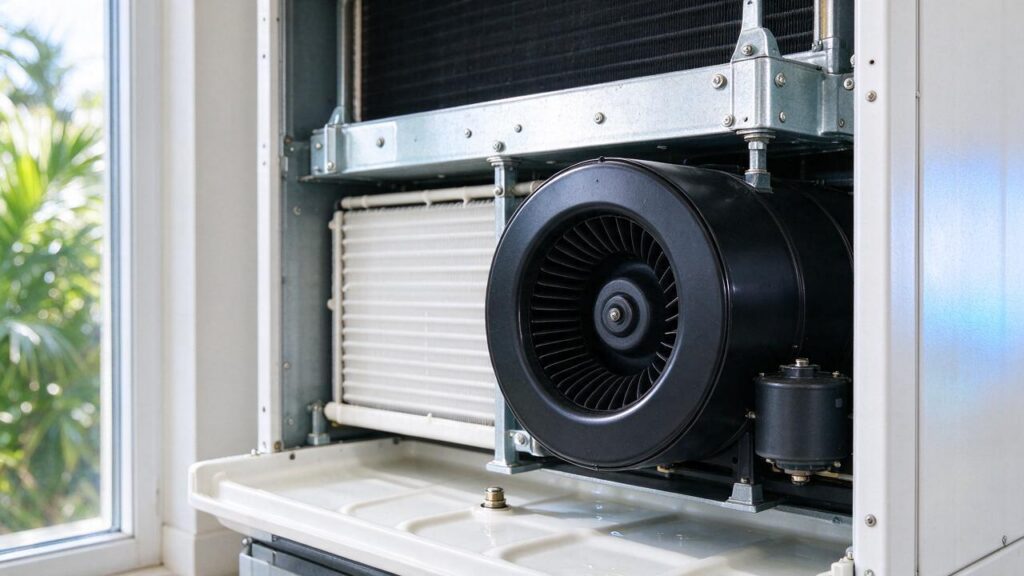
Air conditioner vibration can have more than one cause. On its own, it does not tell you whether you need a repair, a replacement, or nothing at all. Some vibration is part of normal operation. Other vibration warns that something is loose, worn, or failing. The safe path is the same either way: watch for stop signs, collect a few simple observations, and let a qualified HVAC technician measure the system before anyone names a failed part.
When a Sound or Odor Is a Stop Sign
Some conditions end the observation phase right away. Stop the system and request qualified help if you notice any of these:
- Smoke or an electrical burning smell from the indoor or outdoor unit
- Repeated breaker trips when the cooling system starts or runs
- Severe noise that is clearly worse than the vibration you first noticed
- Unsafe water contact — water where it should not be, near electrical parts
- A non-spinning outdoor fan while the system is calling for cooling
These are not situations to troubleshoot yourself. Shut the system down at the thermostat. If it is safe to do so, shut it off at the disconnect or breaker as well. Then request service. Velocity offers 24/7 repair availability, and same-day dispatch may be available when a technician is free. Velocity also states it does not add a separate night or weekend service charge.
Describe the Vibration Symptom
If there are no stop signs, the most useful thing you can do is describe the vibration well. Vibration is a symptom, not a diagnosis. The details you record help a technician narrow the possibilities faster.
Location
Note where you feel or hear it: the indoor air handler, the outdoor condenser unit, the refrigerant lines, or the ductwork and registers. Vibration felt at a supply register can travel through ductwork from a source far away.
Timing
Does it happen only at startup, only at shutdown, or the whole time the system runs? Startup and shutdown vibration can point to different possibilities than vibration that never stops. Only a technician’s measurements can confirm which.
Character
Is it a low hum, a rattle, a buzz, or a shake you can feel through a floor or wall? A steady hum during normal operation may simply be how the system sounds when it runs. A new rattle, or a shake that has grown stronger over time, is more worth checking.
Safe Observations Before Service
You can gather useful facts without opening any panel or touching any electrical part. Stick to what you can see, hear, and note from a safe distance:
- Check the air filter. A badly clogged filter changes airflow, and restricted airflow is one plausible source of system strain. If the filter is visibly loaded, replacing it is a safe, routine step.
- Look around the outdoor unit. Leaves, grass clippings, or debris resting against the cabinet can add noise and vibration. Clearing debris around the cabinet is safe. Reaching inside the unit is not.
- Look for loose panels or hardware. If an access panel or guard is clearly loose or rattling against the cabinet, note it. Do not remove panels or tighten anything inside the cabinet.
- Note the pattern. Write down when it started, whether it is constant or on and off, and whether anything changed recently — a storm, a service visit, or new equipment nearby.
- Confirm cooling performance. Is the system still cooling the home normally, or has output dropped? Reduced cooling along with vibration is a useful fact to report.
What you should not do: open energized equipment, test or touch capacitors, bypass any safety control, or handle refrigerant. Electrical and refrigerant work is technician-only work. Manufacturers and safety guidance agree on that boundary.
What a Qualified Technician Distinguishes
A vibration symptom has several plausible causes. Only measurement separates them. Depending on what the technician finds, possibilities can include loose or worn mounting hardware, fan blade or motor issues, electrical component problems, refrigerant flow behavior, or ductwork and cabinet resonance. These are possibilities — not conclusions — until the system is measured.
A qualified technician can verify what a homeowner cannot safely reach:
- Electrical parts and connections, tested with proper instruments
- Fan blades, motors, and mounts for wear, damage, or looseness
- Refrigerant pressures, using EPA-certified handling practices when refrigerant work is done
- Mounting, isolation, and cabinet condition that affect how vibration travels
This is also where warranty-aware repair practices apply. When manufacturer coverage is still active, a technician can document findings in a way that supports warranty-aware repair decisions. Warranty terms and registrations vary by equipment and documentation, so coverage is never assumed from a symptom.
Avoiding Repeat Damage
Unchecked vibration is worth taking seriously because of what it can lead to, even when the first cause is minor. A loose part that rattles can wear nearby components. A motor or fan running out of balance can get worse over time. Strain on the system can build into larger failures if the cause is never found.
That is the practical case for early diagnosis rather than waiting. The observation is cheap today, and the repair it prevents may cost more later. In Florida’s hot climate, cooling systems run long, heavy hours, so a developing mechanical issue has less downtime to hide in. That is context, not a universal claim — every building, system, and load condition is different.
One concise way to frame the decision:
| What you observe | What it means for your next step |
|---|---|
| Stop sign present (smoke, burning smell, repeated breaker trips, severe noise, non-spinning outdoor fan, unsafe water contact) | Stop the system and request qualified help now |
| New or worsening vibration, system still cooling | Collect safe observations and schedule service soon |
| Steady hum consistent with normal operation, unchanged over time | Reasonable to note and monitor; mention it at your next service visit |
Focused FAQs
How do I know whether air conditioner vibration needs service?
Any stop sign — smoke, electrical burning smell, repeated breaker trips, unsafe water contact, severe noise, or a non-spinning outdoor fan — means stop the system and request qualified help. Beyond that, vibration that is new, worsening, or paired with reduced cooling is worth scheduling. A steady hum that has never changed may be normal operation, but only a technician can confirm the cause.
What information should I gather about air conditioner vibration before calling?
Note the location (indoor unit, outdoor unit, lines, or registers), the timing (startup, shutdown, or constant), and the character (hum, rattle, buzz, shake). Add when it started and whether cooling has changed. Also check whether the air filter is clogged and whether debris sits against the outdoor unit. These safe observations shorten the diagnostic process.
Can a homeowner safely fix air conditioner vibration?
Safe steps are limited to replacing a clogged air filter, clearing debris from around the outdoor cabinet, and recording observations. Homeowners should not open energized equipment, test capacitors, bypass safety controls, or handle refrigerant. Electrical and refrigerant work requires a qualified technician.
What does a technician check for air conditioner vibration?
A technician can measure and inspect what a homeowner cannot: electrical parts and connections, fan blades and motors, mounts and isolation hardware, refrigerant pressures with EPA-certified handling, and cabinet or ductwork resonance. The inspection separates plausible causes. The symptom alone does not.
When does air conditioner vibration become a repair-versus-replacement conversation?
That conversation follows evidence, not the symptom. If the inspection finds a single worn or loose part, a targeted repair is often the answer. If measurements show broader wear, repeated failures, or conditions where repair no longer makes sense, replacement enters the talk. No one can make that call honestly from vibration alone. It requires the technician’s documented findings, and any warranty coverage depends on your equipment and documentation.
If your system shows a stop sign, or the vibration is new and getting worse, air conditioning repair service is available around the clock. You can also request service online, and same-day dispatch may be available when a technician is free.