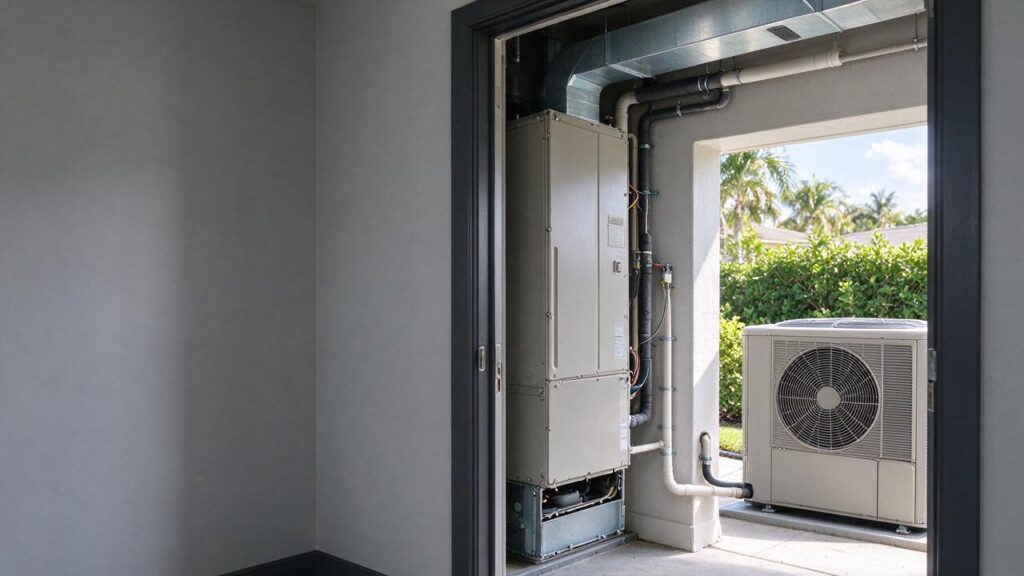
Air conditioner estimate near me is not a single problem with one fix. It is a starting point: a way of saying you need cooling help and want a clear, honest quote before any work begins. The safe path is to make a few simple observations, stop immediately if you see specific hazards, and then let a qualified technician measure the system to find the true cause before you commit to a repair or a replacement.
What “Air Conditioner Estimate Near Me” Practically Means
When you search for an air conditioner estimate near me, you are really looking for two things: someone who can diagnose what is wrong, and a written proposal that explains what fixing it involves. An estimate is only as good as the diagnosis behind it. That is why the process matters more than the number on the page.
A useful estimate comes from evidence: what you observed before calling, what the technician measures on site, and what the equipment’s history shows. In Florida’s hot climate, cooling systems work hard for long stretches, so small problems can grow quickly when they go unaddressed. That is context, not a prediction about your specific home, because every building, duct system, and piece of equipment is different.
Safe Observations You Can Make Before Calling
You do not need tools or technical training to gather information that will make any estimate more accurate. Stick to looking, listening, and checking settings. Never open panels, touch electrical components, or handle refrigerant lines.
- Check the thermostat. Confirm it is set to cool, the temperature setting is where you intend, and the batteries (if it uses them) are fresh.
- Look at the air filter. A clogged filter restricts airflow and is one of the most common contributors to cooling problems. Note whether it is dirty and when it was last changed.
- Look for visible ice. Ice on the refrigerant lines or the indoor coil is an observation, not a diagnosis. Note it and mention it when you call.
- Check for water where it should not be. Water pooling near the indoor unit or a clogged condensate drain line is worth reporting.
- Listen for new sounds. Grinding, rattling, or banging that was not there before is useful information for the technician.
- Look at the outdoor unit. From a distance, note whether the fan spins when the system runs and whether leaves or debris are blocking the cabinet.
Write down what you find, including when the problem started and whether it is constant or intermittent. These notes help the estimator and the technician, and they keep the eventual estimate grounded in facts rather than guesses.
When to Stop and Call for Qualified Help
Some conditions are not do-it-yourself observations. Stop using the system and request qualified help right away if you notice any of the following:
- Smoke or a smell of electrical burning
- Repeated breaker trips when the system starts
- Water contacting electrical components or unsafe standing water near equipment
- Severe or sudden loud noise from the system
- An outdoor fan that is not spinning while the system runs
These signs can indicate hazards that require professional attention, not further homeowner investigation.
What Changes the Answer
The same symptom can lead to very different next steps depending on context. Before any estimate is final, these factors shape the decision:
- System age and condition. Older equipment with a new major fault points toward a different conversation than a newer system with a minor issue.
- Repair history. A pattern of repeated repairs changes the math compared with a first-time problem.
- Whether the issue is maintenance-related. Restricted airflow from a dirty filter or blocked coils is a maintenance matter; a failed component is a repair matter. Only measurement can tell the difference.
- Warranty status. Warranty terms and registrations vary by equipment and documentation, so active manufacturer coverage can affect the path forward.
- Efficiency and comfort goals. How the system performs day to day matters when weighing repair against replacement.
No single observation answers the repair-versus-replacement question on its own. The estimate should connect the evidence to a recommendation, not the other way around.
What a Qualified Technician Must Verify
The observations above narrow the field, but they cannot confirm a cause. A qualified technician uses measurements and tests that homeowners should never attempt, including:
- Refrigerant pressures and charge, handled under EPA-certified refrigerant practices whenever refrigerant work is performed
- Electrical components such as capacitors, contactors, and wiring condition
- Airflow measurements across the indoor coil and blower
- Coil and drain condition, including cleaning needs beyond what a homeowner should touch
- Control and thermostat operation, plus overall system capacity and temperature split
As the U.S. Department of Energy explains in its home cooling guidance, cooling systems depend on the whole cycle—airflow, coils, and refrigerant—working together, which is why partial observations rarely identify the true fault. ENERGY STAR’s maintenance checklist similarly draws a clear line between what homeowners handle (filters, drains, basic visual checks) and what professionals handle (coils, controls, and blower checks). A trustworthy estimate reflects that boundary.
The Next Decision: Maintenance, Repair, or Replacement
Once the technician has measured the system, the estimate should support one of three paths:
- Maintenance. If the findings point to dirt, restricted airflow, or drain issues, a maintenance visit may restore normal operation and prevent recurrence.
- Repair. If a specific component has failed, the estimate should name it, explain the fix, and note any warranty considerations that apply.
- Replacement conversation. If the evidence supports it—age, condition, repeated failures, or a major component fault—the estimate should lay out replacement options and the reasoning behind them.
Ask the estimator to show how the diagnosis connects to the recommendation. If the number arrives without the evidence behind it, keep asking until it does.
Getting an Estimate from Velocity
Velocity offers 24/7 repair availability, and same-day dispatch may be available when a technician is available. Velocity states that it does not add a separate night or weekend service charge. EPA-certified refrigerant handling practices apply when refrigerant work is performed, and warranty-aware repair practices apply when manufacturer coverage remains active. When you request service, have your notes ready—they shorten the diagnostic visit and make the estimate more precise. You can also learn more about air conditioning repair or air conditioning maintenance before you call.
Focused FAQs
How do I know whether I need service at all?
If the system is cooling poorly, cycling oddly, making new noises, leaking water, or showing ice, those are signals worth a professional look. If you see smoke, smell electrical burning, experience repeated breaker trips, or notice a non-spinning outdoor fan, stop the system and request qualified help immediately.
What information should I gather before calling?
Note the thermostat settings, filter condition, any ice or water you can see, new sounds, and when the problem began. Say whether the issue is constant or intermittent. These safe observations give the technician a head start without requiring you to diagnose anything.
Can a homeowner safely fix this?
Safe homeowner tasks are limited to things like replacing a filter, checking thermostat settings, and keeping debris away from the outdoor unit. Do not open energized equipment, test capacitors, bypass safety controls, or handle refrigerant. Anything beyond basic maintenance belongs to a qualified technician.
What does a technician check during the estimate visit?
Expect measurements, not guesses: refrigerant pressures, electrical component testing, airflow readings, coil and drain condition, and control operation. Those findings form the actual diagnosis that the estimate should be built on.
When does this become a repair-versus-replacement conversation?
When the technician’s findings—combined with system age, repair history, and warranty status—show that repair is no longer the practical path. That conclusion should come from measured evidence presented in the estimate, never from a symptom alone.