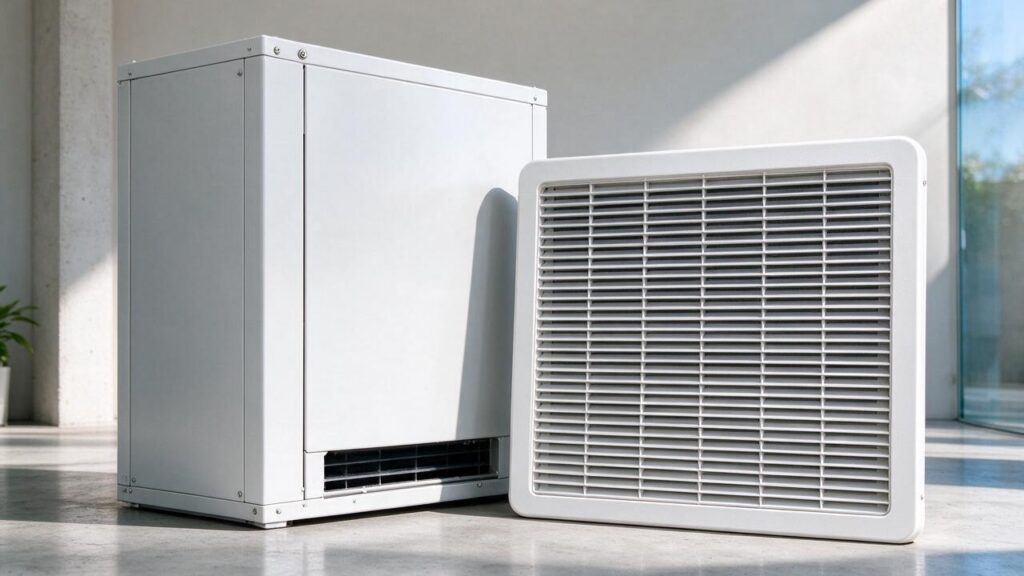
Air conditioner energy usage tells you how much power your cooling system draws. A sudden rise can be normal or a warning. Start with what you can see. Note whether cooling feels weaker or your electric bills keep climbing. Stop the system and request qualified help for smoke, electrical burning smells, repeated breaker trips, or unsafe water contact. If none of those signs appear, check a few simple, safe items first. The air filter and thermostat settings are good places to start. A qualified technician must measure the system to find the true cause. Until then, treat every possible cause as a possibility, not a fact.
What Air Conditioner Energy Usage Means in Practical Terms
Every air conditioner uses electricity to move heat out of your home. Energy usage describes how much power the system draws while it does that job. You notice it in three ways. The system runs longer. Cooling feels weaker. Your electric bill climbs.
Usage can rise for reasons that involve no broken part. Hotter weather can do it. More people in the home can do it. A clogged filter or a lower thermostat setting can do it too. That is why a change in usage is an observation, not a diagnosis. The U.S. Department of Energy’s home cooling guidance notes that cooling-cycle operation and regular maintenance both affect performance. Careful observation comes before any repair decision.
Safe Observations You Can Make Before Service
You do not need tools or training to gather useful information. Safe observations include:
- Filter condition: Check whether the air filter is visibly loaded with dust. A restricted filter is one of the simplest things to inspect and replace per the maker’s guidance.
- Thermostat settings: Confirm the mode, schedule, and setpoint. A mistaken schedule can look like an energy problem.
- Run-time pattern: Note whether the system runs longer than in past months. Note whether it cycles on and off more often.
- Comfort pattern: Note whether some rooms cool while others stay warm. Note whether the change was sudden or gradual.
- Outdoor unit condition: From a distance, look for debris, damage, or an outdoor fan that is not spinning.
- Bill history: Compare recent bills with the same period in past years. Keep weather differences in mind.
Write these notes down. They become useful evidence for the professional you contact next.
Stop Signs: When to Shut the System Down and Call for Help
Some observations are not “wait and see” items. Stop the system and request qualified help right away if you notice any of the following:
- Smoke or an electrical burning smell
- Repeated circuit breaker trips
- Water where it should not be, or unsafe contact between water and electrical parts
- Severe or unusual noise
- An outdoor fan that is not spinning
These signs can point to hazards only a qualified technician should evaluate. Do not open panels. Do not test electrical parts. Do not bypass any safety control.
What Changes the Answer
The right next step depends on conditions that vary from home to home. No single rule fits every Florida home or every system. Florida’s cooling demand is context only. It does not tell you what your equipment is doing. Conditions that change the decision include:
- System age and service history: A sudden change in a well-maintained system points to a different conversation than a long decline in an older one.
- Maintenance history: A system that has gone years without professional care may simply need that baseline restored.
- Refrigerant type: When refrigerant work is involved, EPA-certified handling practices apply. The refrigerant your system uses can affect which repair makes sense.
- Warranty status: Warranty terms and registrations vary by equipment and paperwork. Coverage can change the repair-versus-replacement math.
- Pattern of the change: A slow rise over seasons suggests something different from an abrupt jump after a storm or power event.
What a Qualified Technician Evaluates
Moving from “usage seems high” to a confirmed diagnosis requires measurements homeowners cannot safely take. A qualified technician may check:
- Refrigerant pressures and temperatures to assess cooling-cycle performance
- Electrical readings on motors, capacitors, and controls
- Airflow and blower performance
- Coil and drain condition, following the homeowner-and-professional boundaries in ENERGY STAR’s maintenance checklist
- Thermostat and control operation
- Overall system condition relative to its age and service history
Until these measurements are taken, any specific cause remains a possibility. Dirty coils, low refrigerant, and a failing part are all guesses until tested. Be cautious of anyone who names a failed part from a symptom alone. When you are ready, you can request service or learn more through Air conditioning repair and Air conditioning maintenance.
Your Next Decision: Maintenance, Repair, or Replacement
Once a technician has verified the evidence, the decision usually falls into one of three paths:
- Maintenance: If the findings point to neglected upkeep, professional maintenance may restore performance. Restricted filters, dirty coils, and blocked drains are common examples.
- Repair: If one part has failed and the system is otherwise sound, a targeted repair is often the logical step.
- Replacement conversation: If verified evidence shows declining performance or repeated failures, a repair-versus-replacement talk is reasonable. The same is true when repair costs are out of proportion to the system’s age and condition. Rest that decision on measured findings, not the symptom alone.
Velocity offers 24/7 repair availability. Same-day dispatch may be available when a technician is free. Velocity states it does not add a separate night or weekend service charge. Exact pricing, warranty coverage, and equipment details require current confirmation before any commitment.
Preparing for the Call
A short checklist keeps the visit efficient:
- Your notes on run time, comfort changes, and bill history
- The filter’s condition and when it was last changed
- The system’s approximate age and any maintenance records you have
- The stop signs you have or have not seen
- Your questions about maintenance versus repair versus replacement
Frequently Asked Questions
How do I know whether air conditioner energy usage needs service?
Treat it as a signal, not a verdict. Service is worth scheduling if usage has risen along with weaker cooling, longer run times, or uneven comfort. Stop the system and request qualified help right away if you see smoke, burning smells, repeated breaker trips, unsafe water contact, severe noise, or a non-spinning outdoor fan.
What information should I gather before calling?
Collect only safe observations. Note the filter condition, thermostat settings, and run-time patterns. Note which rooms cool well, how the outdoor unit looks from a distance, and your recent bill history. These notes help a technician narrow the possibilities faster.
Can a homeowner safely fix air conditioner energy usage?
A homeowner can safely check and replace an air filter and verify thermostat settings. Everything else requires a qualified technician. That includes refrigerant, electrical parts, capacitors, safety controls, and internal parts. Do not open energized equipment or bypass any safety control.
What does a technician check for air conditioner energy usage?
A qualified technician measures refrigerant pressures and temperatures. They also take electrical readings and check airflow, blower performance, coil and drain condition, and control operation. These measurements turn a symptom into a confirmed diagnosis.
When does air conditioner energy usage become a repair-versus-replacement conversation?
It happens when verified evidence shows declining performance or repeated part failures. It also happens when repair costs are out of proportion to the system’s age and condition. Warranty status and refrigerant factors can shape that talk. Both vary by equipment and paperwork.