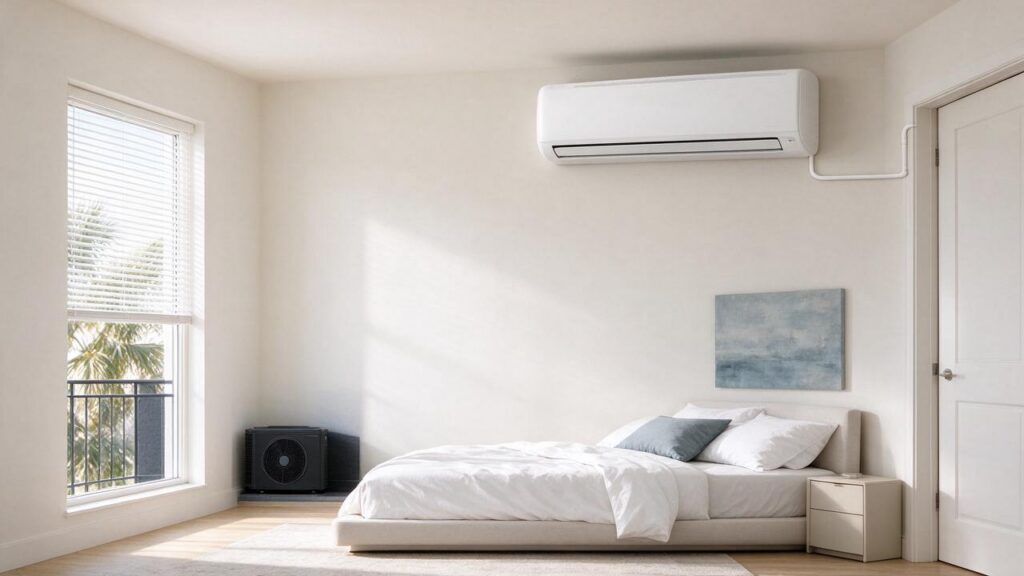
Air balancing means adjusting an HVAC system so airflow and temperature feel more even across a home. It is not one failed part. Uneven cooling, weak airflow in some rooms, or rooms that never reach the set temperature can each have several causes. Only a qualified technician’s measurements can confirm which one applies to your system. Your safe role is to observe, take notes, and pick the right next step.
What Air Balancing Means in Plain Terms
In daily use, “air balancing” describes a system condition: air is not spread evenly through your living spaces. One room may feel warmer than another. Some vents may push much less air than others. The system may run longer than it used to. These are observations, not diagnoses.
Balancing work can involve adjusting airflow, checking ducts, and confirming the equipment moves the air it was built to move. The U.S. Department of Energy’s home cooling guidance covers cooling basics, upkeep, and system operation. It treats the cooling system as a whole, not as one part. That framing matters here. An imbalance is a system-level symptom with many possible causes.
Safe Observations You Can Make First
Before calling for service, you can gather useful facts. Do not open equipment. Do not touch anything electrical or refrigerant-related.
- Vent airflow: Hold your hand near supply vents in several rooms. Note whether airflow feels strong, weak, or absent in each.
- Filter condition: Check whether the filter looks loaded with dust or is past its change date. ENERGY STAR’s maintenance checklist puts filter care in the homeowner’s lane, along with keeping drains clear. Coil, control, and blower checks belong to professional service.
- Room-by-room notes: Write down which rooms are warm, which are comfortable, and whether the pattern stays the same or shifts by time of day.
- Recent changes: Note any new renovation, furniture blocking vents, closed registers, or thermostat changes.
- Outdoor unit: From a safe distance, confirm the outdoor fan is spinning during operation.
These notes cost nothing and give a technician a head start. They do not tell you the cause.
Stop and request qualified help right away if you notice smoke, an electrical burning smell, repeated breaker trips, unsafe water contact with equipment, severe or sudden noise, or an outdoor fan that is not spinning. Turn the system off at the thermostat and wait for a professional.
What Changes the Answer
The right next step depends on conditions, not on the label “air balancing” alone:
- One room or the whole house. A single problem room points to a different set of causes than a whole-home comfort complaint.
- Recent work. New ductwork, renovations, or equipment changes can shift airflow patterns.
- Maintenance history. A system with overdue filter changes and no recent professional service follows a different path than a freshly serviced one.
- Safety signs. Any stop sign above ends the observation phase at once.
- Age and repair history. These facts shape whether the talk is maintenance, repair, or replacement.
Florida’s cooling demand makes long run times common. But no two homes share the same load, duct layout, humidity, or equipment. Do not assume advice written for another house applies to yours.
What a Qualified Technician Evaluates
Confirming an airflow imbalance and its cause takes measurements homeowners cannot safely take. A qualified technician may check:
- Duct airflow and static pressure to find where air is lost or blocked
- Blower performance against the equipment’s design
- Refrigerant charge, using EPA-certified handling practices whenever refrigerant work is done
- Coil, control, and drain condition as part of the professional maintenance boundaries ENERGY STAR describes
- Whether equipment size and duct design match the home
Until those readings are taken, every cause stays a possibility. A weak vent does not prove a duct problem. A duct leak does not prove a blower problem. No single observation confirms a failed part.
Maintenance, Repair, or Replacement: The Next Decision
Once a technician has measured the system, the choice usually falls into one of three paths:
- Maintenance. If blocked airflow traces to a loaded filter, dirty coils, or overdue service, a maintenance visit may restore balance. See our air conditioning maintenance page for what that visit covers.
- Repair. If a measured component problem is confirmed, a targeted repair follows. Warranty-aware repair practices apply when manufacturer coverage is still active. Warranty terms and registrations vary by equipment and paperwork.
- Replacement. If evidence shows the system cannot deliver balanced comfort at a reasonable cost, replacement becomes the talk. That choice should rest on the technician’s findings, not on the symptom alone.
Velocity offers 24/7 repair availability, and same-day dispatch may be available when a technician is available. Velocity states that it does not add a separate night or weekend service charge.
Getting Ready for the Call
A short checklist keeps the visit efficient:
- Your room-by-room comfort notes and when the pattern started
- Filter size and last change date
- Equipment age and any warranty or registration papers
- Any recent renovations, equipment changes, or past repairs
- The safety signs you have or have not seen
When you are ready to move forward, you can request service or learn more about air conditioning repair before the visit.
Frequently Asked Questions
How do I know if air balancing needs service?
If some rooms stay warmer than others, some vents move much less air, or the system runs long without evening out comfort, those signs justify a professional check. They confirm a comfort problem, not a cause. Any safety stop sign means service is needed now, not later.
What should I gather before calling?
Collect vent airflow notes by room, filter condition and change date, recent changes to the home or system, equipment age, and any warranty papers. These safe observations help the technician focus measurements without anyone guessing at a diagnosis.
Can a homeowner safely fix air balancing?
A homeowner can replace a filter, clear vents blocked by furniture, and keep records. A homeowner should not open energized equipment, test capacitors, bypass safety controls, or handle refrigerant. Duct adjustments, blower checks, and refrigerant work need qualified, EPA-certified professionals.
What does a technician check for air balancing?
Expect measurements, not guesses: duct airflow and static pressure, blower performance, refrigerant charge, coil and drain condition, and control operation. Those readings separate possible causes from a confirmed diagnosis and point to maintenance, repair, or replacement.
When does air balancing become a repair-versus-replacement talk?
When technician evidence shows the system cannot move and spread air as designed at a reasonable cost, replacement enters the discussion. System age, repair history, and measured performance drive that choice. Uneven cooling alone never justifies replacing equipment.