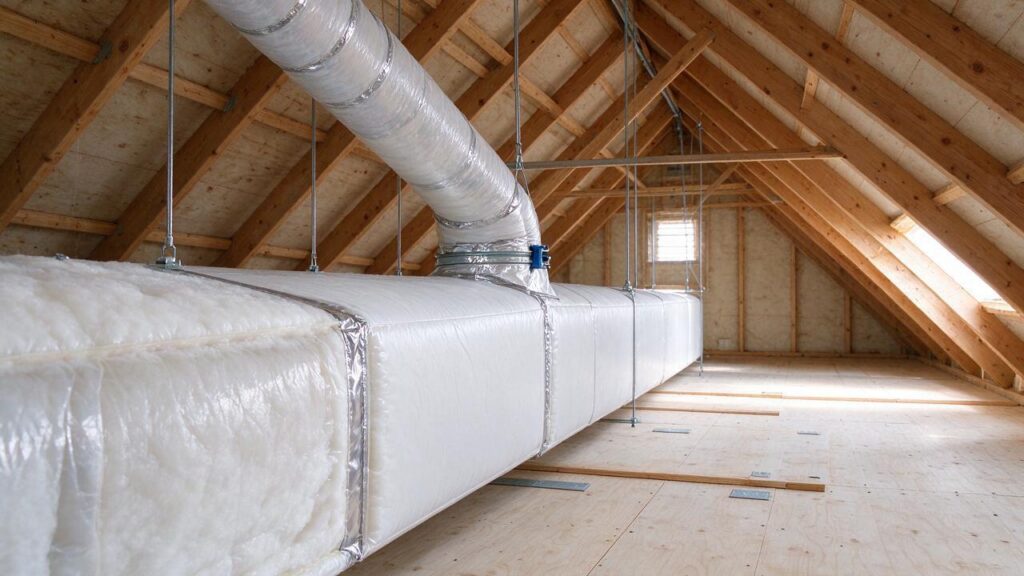
Aeroseal duct sealing is a professional method for sealing leaks in ductwork from the inside, using a pressurized sealant that fills gaps as air escapes through them. It is not a do-it-yourself project, and it is not a fix for every cooling complaint. Whether sealing is the right next step depends on measured duct leakage, not on a symptom alone. A qualified HVAC technician should test the duct system first, then confirm whether sealing, repair, or another airflow correction makes sense.
How Duct Leaks Affect Cooling Airflow
Your air conditioner does not cool a room directly. It cools air at the indoor unit, and the blower pushes that air through supply ducts to your rooms while return ducts carry air back. The U.S. Department of Energy describes this cooling cycle as the foundation of how a central system works, and ducts are the delivery path for it.
When ducts leak, conditioned air escapes into attics, crawl spaces, or wall cavities before it reaches the rooms you use. Two things follow. First, less cool air arrives at the vents, so rooms far from the air handler may feel warm. Second, the system may run longer to reach the thermostat setting because part of its output is being lost along the way. Leaks on the return side can also pull unconditioned air into the system, which changes the air the equipment has to cool.
The practical point is that duct leakage is an air-distribution problem. It is different from a cooling-capacity problem, where the equipment itself is not producing enough cold air. Both can feel similar from inside the house, which is why measurement matters.
Symptom Differences: What Leaks Can and Cannot Tell You
Several common complaints are possible indicators of duct leakage, but none of them confirms it on their own:
- Rooms that stay warm while others cool fine. This can point to duct leakage, undersized or damaged duct runs, a balancing issue, or restricted airflow.
- Weak airflow at certain vents. Possible causes include leaks, a clogged filter, a blocked return, or a blower problem.
- Longer run times or higher cooling use. Leakage is one possibility; dirty coils, low refrigerant charge, poor insulation, and thermostat issues are others.
- Excess dust or stuffiness. Return-side leaks can draw air from dusty spaces, but filtration, humidity, and house tightness also play roles.
The reverse is also true: a home can have meaningful duct leakage with no obvious symptom at all. Treat observations as clues, not conclusions. Only a measured test can distinguish a duct problem from an equipment problem.
Safe Homeowner Checks Before Service
You can gather useful, non-invasive facts without opening equipment or touching electrical components:
- Check the filter. A loaded filter restricts airflow and can mimic duct problems. Replace it if it is dirty, then see whether vent airflow improves.
- Compare vent airflow room to room. Hold your hand at each supply vent and note which ones feel weak. Write down which rooms are affected.
- Look at accessible ductwork. In an attic or garage where ducts are visible, look for obvious gaps, disconnected sections, crushed flex duct, or torn insulation. Do not walk on unsupported surfaces or disturb the ducts.
- Confirm vents and returns are open and unblocked. Furniture, rugs, and closed registers change airflow and can create uneven cooling on their own.
- Note when symptoms occur. Record whether weak rooms are worst at peak afternoon heat, whether the issue is new or long-standing, and any recent work near the ducts.
Stop and request qualified help right away if you notice smoke, a burning electrical smell, repeated breaker trips, water where it should not be, severe or sudden noise, or an outdoor fan that is not spinning. Carrier’s guidance on outdoor-fan problems emphasizes that electrical components, including capacitors and motors, are not homeowner-serviceable items. Do not open panels, test capacitors, bypass safety controls, or handle refrigerant.
What a Qualified Technician Measures
A duct-sealing decision should rest on evidence, and a technician or estimator can collect it directly:
- Duct leakage testing. A pressurized test quantifies how much air the duct system loses, which is the core measurement behind any sealing recommendation.
- Static pressure readings. These show whether the blower is fighting restrictions in the duct system, the filter, or the coil.
- Airflow and temperature checks at registers. These separate distribution losses from cooling-capacity problems at the equipment.
- Filter, drain, coil, and control inspection. ENERGY STAR’s maintenance checklist places these items in the professional-service category, because each can affect airflow and comfort independently of the ducts.
- Refrigerant performance checks when needed. Any refrigerant work must be performed with EPA-certified handling practices, and warranty-aware repair practices apply when manufacturer coverage remains active.
The results sort the problem into one of three paths: a maintenance item (like a filter or blocked return), an equipment or refrigerant issue, or a genuine duct-leakage problem where sealing is the appropriate fix. Aeroseal-style sealing is chosen when the measured leakage and duct condition make internal sealing the right method — not as a default answer to any comfort complaint.
Maintenance and Prevention
Sealing addresses existing leaks; maintenance helps the rest of the system support good airflow:
- Replace or clean filters on the schedule your system and household conditions require, since restricted airflow stresses the blower and starves distant rooms.
- Keep supply vents and return grilles open and clear.
- Have coils, drains, and controls checked during routine professional maintenance, consistent with ENERGY STAR’s homeowner-versus-professional boundaries.
- Avoid disturbing accessible ductwork during storage or renovation projects, since flex duct and connections can be damaged easily.
These steps support airflow but do not replace a leakage test. If a test shows significant leakage, maintenance alone will not close the gaps.
Decision Map: Which Path Fits Your Situation?
| What you observe | Possible meaning | Reasonable next step |
|---|---|---|
| Weak vents everywhere, dirty filter | Airflow restriction, possibly not ducts | Replace filter; recheck; call for evaluation if unchanged |
| One or two rooms warm, others fine | Distribution issue — leaks, duct damage, or balancing | Request an airflow evaluation with leakage testing |
| System runs long, air still not cold enough | Possible capacity or refrigerant issue | Schedule professional diagnosis before any duct work |
| Visible disconnected or crushed duct | Confirmed distribution problem | Professional repair or sealing assessment |
| Burning smell, breaker trips, non-spinning outdoor fan | Potential safety hazard | Stop the system and request qualified help now |
Getting Ready for an Airflow Evaluation
A short checklist makes the visit more productive:
- Note which rooms feel warm and when the problem is worst.
- Confirm the filter is fresh and all vents are open.
- List any recent attic, renovation, or pest work near ductwork.
- Mention whether the equipment is under manufacturer warranty, since warranty-aware repair practices apply when coverage remains active.
- Ask what leakage test will be performed and what result would justify sealing versus repair.
Focused FAQs
How do I know whether aeroseal duct sealing needs service?
You do not know from symptoms alone. Uneven cooling, weak vents, and long run times are possible signs of duct leakage, but they overlap with filter, coil, blower, and refrigerant issues. A measured duct leakage test is what determines whether sealing is warranted.
What information should I gather before calling?
Record which rooms are affected, whether the filter is fresh, whether vents and returns are open, any visible duct damage in accessible areas, and when symptoms started or worsened. This helps the technician separate distribution problems from equipment problems quickly.
Can a homeowner safely fix duct leaks?
Safe homeowner actions are limited to observations: checking the filter, comparing vent airflow, and visually inspecting accessible ducts. Sealing — especially an internal pressurized method like Aeroseal — is a professional service. Do not open energized equipment, test capacitors, bypass safety controls, or handle refrigerant.
What does a technician check?
Expect duct leakage measurement, static pressure readings, register airflow and temperature checks, and inspection of filters, drains, coils, and controls. If refrigerant performance is in question, EPA-certified handling practices apply to any refrigerant work.
When does this become a repair-versus-replacement conversation?
That conversation follows the evidence. If testing shows the duct system is largely sound, targeted repair may be enough. If leakage is widespread or ducts are badly deteriorated, sealing or replacement options get compared. If the equipment itself is underperforming, the ducts may not be the limiting factor at all. No single symptom or label settles it — the measured results do.
If uneven cooling or weak airflow is affecting your home, an airflow evaluation is the safe next step. Velocity offers 24/7 repair availability, and same-day dispatch may be available when a technician is available, with no separate night or weekend service charge. Request service or learn more about air conditioning repair and air conditioning maintenance.