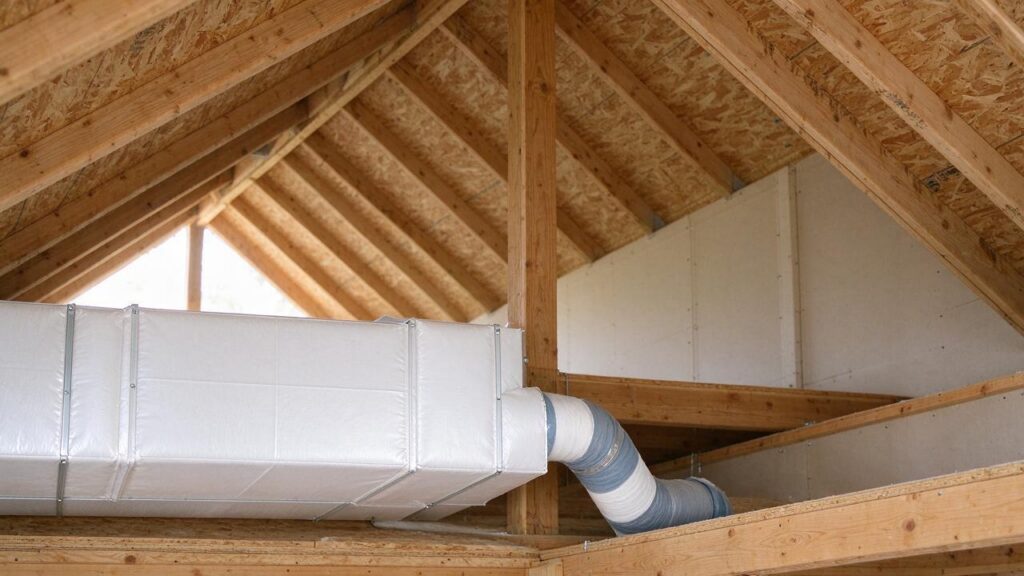
When your AC vents sweat, moisture forms on or near the vent covers. This happens when the vent surface gets colder than the dew point of the air around it. In plain terms, the air from the vents is colder than the room air can handle, or the room is holding more humidity than the system removes. Several conditions can cause this, so treat it as an observation, not a diagnosis. Some causes are as simple as a dirty filter. Others involve ducts or equipment that only a qualified technician can measure.
This guide explains how airflow and cooling interact to cause vent condensation. It also covers which checks are safe to do yourself, what a technician must verify, and how to choose between routine care and a service call.
How Airflow Affects Cooling
An air conditioner cools air. A blower then moves that air through ducts and out of your supply vents. The U.S. Department of Energy describes this cooling cycle as the basis of how home cooling works. When the system is balanced, air reaches each room at the temperature and volume it was designed to deliver.
Airflow problems upset that balance in two ways:
- Too little airflow. A clogged filter, blocked return, or closed vents can restrict air movement. Air may sit on the cold coil longer than intended. The system then delivers very cold air while the blower moves less of it. Cold air meeting warm, humid room air at the vent can cause condensation on the register.
- Humidity the system is not removing. Cooling systems also dry the air. If run times, airflow, or equipment condition change, indoor humidity can rise. Moist room air condensing on a cold vent looks like the vent is sweating.
In Florida’s hot climate, cooling systems run heavily for much of the year. That is why airflow and moisture issues tend to show up during cooling season. This is general context, not a claim that every Florida home or system has the same conditions.
Symptom Differences Worth Noting
Not all moisture near a vent means the same thing. What you see helps you describe the problem:
- Condensation on the register face. Fine droplets or fogging on the vent cover, often worse on humid days. This suggests the surface is colder than the dew point of nearby air.
- Water that persists or drips. Moisture that keeps returning, runs down the wall or ceiling, or leaves stains may point to a recurring problem or another water source.
- Moisture with weak airflow. If the sweating vent also delivers less air than other vents, an airflow restriction is a plausible contributor.
- Moisture with a musty odor. Damp vents can support mold over time. If you suspect mold, leave the duct system alone and put that observation in a professional evaluation.
These are observations, not confirmed causes. Only measurements can separate an air-distribution issue from a cooling-capacity issue.
Safe Homeowner Checks
You can gather useful facts without tools, disassembly, or contact with electrical parts:
- Check the filter. A loaded filter is a common and fixable airflow restriction. ENERGY STAR’s maintenance guidance puts filter checks at the center of routine homeowner care.
- Look at the vents. Note whether furniture, drapes, or closed louvers block any vents. Note whether one register sweats or many do.
- Compare airflow between rooms. Hold your hand near several registers. Note clear differences in air volume or temperature.
- Note when it happens. Record whether moisture appears during long run times, at startup, on humid days, or all the time.
- Watch for safety stop signs. Stop the system and request qualified help if you see smoke, smell electrical burning, see repeated breaker trips, notice water near electrical parts, hear severe new noise, or see an outdoor fan that is not spinning. Carrier’s guidance on outdoor fans stresses that parts like capacitors and motors are not homeowner-service items.
Do not open panels on the indoor or outdoor unit, test electrical parts, bypass a safety control, or handle refrigerant. Those tasks require qualified training and equipment.
What a Technician Measures
A qualified technician confirms or rules out causes with measurements a homeowner cannot take. An evaluation may include:
- Airflow and static pressure checks to find restrictions in the filter, ducts, or blower path.
- Temperature split measurements between return and supply air to see whether the system cools as designed.
- Refrigerant charge verification, done under EPA-certified refrigerant handling practices when refrigerant work is involved.
- Blower and control checks, matching the professional maintenance boundaries ENERGY STAR describes for blowers, coils, drains, and controls.
- Duct and distribution review to learn whether the problem is how air is delivered, not how much cooling is produced.
This step turns possibilities into a diagnosis. Until then, the sweating vent remains a symptom with several plausible causes.
Maintenance and Prevention
Routine care supports healthy airflow and reduces the conditions that let condensation form:
- Check and replace filters on the schedule your system and household call for.
- Keep supply and return vents clear of furniture and decor.
- Have drains, coils, and blower parts inspected during professional maintenance, not as DIY work.
- Schedule regular air conditioning maintenance so small airflow problems are found before they show up as moisture or comfort complaints.
Choosing the Next Step
Three questions usually frame the decision:
| Question | Points toward maintenance | Points toward service |
|---|---|---|
| Is the filter or a vent the issue? | A loaded filter or blocked register you can fix yourself | Restrictions that persist after basic fixes |
| Is it air distribution or cooling capacity? | Not determinable by observation alone | Requires technician measurement to answer |
| Is this safe upkeep or repair work? | Filter changes and clearing vent obstructions | Anything involving panels, wiring, refrigerant, or duct changes |
If a fresh filter and open vents do not change what you see, or if any safety stop sign is present, the next step is a professional airflow evaluation. Velocity offers 24/7 repair availability, and same-day dispatch may be available when a technician is available. Velocity does not add a separate night or weekend service charge, and warranty-aware repair practices apply when manufacturer coverage remains active. Request service or learn more about air conditioning repair when you are ready for a diagnosis you do not have to guess at.
Focused FAQs
How do I know whether ac vents sweating needs service?
Schedule an evaluation if the moisture is new, persistent, or spreading, or if it comes with weak airflow, odors, or comfort problems. If any safety stop sign appears, such as smoke, burning smells, repeated breaker trips, or a non-spinning outdoor fan, stop the system and request qualified help right away.
What information should I gather about ac vents sweating before calling?
Note which vents sweat, whether airflow feels weak there, when the moisture appears, whether the filter is due for replacement, and whether anything changed recently, such as a new filter size or closed vents. These safe observations help the technician focus the evaluation.
Can a homeowner safely fix ac vents sweating?
Safe homeowner actions are limited to simple checks, like replacing a dirty filter and clearing vent obstructions. Anything involving opening equipment, electrical parts, refrigerant, or ductwork requires a qualified HVAC technician.
What does a technician check for ac vents sweating?
A technician typically measures airflow and static pressure, checks the temperature difference between return and supply air, verifies refrigerant charge under EPA-certified handling practices when refrigerant work is done, and inspects blower, drain, coil, and control conditions.
When does ac vents sweating become a repair-versus-replacement conversation?
That conversation follows diagnosis, not the symptom alone. If measurements show that equipment condition, capacity, or duct design is the root cause and repairs would be extensive, the technician’s findings support a repair-versus-replacement decision. No such conclusion can be drawn from sweating vents by themselves.