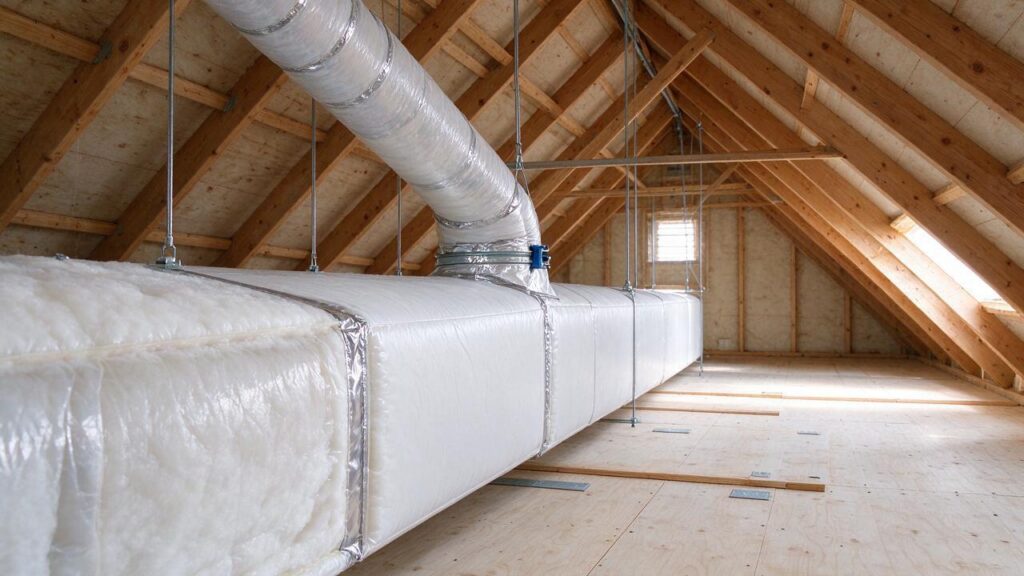
Noisy AC vents usually point to an airflow problem. A clogged filter, a blocked register, loose ducts, or a blower working too hard can all cause it. The noise alone does not tell you which one it is. It does not confirm a failed part either. Your safest next step is simple. Make a few easy observations. Watch for clear stop signs. Then let a qualified HVAC technician measure the system before any repair decision.
What Vent Noise Means in Plain Terms
Your air conditioner moves air with a blower. The air travels through ductwork and out of supply vents. Return vents pull air back to the system. When the pressure or the air path changes, the moving air — or the parts moving it — can make sound. So vent noise is a symptom of changed airflow. It is not a diagnosis by itself.
Common possibilities include a filter loaded with dust, a supply register partly closed or blocked, loose duct sections that vibrate, or a blower pushing against a restriction. Each one makes a different sound pattern. That is why careful observation beats guessing at one cause.
Safety Stop Signs First
Before any troubleshooting, look for conditions that call for stopping the system and getting qualified help right away:
- Smoke or a burning electrical smell from vents or equipment.
- Repeated breaker trips when the cooling system runs.
- Severe or suddenly worse noise, such as loud banging or grinding.
- A non-spinning outdoor fan while the system tries to run.
- Unsafe water contact with any electrical part.
Any of these ends the observation phase. Shut the system down at the thermostat and request professional service. Do not open panels. Do not test electrical parts. Do not bypass any safety control.
Safe Observations You Can Make
If no stop signs are present, a few no-tool checks can help a technician later:
- Check the filter. A visibly dirty filter is a very common cause of airflow noise. Swapping it for a correctly sized one is safe, routine care.
- Look at each register. Note whether furniture, curtains, or closed louvers block any supply vents. Note whether the noise comes from one vent or many.
- Note when the noise happens. Is it constant? Only at startup? Only during heavy cooling? Only in certain rooms? Timing is useful evidence.
- Describe the sound. Whistling often means air forced through a tight spot. Rattling can mean a loose register or duct section. A low rumble may relate to the blower. These are observations, not diagnoses.
- Check return vents for blockage too. Restricted returns can also change system pressure and sound.
Write down what you find. These notes become the raw material for a real diagnosis.
How Airflow Creates Noise
Air moving through ducts acts a bit like water in a pipe. When the path narrows — a dirty filter, a pinched duct, a half-closed damper — the same air pushes through a smaller opening at higher speed. That often makes a whistling or hissing sound at the vents. When a duct section is loose, pressure pulses can make it rattle or pop. And when the blower works against a restriction, its sound can change too.
This is why the same complaint — “my vents are noisy” — can trace back to very different causes. It also shows why two ideas matter here. One is an air-distribution issue: air not moving well through ducts and vents. The other is a cooling-capacity issue: the equipment itself not cooling as it should. Vent noise more often points to the first. But only measurements can confirm it.
What a Qualified Technician Measures
Diagnosis takes instruments and training, not guesswork. A qualified technician may check static pressure in the duct system. They may inspect the blower and its parts. They may verify filter fit and condition, look for leaky or loose duct sections, and compare system performance to the equipment’s design. Where refrigerant work is involved, EPA-certified handling practices apply.
These measurements separate possible causes from a confirmed one. A whistling vent plus high static pressure points one way. A rattling duct plus normal pressure points another. The technician’s findings — not the noise alone — set the repair path.
How Observations Change the Decision
The pattern you see helps shape what happens next:
| What you observe | What it may suggest | Likely next step |
|---|---|---|
| Noise from one vent, others quiet | Local restriction — register, branch duct, or damper | Technician checks that branch |
| Noise at many vents, weak airflow everywhere | System-level restriction such as filter or blower issue | Filter check now; technician measurement if it persists |
| Noise plus poor cooling | Possible mix of distribution and capacity issues | Full professional evaluation |
| Noise plus any safety stop sign | Potentially unsafe condition | Stop the system and request service now |
Simple care — like replacing a filter or clearing a blocked register — is within a homeowner’s safe reach. Anything that involves opening equipment, electrical parts, duct changes, or refrigerant is work for a qualified technician.
Maintenance and Prevention
Regular care reduces the conditions that make vents noisy in the first place. Following ENERGY STAR’s maintenance guidance, homeowners can typically handle filter changes and keep registers and returns clear. Tasks such as coil cleaning, drain service, control checks, and blower inspection belong to a professional maintenance visit. In Florida’s long cooling season, systems run hard for many months. So steady filter checks are especially practical. Still, every building’s load, duct design, and equipment differ. No single schedule fits every home.
Routine professional maintenance also supports warranty-aware repair practices when manufacturer coverage is active. Warranty terms and registrations vary by equipment and documentation.
Getting Help from Velocity
Velocity offers 24/7 repair availability. Same-day dispatch may be available when a technician is free. Velocity states that it does not add a separate night or weekend service charge. If your observations point beyond simple care, air conditioning repair can handle the diagnosis. Or air conditioning maintenance can help keep airflow issues from coming back. When you are ready, you can request service and share your notes.
Focused FAQs
How do I know whether ac vents making noise needs service?
If the noise is mild and a filter change or clearing a blocked register fixes it, routine care may be all that was needed. If noise persists, gets worse, or comes with weak cooling, schedule a qualified technician. Call right away if any safety stop sign appears. Noise alone never confirms a failed part.
What should I gather about ac vents making noise before calling?
Note when the noise occurs, which vents it comes from, and what the sound resembles. Check whether the filter is dirty and whether any registers are blocked. This record helps the technician measure and diagnose faster.
Can a homeowner safely fix ac vents making noise?
Safe homeowner steps are limited to filter replacement and clearing obstructions at registers and returns. Do not open energized equipment, test capacitors, bypass safety controls, or handle refrigerant. Those jobs require qualified professionals.
What does a technician check for ac vents making noise?
Expect checks of static pressure, filter condition, blower operation, duct integrity, and overall system performance. These measurements tell an air-distribution problem apart from a cooling-capacity problem and find the real cause.
When does ac vents making noise become a repair-versus-replacement question?
That question follows evidence, not the symptom. If measurements show a repairable part or duct issue explains the noise, repair is usually the path. Replacement talks come up only when findings about equipment condition and remaining service life support them. A professional evaluation is the only way to establish that.