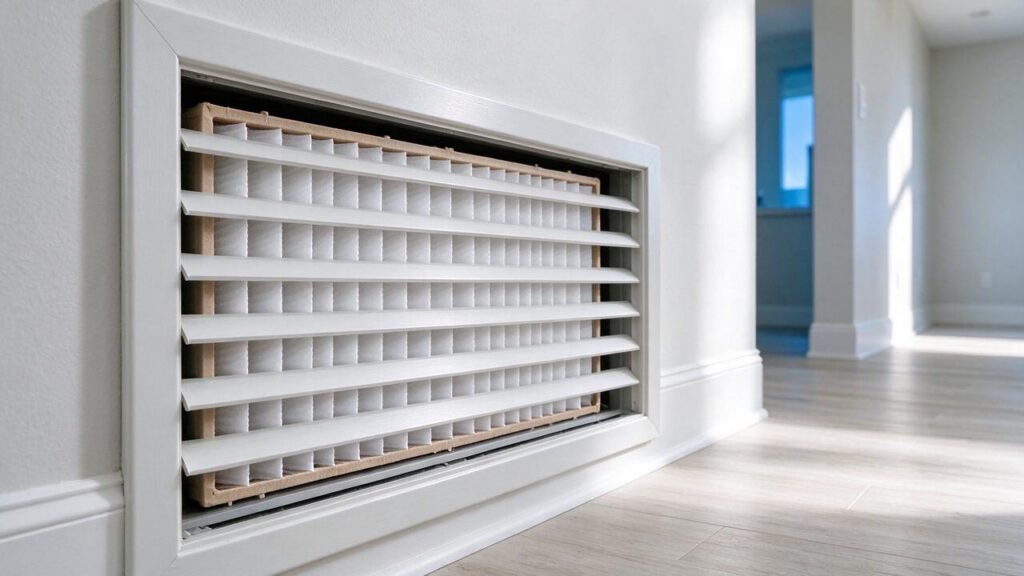
Dusty AC vents usually point to an airflow or filtration issue. The cause can range from a clogged filter to a duct or equipment problem, so the symptom alone is not a diagnosis. If you see smoke, smell something burning, hear severe noise, or notice the outdoor fan not spinning, stop the system and request qualified help. Otherwise, make a few safe observations. Then decide whether simple maintenance or a professional airflow evaluation is the right next step.
What “Ac Vents Dusty” Means for Your Cooling
When homeowners say their AC vents are dusty, they usually mean one of two things. Dust or dark streaks collect on the vent covers. Or dust blows out of the registers into the room. These are observations, not diagnoses. The same dusting can come from several conditions. A filter may be past due for replacement. Return airflow may be restricted. Duct leaks can pull in attic or wall dust. Or it may just be normal household dust settling on surfaces.
It helps to separate the symptom from the cause. The vent is where air leaves the system. It is also where airborne particles leave a visible trace. That trace tells you air moved through the duct. It does not tell you why the dust is there or whether the equipment is at fault. In Florida’s long cooling season, systems run many hours a day. Whatever is causing the dusting tends to show up faster here. That does not mean every Florida home has the same ducts, humidity, or equipment load. It only means cooling demand makes airflow symptoms worth attention.
Safe Observations You Can Make Right Now
Before calling anyone, you can gather useful, low-risk facts. These checks involve looking and noting. Do not open equipment or touch electrical parts.
- Check the filter. Note its condition and when it was last changed, if you know. A loaded filter is one plausible contributor, but not the only possible cause.
- Look at the vents. Does dust appear on all registers or only some? Is it light gray dust or darker streaking near the louvers?
- Note airflow. With the system running, feel whether some rooms have weaker airflow than others.
- Check for obstructions. Look for furniture, curtains, or rugs blocking supply or return grilles.
- Record symptoms. Note any musty odor, uneven cooling, longer run times, or recent renovation dust.
Stop here on your own. Do not open panels on the air handler. Do not remove the blower cover, test electrical parts, or reach ductwork in an attic. Those steps belong to a qualified technician.
When the Cause Points to Airflow Restrictions
One decision path is filter or vent restriction versus equipment issue. Restricted airflow is a common, often maintenance-related contributor to dust problems. A filter left in place too long can load up and allow bypass. Blocked returns can change how air and particles move through the system. If your notes show a loaded filter, blocked grilles, and gradual dusting across many vents, the picture leans toward an airflow restriction that routine maintenance may address.
Even so, do not assume a filter change alone will solve it. A filter is one plausible factor among several. Only measured performance can confirm what was happening. If you replace a loaded filter and dusting continues, that is useful evidence for the next conversation. It is not proof of a failed part.
When the Cause Points to Equipment or Duct Issues
The second decision path is air-distribution issue versus cooling-capacity issue. Dusty vents can accompany duct problems, such as leaks or disconnected sections that pull dust from unconditioned spaces into the airstream. They can also appear alongside cooling complaints, like rooms that never reach the setpoint. These are different problems with different fixes. Distribution issues concern how air moves through ducts. Capacity issues concern whether the cooling system delivers expected performance.
You cannot reliably tell these apart from the vent symptom alone. Weak airflow in one room might mean a duct issue, a damper position, or a blower problem. Dust on every vent might mean filtration, duct leakage, or household conditions. The symptom is the starting point for a diagnosis, not the conclusion of one.
What a Qualified Technician Measures and Verifies
A professional evaluation goes beyond what a homeowner can safely observe. Depending on your observations, a technician may verify items such as:
- Filter condition, fit, and whether the correct type is installed
- Blower performance and overall airflow
- Static pressure and duct condition, including visible leakage or disconnections
- Coil condition, since a dirty coil affects airflow and heat transfer
- Refrigerant charge, checked only by an EPA-certified technician when refrigerant work is involved
- Thermostat and control operation
These measurements turn possibilities into a confirmed diagnosis. They also support warranty-aware repair practices when manufacturer coverage remains active; warranty terms and registrations vary by equipment and documentation. Ask what was measured and what the findings mean. The recommended repair should connect to evidence, not to the symptom alone.
Maintenance Steps to Prevent Future Dust Buildup
Regular maintenance is the most reliable way to keep dust from becoming a recurring complaint. ENERGY STAR’s home maintenance guidance covers homeowner tasks such as filter checks, along with professional tasks like coil, drain, and blower inspection. The Department of Energy’s home cooling guidance notes that maintenance supports efficient cooling-system operation. In practical terms:
- Check your filter on a regular schedule. Replace it when it is loaded, following the filter manufacturer’s guidance.
- Keep supply and return grilles unobstructed. Dust them as part of normal housekeeping.
- Schedule professional maintenance so coils, drains, controls, and blower parts are inspected by someone qualified.
These steps support airflow and cleanliness, but they do not replace diagnosis. If dusting persists after maintenance is current, the system should be measured, not assumed.
Focused FAQs on Ac Vents Dusty
How do I know whether ac vents dusty needs service?
Treat it as a signal worth investigating, not an emergency by itself. If dusting comes with smoke, a burning smell, repeated breaker trips, severe noise, or a non-spinning outdoor fan, stop the system and request qualified help right away. If the only symptom is gradual dust buildup, start with safe observations and filter condition. Then schedule an airflow evaluation if the dusting continues or cooling seems off.
What information should I gather about ac vents dusty before calling?
Note when the dusting started, whether it affects all vents or only some, the filter’s age and condition, any rooms with weak airflow, any odors, and any recent renovation dust. This record helps the technician connect your observations to measurements.
Can a homeowner safely fix ac vents dusty?
Safe homeowner actions are limited to checking and replacing the filter, clearing obstructions at grilles, and cleaning vent covers. Do not open energized equipment, test capacitors, bypass safety controls, or handle refrigerant. Duct sealing, blower work, and refrigerant checks require a qualified technician.
What does a technician check for ac vents dusty?
A technician verifies filter condition and fit, blower and airflow performance, static pressure, duct condition and leakage, coil condition, and control operation. Refrigerant charge is checked only when refrigerant work is performed under EPA-certified handling practices. The goal is to confirm the cause rather than assume it from the symptom.
When does ac vents dusty become a repair-versus-replacement conversation?
That conversation follows evidence, not the dust itself. If measurements reveal significant duct leakage, a failing blower, or broader equipment wear, the technician may present repair and replacement options with the findings. Until the system is measured, keep both paths open. Dusty vents alone do not mean major equipment work is needed.
The Next Step for Dusty Vents
Dusty vents are a useful clue about airflow, filtration, or distribution. The clue is not the diagnosis. Make your safe observations, address obvious maintenance items like a loaded filter, and let a qualified technician measure the system before any repair decision. If you want help turning your observations into a confirmed answer, request service through our air conditioning repair team or schedule routine air conditioning maintenance. Velocity offers 24/7 repair availability, and same-day dispatch may be available when a technician is available, with no separate night or weekend service charge.