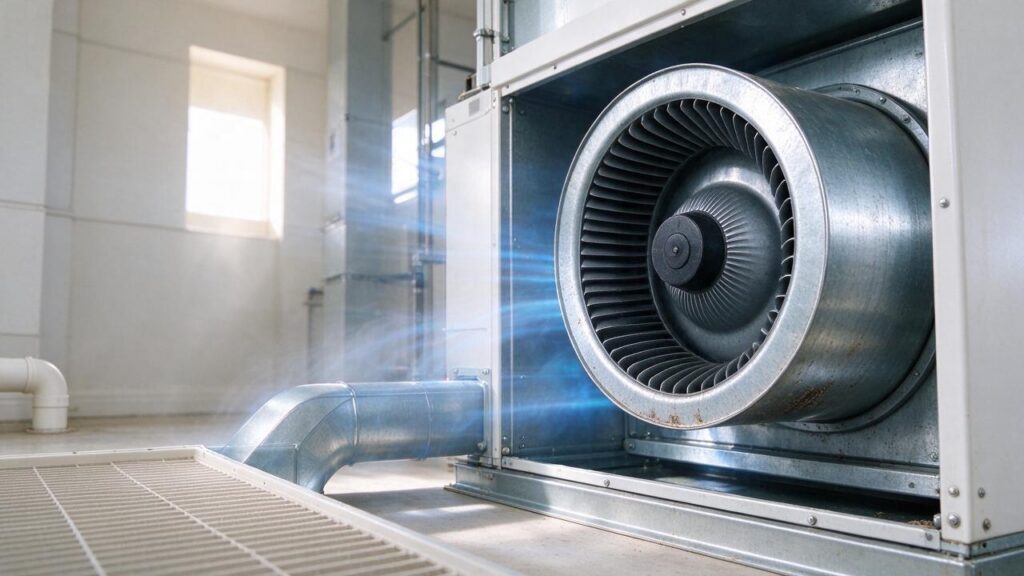
When an AC vent is barely blowing, the symptom points to an airflow problem somewhere between the blower and that vent. It does not tell you which cause is to blame. A clogged filter, a blocked register, duct restrictions, or a blower or outdoor-fan issue can all cause weak airflow. Start with safe observations only. If the problem persists, or if you see any safety stop sign below, the next step is to have a qualified HVAC technician measure the system and confirm the cause.
How Airflow Affects Cooling
Your cooling system moves air in two directions at once. The blower pulls air through the return, pushes it across the indoor coil, and sends it through your supply ducts. The outdoor fan releases heat outside. The U.S. Department of Energy’s home-cooling guidance treats this air movement as a core part of how the cooling cycle works.
When airflow drops, two things can happen. Rooms get less conditioned air, so they feel warmer. And if the restriction is on the return side, less air moves across the indoor coil. That can reduce cooling performance. This is why weak airflow at a vent is worth checking. But the symptom alone does not tell you where the restriction is, or what part, if any, has failed.
Symptom Patterns That Narrow the Picture
Where and how you notice weak airflow matters. These patterns are observations, not diagnoses:
- One vent or one room is weak. This often points toward a distribution issue — a closed or blocked register, a damper position, or a duct restriction serving that room.
- All vents are weak. A system-wide pattern fits better with a restriction near the blower, such as a loaded filter, or a blower or equipment issue.
- Weak airflow with warm air. Less air movement plus air that is not cold can mean either an air-distribution problem or a cooling-capacity problem. These need different next steps. Only measurements can tell them apart.
- Weak airflow that started after a change. A recent filter change, furniture move, or renovation can be a useful clue to report.
These patterns only suggest where to look. A qualified technician confirms the actual cause.
Safe Homeowner Checks
Before calling for service, a few observations are safe and useful. None of these involve opening equipment, testing electrical parts, or handling refrigerant.
- Check the filter. Look at its condition and note how long it has been in place. A loaded filter is a common cause of weak airflow. Replacing it is routine care described in ENERGY STAR’s maintenance checklist.
- Check the supply registers. Make sure vents in the affected room are open and not blocked by furniture, rugs, or curtains.
- Check the thermostat. Confirm the system is set to cool, the fan setting is as intended, and the set temperature makes sense.
- Look at the outdoor unit from a distance. Note whether the outdoor fan is spinning during a cooling call. If it is not spinning, stop there. Carrier’s guidance on outdoor-fan problems treats this as a case for qualified help, not homeowner electrical testing.
- Write down what you observe. Which vents are weak, whether the air is cool, when it started, and any recent changes. This record shortens the service call.
Do not open panels, test capacitors, bypass safety controls, or attempt refrigerant work. Those tasks require training. Refrigerant work also requires EPA-certified handling practices.
Safety Stop Signs: Stop and Request Qualified Help
Some observations change the decision right away. Stop the system and request qualified help if you notice any of these:
- Smoke or a smell of electrical burning
- Repeated breaker trips
- Unsafe water contact with equipment
- Severe or unusual noise
- An outdoor fan that is not spinning
These signs can point to electrical or mechanical problems a homeowner should not investigate.
What a Qualified Technician Measures
Weak airflow has several possible causes. A technician gathers evidence before confirming a diagnosis. Typical checks include:
- Airflow and static pressure measurements to find where a restriction sits in the duct system.
- Blower operation checks to confirm the indoor fan moves the air the system was designed to move.
- Outdoor unit and fan checks, including the electrical and motor context Carrier describes for outdoor-fan problems.
- Refrigerant charge verification, done under EPA-certified handling practices when refrigerant work is involved.
- Control and thermostat checks, consistent with the controls and blower checks in ENERGY STAR’s maintenance guidance.
The distinction matters: a symptom suggests possibilities; measurements confirm a diagnosis. If a proposal follows, warranty-aware repair practices apply when manufacturer coverage is still active. Warranty terms vary by equipment and documentation.
Maintenance and Prevention
Several common airflow restrictions can be prevented with routine care. ENERGY STAR’s maintenance checklist places filter condition, drains, coils, controls, and blower checks within a routine that includes both homeowner tasks and professional service. The Department of Energy’s cooling guidance also stresses maintenance as part of keeping a cooling system working as designed.
In Florida, long cooling seasons mean systems run for extended periods. Staying current on filter changes and scheduled maintenance is practical hot-climate context. Every building and system is different, though. Duct design, equipment condition, and cooling loads vary, so no single maintenance interval fits every home.
Repair or Replace: What Changes the Conversation
A weak-airflow complaint usually starts as a repair question. It can become a repair-versus-replacement talk when the evidence points to larger issues. Examples include measurements showing problems with major components, a history of repeated repairs, or equipment age and condition that make more repair a poor fit. That decision should rest on what the technician measures, not on the symptom alone. Ask for the evidence behind any recommendation before you decide.
Getting Help From Velocity
Velocity offers 24/7 repair availability. Same-day dispatch may be available when a technician is free. Velocity states it does not add a separate night or weekend service charge. If your safe checks have not fixed the weak airflow — or if you saw any safety stop sign — air conditioning repair service can find the cause. Routine air conditioning maintenance can help prevent it from coming back. You can also request service directly.
Focused FAQs
How do I know whether ac vent barely blowing needs service?
If weak airflow continues after you check the filter, confirm registers are open and clear, and verify thermostat settings, it is time for service. Any safety stop sign — smoke, burning smell, repeated breaker trips, unsafe water contact, severe noise, or a non-spinning outdoor fan — means stop the system and request qualified help right away.
What information should I gather about ac vent barely blowing before calling?
Note which vents are weak, whether one room or the whole system is affected, whether the air is cool or warm, when it started, the filter’s age and condition, and any recent changes such as furniture moves, renovations, or filter changes. This record helps the technician work faster.
Can a homeowner safely fix ac vent barely blowing?
Sometimes the cause is within safe reach. Replacing a loaded filter or clearing a blocked register are routine tasks. Anything involving opening equipment, electrical parts, capacitors, safety controls, or refrigerant should be left to a qualified technician. Even safe fixes may not resolve the symptom if the real cause is elsewhere.
What does a technician check for ac vent barely blowing?
A technician measures airflow and static pressure, verifies blower operation, inspects the outdoor unit and fan, checks controls, and verifies refrigerant charge when needed. These measurements separate an air-distribution problem from a cooling-capacity problem and confirm the cause before any repair recommendation.
When does ac vent barely blowing become a repair-versus-replacement conversation?
That shift happens when evidence — not the symptom — supports it. Examples include measurements showing major component problems, a pattern of repeated repairs, or equipment age and condition that make repair a poor long-term fit. Ask the technician to show the findings behind the recommendation so you can decide with confidence.