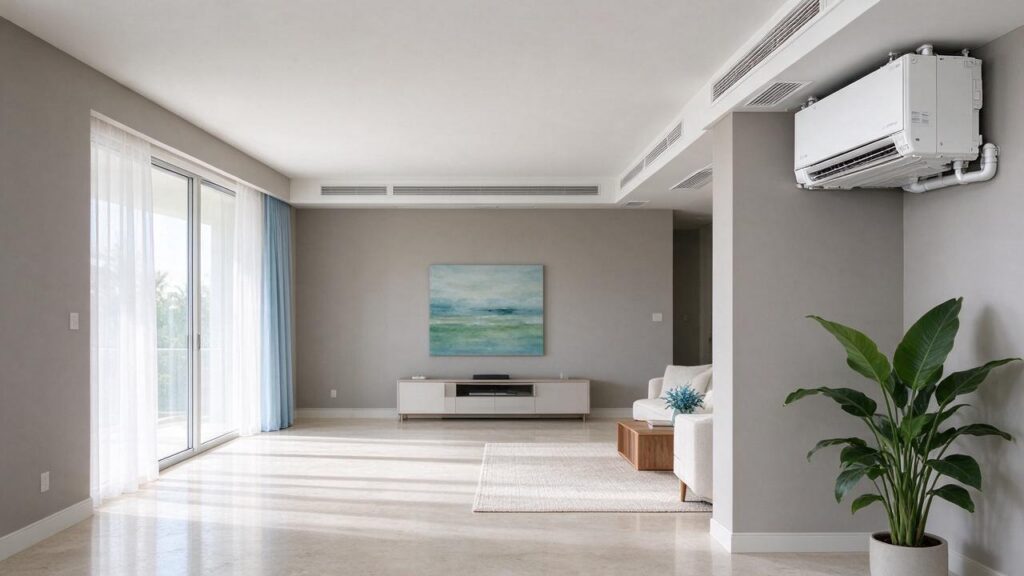
When the air coming out of your AC vent feels cold but the room stays warm, the system is usually making cold air but failing to deliver enough of it. That points to an airflow or distribution problem more often than a cooling-production problem. Common possibilities include a restricted filter, blocked or closed vents, duct leakage, or a blower that is not moving enough air. Only a qualified technician’s measurements can confirm which one applies to your home.
How Airflow Affects Cooling
An air conditioner cools air at the indoor coil. The blower then pushes that cooled air through ducts and out your supply vents. The U.S. Department of Energy describes this cooling cycle as the core of how a system keeps a home comfortable. If cooled air never reaches the room in sufficient volume, the room stays warm even though the air at the vent feels cold.
Two failure patterns can look similar from the couch:
- A distribution problem: cold air is produced, but restricted ducts, a clogged filter, closed vents, or a weak blower keep it from circulating enough to lower the room temperature.
- A capacity problem: the system produces some cold air but not enough total cooling for the space. The vent feels cool while the room never catches up.
Telling these apart matters. The fix, and the decision you make next, is different for each.
Symptom Differences Worth Noting
Before calling for service, it helps to separate what you can safely observe from what you cannot diagnose. Possible causes remain possibilities until a technician measures the system.
- Weak airflow at one or more vents: often consistent with a filter, vent, or duct restriction — but not a confirmed diagnosis.
- Strong airflow but a room that never cools: could point to duct leakage or a cooling-capacity issue. Both need professional verification.
- One warm room while others cool fine: suggests the issue may be in that room’s duct run or vent rather than the whole system.
- Whole-home struggle on very hot days: in Florida’s hot climate, heavy cooling demand can expose limits in a system or ductwork. Every building’s load, ducts, and equipment differ, so no universal claim applies.
Safe Homeowner Checks
ENERGY STAR’s maintenance guidance draws a clear line between homeowner tasks and professional work. A few safe observations can sharpen your next decision:
- Check the air filter. A heavily loaded filter restricts airflow. If it is dirty, replacing it is a standard homeowner task. Note the date you changed it.
- Look at your supply and return vents. Make sure supply vents are open and not blocked by furniture, curtains, or rugs. Return grilles should not be covered.
- Note the pattern. Write down which rooms stay warm, whether airflow feels weak or strong, and when the symptom started.
- Listen and look from a distance. Note unusual sounds or visible issues. Do not open panels or touch electrical components.
Stop the system and request qualified help immediately if you notice smoke, an electrical burning smell, repeated breaker trips, unsafe water contact with equipment, severe noise, or an outdoor fan that is not spinning. Carrier’s guidance on outdoor fans stresses that capacitor, motor, and electrical issues carry real safety boundaries. These are not homeowner repairs.
What a Qualified Technician Measures
Some checks are unsafe or impossible for a homeowner. They require trained hands and instruments:
- Airflow and static pressure measurements to confirm whether the blower and duct system are moving enough air.
- Refrigerant-level checks. Any refrigerant work must follow EPA-certified handling practices.
- Duct integrity evaluation to find leaks or restrictions that waste cooled air before it reaches the room.
- Electrical and component testing, including capacitors and motors. A homeowner should never test or handle these.
- Controls and blower performance checks as outlined in professional maintenance boundaries.
These measurements turn “cold vent, warm room” from a symptom into a confirmed diagnosis.
Choosing the Next Step
The right next move depends on what you observed:
| What you observe | What it may suggest | Reasonable next step |
|---|---|---|
| Dirty filter, blocked vents | Airflow restriction | Safe homeowner maintenance, then re-evaluate |
| Weak airflow after filter and vent checks | Duct, blower, or distribution issue | Schedule a professional airflow evaluation |
| Good airflow but room still warm | Possible capacity or refrigerant issue | Schedule a professional diagnosis |
| Any safety stop sign | Potentially hazardous condition | Stop the system and request qualified help now |
If simple maintenance does not resolve the symptom, the next decision is a professional evaluation rather than a guess about parts. Velocity offers 24/7 repair availability through its Air conditioning repair service, and same-day dispatch may be available when a technician is on hand. Velocity also states that it does not add a separate night or weekend service charge, and warranty-aware repair practices apply when manufacturer coverage remains active.
Maintenance and Prevention
Regular maintenance supports steady airflow and cooling delivery. ENERGY STAR’s checklist places filter changes and drain checks in the homeowner category. Coil cleaning, control checks, and blower inspection belong to professional service visits, such as scheduled Air conditioning maintenance. Keeping vents clear and filters fresh reduces the chance that a distribution problem returns, though it cannot prevent every equipment issue.
Focused FAQs
How do I know whether ac vent air is cold but room is warm needs service?
If a fresh filter and open, unblocked vents do not restore normal cooling, it is time for qualified service. The same is true if any safety stop sign appears. A symptom alone cannot confirm which part is at fault.
What information should I gather about ac vent air is cold but room is warm before calling?
Note which rooms stay warm, whether airflow feels weak or strong, and when the symptom began. Add the filter’s condition and last change date, plus any sounds or shutdowns you observed. This helps the technician evaluate efficiently.
Can a homeowner safely fix ac vent air is cold but room is warm?
Only the maintenance-level items: replacing a dirty filter and clearing blocked vents. Anything involving panels, electrical components, capacitors, refrigerant, or ductwork requires a qualified technician.
What does a technician check for ac vent air is cold but room is warm?
Airflow and static pressure, blower performance, duct integrity, refrigerant levels under EPA-certified handling practices, and electrical components. These measurements distinguish a distribution problem from a capacity problem.
When does ac vent air is cold but room is warm become a repair-versus-replacement conversation?
Only after a qualified technician measures the system and identifies the actual cause. Equipment condition, duct findings, and warranty status all shape that conversation. Warranty coverage varies by equipment and documentation. No one should assume replacement from the symptom alone. When you are ready to schedule, you can Request service online.