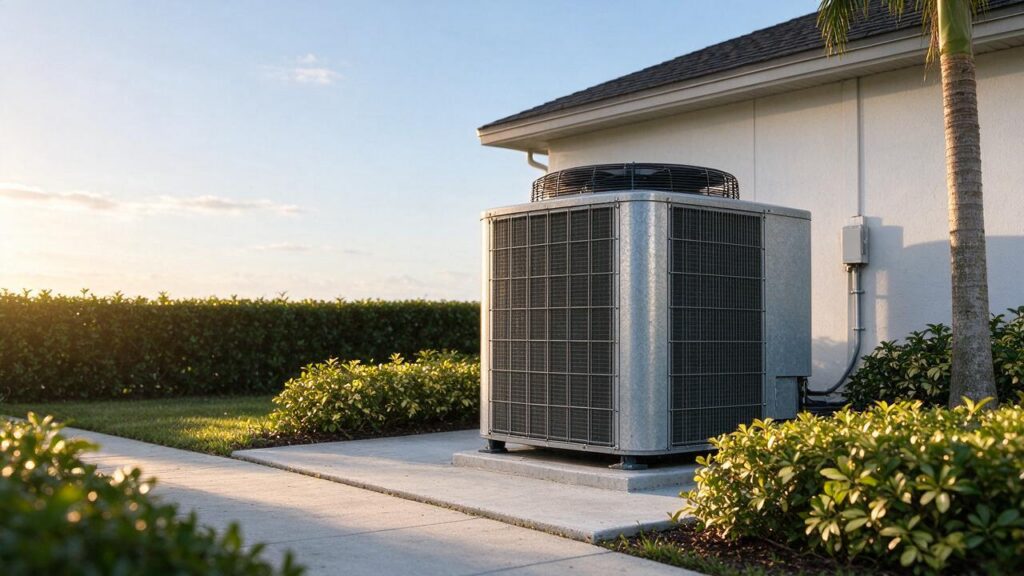
An AC unit loud outside deserves attention. But the sound alone does not tell you what is wrong. The noise could come from something minor. It could point to a fault that needs professional repair. The useful next step is not to guess at one cause. It is to separate what you can safely observe from what only a qualified HVAC technician can measure. Then choose your next move based on evidence.
What “Loud” Means in Practical Terms
People describe outdoor unit noise in many ways. Common words include buzzing, humming, clicking, rattling, and shaking. Some describe a sudden severe sound. Each description is a symptom, not a diagnosis. The same word can point to more than one condition. Some causes of noise are normal operating sounds that have simply become easier to notice.
What matters first is change. Is the noise new? Has it gotten worse? Does it come with other behavior, such as a fan that will not spin or a system that shuts off? A noise alone does not confirm a failed part. Only measurements and inspection by a qualified technician can do that.
Safe Observations You Can Make
You do not need tools. You should never open panels or reach into the cabinet. Even so, you can gather useful information from a safe distance. Note the following:
- The sound itself: Is it buzzing, humming, clicking, or rattling? When does it happen — at startup, during operation, or at shutdown?
- When it started: Was the noise sudden or gradual? Did it follow a storm, a power cut, or a service visit?
- System behavior: Is the outdoor fan spinning? Does the unit run nonstop, cycle on and off, or fail to start?
- Surroundings: Are there loose items, plants, or debris near the unit that could rattle against it?
- Anything else unusual: Weak airflow indoors, warm air from vents, water where it should not be, or a tripped breaker.
Write these notes down. They give a technician a faster, more accurate starting point.
Stop Signs: When to Shut Down and Call for Help
Some conditions should end your observation right away. Stop the system and request qualified help if you notice any of these:
- Smoke or a smell of electrical burning
- Repeated breaker trips
- Unsafe water contact with the equipment
- Severe or growing noise
- An outdoor fan that is not spinning while the system runs
Do not restart the system to “test” any of these conditions. Do not open energized equipment. Do not test capacitors, bypass a safety control, or handle refrigerant. Refrigerant work requires EPA-certified handling. Electrical parts should only be checked by qualified professionals.
What Changes the Answer
The right next step depends on conditions, not on the noise label alone. A few questions help sort it out:
- Safety signs present? Shut down and request service now.
- Noise with normal cooling? Schedule a diagnostic visit. The cause still needs professional verification.
- Noise plus poor cooling or cycling problems? The system needs evaluation soon. Performance and noise together suggest more than routine wear.
- Maintenance overdue? Filters, coils, drains, and general upkeep affect how a system runs and how it sounds. ENERGY STAR’s maintenance checklist draws a clear line between homeowner tasks, like filter checks, and professional work on coils, controls, and electrical parts. If basic upkeep has lapsed, scheduling maintenance may be part of the answer.
What a Qualified Technician Evaluates
A diagnostic visit turns your observations into verified findings. Depending on the symptom, a technician may check several things. These include the outdoor fan and motor, electrical connections and parts, and refrigerant pressures using EPA-certified handling. They may also check mounting and cabinet condition and overall system performance. They will look at system history and any active manufacturer warranty coverage. Warranty-aware repair practices apply when coverage remains active, and terms vary by equipment and documentation.
This is the difference between a symptom and a diagnosis. You can report that the unit is loud outside. Only measured testing can confirm why.
Your Next Decision
Once a technician has verified findings, the path usually follows one of three routes:
- Maintenance: If the noise traces to upkeep issues — debris, airflow limits, or neglected parts — maintenance may resolve it.
- Repair: If a specific part has failed or is at risk, a targeted repair is the typical path. Warranty coverage is considered where it applies.
- Replacement: If evidence shows the system can no longer cool reliably or economically, repair-versus-replacement becomes the talk. That call rests on the technician’s findings, not the noise alone.
In Florida’s hot climate, cooling systems work hard for much of the year. Prompt attention to changes in how your system runs is practical. Still, every building and system is different. No single rule fits all homes.
Before You Call: A Short Preparation Checklist
- Your written notes on the sound, timing, and system behavior
- Whether any stop-sign conditions occurred
- The system’s rough age and last service date, if known
- Whether cooling performance has changed
Velocity offers 24/7 repair availability. Same-day dispatch may be available when a technician is available. Velocity states that it does not add a separate night or weekend service charge. When you are ready, you can request service, learn more about air conditioning repair, or review air conditioning maintenance options through our cooling resource center.
Focused FAQs
How do I know whether ac unit loud outside needs service?
Schedule a diagnostic visit if the noise is new, has changed, or comes with performance problems. Stop the system and request qualified help right away if you see smoke, smell electrical burning, face repeated breaker trips, notice unsafe water contact, hear severe noise, or see a fan that is not spinning. A noise alone never confirms a specific fault.
What information should I gather about ac unit loud outside before calling?
From a safe distance, note the type of sound, when it occurs, and when it started. Also note whether the fan spins, how the system cycles, and anything unusual indoors, such as weak airflow. Written notes help a technician work faster.
Can a homeowner safely fix ac unit loud outside?
Safe actions are limited to observation, basic upkeep such as filter checks, and keeping debris away from the unit. Do not open energized equipment, test capacitors, bypass safety controls, or handle refrigerant. Diagnosis and repair require a qualified technician.
What does a technician check for ac unit loud outside?
Depending on the symptom, a technician may check the outdoor fan and motor, electrical parts, and refrigerant pressures with EPA-certified handling. They may also check mounting, cabinet condition, overall cooling performance, system history, and warranty status.
When does ac unit loud outside become a repair-versus-replacement conversation?
Only when verified evidence — not the noise itself — shows the system cannot cool reliably or economically going forward. A technician’s measured findings, system history, and warranty status inform that decision.