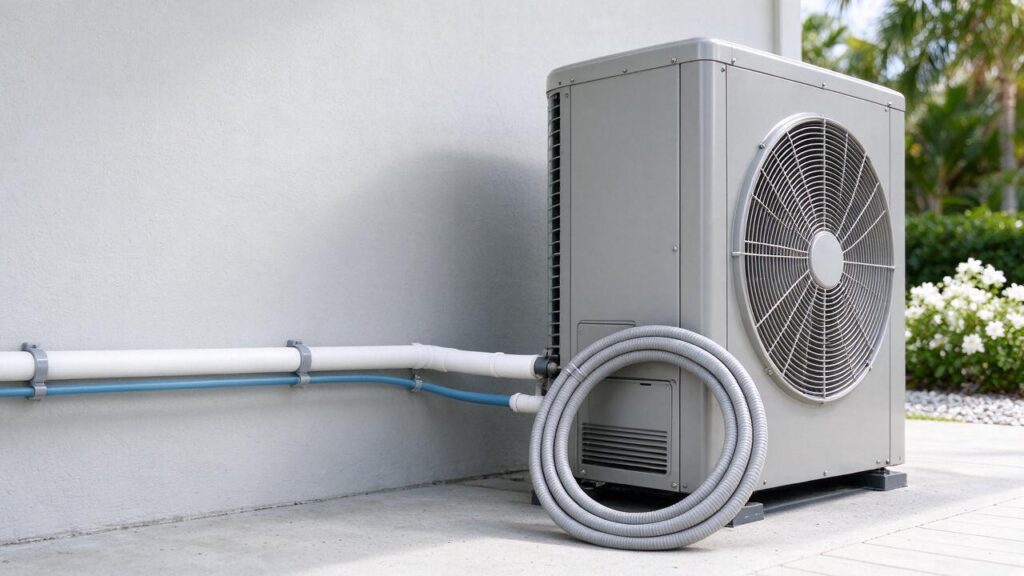
An AC unit that hums but does not run usually means power is reaching the equipment. Something is stopping the compressor or fan motor from starting. The hum is not a normal sound, and it is not a diagnosis on its own. The safe first step is to stop the system at the thermostat and at the outdoor disconnect. Then have a qualified HVAC technician find the cause. Do not force the unit to run or open any panels.
This guide explains what the symptom can mean, which observations are safe to make, what changes the next decision, and what a technician will measure before any repair talk begins.
What “Humming But Not Running” Means
The symptom describes a clear situation. The unit has electrical power. Something near it is energized enough to hum. But the parts that should start — the outdoor fan, the compressor, or both — do not turn. Cooling depends on those parts working together. A unit that hums without running cannot cool your home, even if the indoor blower still moves air.
Keep the symptom separate from a diagnosis. Several different faults can produce the same hum-without-running behavior. A symptom alone does not tell you which part failed. Guessing can lead to replacing parts that were never the problem. Only measurements from a qualified technician can confirm the cause.
Safe Observations You Can Make First
Before calling for service, make a few external checks. None of them require opening the cabinet, touching wiring, or testing parts.
- Note where the hum comes from. Is it the outdoor unit, the indoor air handler, or both? A general location helps. You do not need to name a part.
- Check the thermostat setting. Confirm the system is set to cool and the setpoint is below the room temperature. A settings mistake is one of the few causes you can rule out safely.
- Look at the circuit breaker. Note whether the AC breaker has tripped. You may reset it once. If it trips again, stop and leave it off.
- Check the outdoor disconnect. Confirm it is in the on position. Do not open it or touch internal contacts.
- Look and listen from a distance. Note any burning smell, smoke, ice on the lines or coil, standing water near electrical equipment, or a fan that is not spinning.
- Check the air filter. A badly clogged filter restricts airflow. This is a maintenance item homeowners can safely handle, per general guidance from ENERGY STAR.
Write down what you see. These facts help the technician work faster. They are observations, not conclusions.
Stop Signs: When to Shut Down and Call Right Away
Some conditions change the picture at once. Stop the system at the thermostat and the disconnect, and request qualified help, if you notice any of these:
- Smoke or a smell of electrical burning
- Repeated breaker trips
- Water contacting electrical equipment in an unsafe way
- Severe or grinding noise
- An outdoor fan that is not spinning at all while the unit is energized
In these cases, the goal is preventing damage or hazard. Do not keep running the system to “see what happens.”
What Changes the Next Decision
The right next step depends on conditions, not on the symptom alone. Several factors shift the decision:
- Safety stop signs. Burning smells, repeated breaker trips, or a non-spinning outdoor fan move you straight to shutdown and professional service.
- Whether the problem recurs. A one-time event that clears after a single breaker reset is different from a unit that hums and fails to start every cycle.
- System age and repair history. A newer system under active manufacturer coverage points toward a repair talk. An older system with a history of issues may call for a broader evaluation.
- Maintenance condition. A system with neglected filters, coils, or drains may have contributing issues a technician should assess along with the starting problem.
- What the measurements show. Only electrical, mechanical, and refrigerant-side measurements can sort out the plausible causes.
What a Qualified Technician Evaluates
Diagnosis of a humming-but-not-running unit takes instruments and training. A qualified technician will typically verify the electrical supply and controls, test starting components with proper equipment, inspect the fan motor and compressor electrically, and check refrigerant-side conditions when needed. Refrigerant work, when required, must follow EPA-certified handling practices.
Here is the boundary that matters. A homeowner can observe and report. Testing capacitors, opening energized equipment, bypassing safety controls, or handling refrigerant is not safe DIY work. A confirmed diagnosis comes from measurements, not from a symptom description.
The Next Decision: Maintenance, Repair, or Replacement
Once a technician confirms the cause, the decision usually falls into one of three paths:
- Maintenance. If the evaluation points to airflow or upkeep issues — such as a clogged filter or dirty coil — a maintenance visit may resolve them. Homeowner tasks like filter changes and professional tasks like coil and drain checks follow the homeowner-versus-professional boundaries in ENERGY STAR maintenance guidance.
- Repair. If one component failed and the rest of the system is in good shape, a targeted repair is often the path. Warranty-aware repair practices apply when manufacturer coverage is active. Warranty terms vary by equipment and documentation.
- Replacement. When the findings, the system’s age, and the repair cost relative to the system’s remaining value all point the same way, replacement becomes a reasonable talk. This choice should rest on evidence from the evaluation, not on the symptom alone.
Velocity offers 24/7 repair availability, and same-day dispatch may be available when a technician is available. Velocity does not add a separate night or weekend service charge.
Call-Preparation Checklist
Before you request service, have these details ready:
- When you first noticed the hum and whether the unit ever started
- Whether the hum comes from the outdoor unit, indoor unit, or both
- Breaker and disconnect status, and whether a breaker has tripped more than once
- Any burning smell, smoke, ice, water, or unusual noise you observed
- The system’s approximate age and any recent repair or maintenance history
Frequently Asked Questions
How do I know whether an AC unit humming but not running needs service?
If the unit hums but the fan or compressor does not start, treat it as a fault that needs professional evaluation. Shut the system down at the thermostat and disconnect. If there is a burning smell, smoke, repeated breaker trips, unsafe water contact, severe noise, or a non-spinning outdoor fan, request qualified help right away rather than waiting.
What information should I gather before calling?
Collect only safe, external observations: where the hum seems to come from, whether the breaker tripped, whether the disconnect is on, and whether you notice smells, ice, water, or noise. Add the system’s approximate age and service history. Do not open panels or test parts to gather more detail.
Can a homeowner safely fix an AC unit that hums but does not run?
Homeowners can safely check thermostat settings, replace a clogged air filter, and reset a tripped breaker once. Beyond that, no. Diagnosis requires electrical testing. Internal repairs involve energized equipment and, at times, refrigerant that requires EPA-certified handling. Attempting internal work risks injury and further damage.
What does a technician check for this symptom?
A technician verifies electrical supply and controls, tests starting components with proper instruments, inspects the fan motor and compressor electrically, and checks refrigerant-side conditions when relevant. The goal is a confirmed diagnosis based on measurements, so the repair addresses the actual failed part rather than a guess.
When does this symptom become a repair-versus-replacement conversation?
That talk begins when the findings show a major component failure, when the system is older or has a pattern of recurring problems, or when the confirmed repair cost is high relative to the system’s remaining value. The decision should follow the evaluation evidence, not the hum itself.
If your AC unit is humming but not running, the safest path is simple. Shut it down, note what you can safely observe, and request service with a qualified technician. For related cooling topics, see our guides on air conditioning repair and air conditioning maintenance.