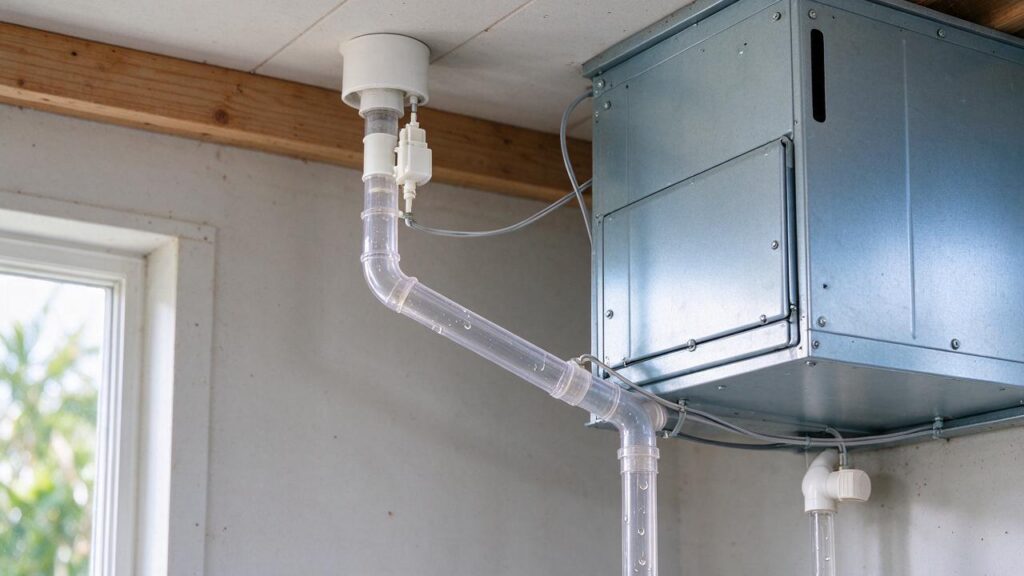
After a storm, an AC unit can show several different symptoms: it may not cool, it may make strange noises, or it may leak water. The safe approach is to observe what you can see and hear from a distance, avoid assuming you know the cause, and let a qualified HVAC technician measure the system before any repair decision is made. More than one cause is possible, and the symptom alone does not tell you which one applies to your equipment.
What “AC Unit After Storm” Practically Means
“AC unit after storm” is not a diagnosis. It is a starting point: your cooling system changed behavior around the time of a storm, and you need to figure out what that means. In practical terms, it usually shows up as one or more observable changes:
- The system runs but the air coming from the vents is not cool.
- The outdoor unit does not start, or the fan does not spin.
- You hear new or unusual sounds from the outdoor unit.
- Water is pooling near the indoor unit or the drain line is overflowing.
- The breaker for the air conditioner has tripped.
Each of these is an indicator, not a conclusion. Storms can affect outdoor equipment in several ways, including electrical disturbances, debris, and water exposure, but which of those applies to your system can only be confirmed by inspection and measurement.
Safe Observations Before Calling for Service
There are useful, non-invasive things you can do before contacting a technician. None of these involve opening equipment, touching electrical components, or handling refrigerant:
- Look at the outdoor unit from a safe distance for visible damage, debris, or displaced panels.
- Listen for whether the outdoor fan and the indoor blower are running.
- Check whether the AC breaker in your electrical panel has tripped, and note it. Do not repeatedly reset a breaker that keeps tripping.
- Check whether the air filter is visibly loaded with dust, since a restricted filter affects cooling performance at any time of year.
- Note whether water is standing near electrical equipment, the indoor unit, or the outdoor unit.
- Write down what changed, when it changed, and anything you heard or smelled.
These notes give a technician a faster, more accurate starting point. General maintenance boundaries, such as homeowner-level filter checks versus professional coil, drain, and control checks, are described by ENERGY STAR, and basic cooling-cycle operation is outlined by the U.S. Department of Energy.
Conditions That Change the Immediate Action
Some observations mean you should stop the system and request qualified help right away rather than continuing to run it:
- Smoke or a smell of electrical burning.
- Repeated breaker trips.
- Water contacting electrical equipment, or the unit sitting in standing water.
- Severe or grinding noise from the outdoor unit.
- An outdoor fan that is not spinning while the system runs.
If any of these apply, turn the system off at the thermostat and request service. If none of these apply and the system simply is not cooling well, a scheduled diagnostic visit is the appropriate next step. Either way, the observations above, not guesses, drive the decision.
What a Qualified Technician Evaluates
A technician does work a homeowner should never do: opening energized equipment, testing electrical components such as capacitors, bypassing safety controls, or handling refrigerant. Refrigerant work requires EPA-certified handling practices, and repairs on equipment under manufacturer coverage should follow warranty-aware practices, since warranty terms and registrations vary by equipment and documentation.
A diagnostic visit typically includes verifying electrical readings, inspecting the outdoor unit for storm-related damage, checking refrigerant pressures, confirming that safety controls operate correctly, and evaluating the indoor components that affect cooling. The technician’s measurements, not the symptom, produce the diagnosis.
From Observation to Decision: Repair, Maintenance, or Replacement
Once the technician has evidence, the decision path becomes clearer:
- Symptom versus diagnosis: Confirm what is actually wrong before agreeing to any specific repair.
- Maintenance versus repair: Some post-storm problems turn out to be maintenance issues, such as a clogged drain or restricted filter, rather than damaged components.
- Repair versus replacement: When findings show extensive damage, the technician’s evidence, the equipment’s age, and the scope of repair inform whether repair or replacement makes more sense. This conversation should be driven by measured findings, not by the storm event alone.
If you reach this point, you can request air conditioning repair or contact us to schedule service. Velocity offers 24/7 repair availability, and same-day dispatch may be available when a technician is available. Velocity does not add a separate night or weekend service charge.
Call-Preparation Checklist
Before you call, have this ready:
- What the system is doing now, in plain terms.
- When the behavior started relative to the storm.
- Any tripped breakers, unusual sounds, smells, or water you observed.
- Whether the outdoor fan spins and the indoor blower runs.
- The equipment’s approximate age, if you know it.
Focused FAQs
How do I know whether my AC unit after a storm needs service?
If the system is not cooling, will not start, is making new noises, or is leaking water, it needs evaluation. If you see smoke, smell burning, experience repeated breaker trips, see water near electrical equipment, hear severe noise, or notice a non-spinning outdoor fan, stop the system and request qualified help promptly.
What information should I gather before calling?
Note the symptoms, when they started, any tripped breakers, sounds, smells, or water you observed, and whether the outdoor fan and indoor blower run. These safe observations help the technician diagnose faster.
Can a homeowner safely fix an AC unit after a storm?
Homeowners can make safe observations, but should not open energized equipment, test capacitors, bypass safety controls, or handle refrigerant. Diagnosis and repair require a qualified technician with the right tools and certifications.
What does a technician check for an AC unit after a storm?
A technician verifies electrical measurements, inspects the outdoor unit for damage, checks refrigerant pressures, confirms safety controls, and evaluates indoor components. These measurements, not the symptom, determine the diagnosis.
When does an AC unit after a storm become a repair-versus-replacement conversation?
When diagnostic findings show extensive damage or a repair scope that warrants comparing repair cost against replacement, the technician’s evidence, the equipment’s age, and the repair scope inform that decision. It should be based on measured findings, not assumptions.