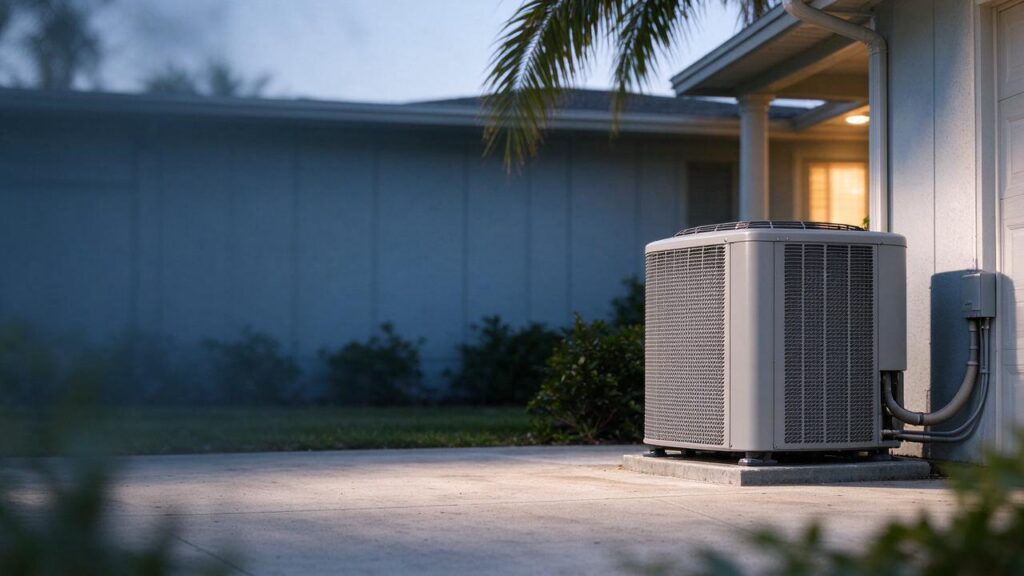
When your AC turns on but no air comes out, the system is running but the blower is not moving air through your ducts. This is a symptom, not a diagnosis. Several different problems can produce it, and only a qualified technician with the right tools can confirm which one applies to your system. What you can safely do right now is make a few simple observations, note what you see, and then decide whether to request service.
What “AC Turns On But No Air Comes Out” Actually Means
In practical terms, your thermostat is calling for cooling, the system responds, but little or no air flows from your supply vents. The outdoor unit may run normally, or the whole system may sit quietly. Either way, the cooling cycle cannot do its job without airflow, because a central air conditioner depends on the blower moving air across the indoor coil and through the ductwork. The U.S. Department of Energy’s home cooling guidance describes this cooling-cycle operation as the foundation of how central systems work.
It is important to keep two ideas separate. The observable symptom is what you can see and hear: the system starts, but no air comes from the vents. The diagnosis is the measured cause, which might be an airflow restriction, an electrical or control issue, or a blower problem. A symptom alone never confirms a failed part, so treat everything below as possibilities until a technician measures the system.
Safe Observations You Can Make Right Now
Before calling for service, a few checks are safe and genuinely useful. None of them involve opening equipment, touching wiring, or handling refrigerant.
- Check the thermostat fan setting. If the fan is set to “on” rather than “auto,” note it. Confirm the thermostat is calling for cooling and has working power.
- Look at the air filter. A severely clogged filter can restrict airflow enough that very little air reaches the vents. If the filter is visibly loaded with dust, note that fact for your technician.
- Listen at the indoor unit. Note whether you hear the blower attempt to start, hear a hum with no movement, or hear nothing at all. Do not open the cabinet to investigate.
- Check the vents. Confirm whether the issue affects every room or only some registers, and whether any vents are blocked by furniture or closed.
- Watch the outdoor unit. Note whether it runs, cycles off quickly, or if the outdoor fan is not spinning. A non-spinning outdoor fan is a stop sign described below.
Write down what you observe, including when the problem started and whether it is constant or intermittent. These notes help a technician diagnose faster.
Stop Signs: When to Shut Down and Call for Help
Some conditions should end your troubleshooting immediately. Stop the system and request qualified help if you notice any of the following:
- Smoke or any smell of electrical burning
- Repeated breaker trips
- Water where it could create an unsafe contact with equipment
- Severe or unusual noise
- An outdoor fan that is not spinning
Do not restart the system after any of these signs. Velocity offers 24/7 repair availability, and same-day dispatch may be available when a technician is available. Velocity also states that it does not add a separate night or weekend service charge.
What Changes the Safe Answer
The right next step depends on a few conditions rather than the symptom alone:
- Whether airflow is completely absent or just weak. Weak airflow points toward different possibilities than no airflow at all, but neither confirms a cause.
- Whether the filter is clogged. A loaded filter is a maintenance issue; replacing it is a reasonable homeowner task. It may or may not resolve the symptom.
- Whether the problem is constant or intermittent. Intermittent symptoms suggest something a technician should observe over time.
- Whether safety stop signs are present. Any stop sign changes the decision from observation to shutting the system down and requesting help.
- Whether the system has been maintained. ENERGY STAR’s maintenance checklist places filter, drain, coil, control, and blower checks on a regular maintenance schedule, which is work for a homeowner or professional depending on the task.
What a Qualified Technician Evaluates
Confirming the cause requires measurements and inspections that are not safe or practical for a homeowner. A qualified technician will typically evaluate airflow, the blower assembly, electrical components and controls, the condition of coils and drains, and, when relevant, refrigerant pressures. Any refrigerant work must be performed under EPA-certified refrigerant handling practices, which is a compliance boundary, not a suggestion.
If your equipment is still under manufacturer coverage, warranty-aware repair practices apply, and warranty terms and registrations vary by equipment and documentation. Keep any paperwork handy when you call.
Choosing Your Next Decision
Once the symptom is understood, three decision paths usually apply:
- Maintenance versus repair. If the evidence points to a restricted filter or a maintenance-related airflow issue, routine maintenance may be the answer. See Velocity’s air conditioning maintenance service.
- Repair. If a technician’s measurements identify a failed or failing component, a repair is the typical path. Velocity’s air conditioning repair team can evaluate and confirm the diagnosis.
- Repair versus replacement. When evidence supports it, such as equipment condition and repair history, a technician can lay out both options so you can compare them on facts rather than assumptions.
In Florida’s hot climate, losing cooling is not a minor inconvenience, so it is reasonable not to let the system sit unresolved for long. That said, every building and system is different, and no universal claim about load, humidity, or duct conditions applies to every Florida home.
Prepare Before You Call
A short checklist makes the service call more productive:
- Thermostat setting and whether the display is working
- Filter condition and the last time it was changed, if known
- What you hear at the indoor unit when the system starts
- Whether the outdoor unit runs and whether its fan spins
- Which rooms have no airflow and when the problem began
- Any stop signs you observed, and whether the system is currently off
When you are ready, you can request service through Velocity’s contact page.
Focused FAQs
How do I know whether AC turns on but no air comes out needs service?
If the symptom persists after you confirm the thermostat setting and check for a clogged filter, it needs professional evaluation. Any stop sign, such as smoke, burning smells, repeated breaker trips, unsafe water contact, severe noise, or a non-spinning outdoor fan, means stop the system and request qualified help immediately.
What information should I gather before calling?
Note the thermostat fan setting, the filter’s condition, what you hear at the indoor unit, whether the outdoor unit and its fan run, which rooms lack airflow, and when the problem started. These safe observations help a technician diagnose efficiently without you opening any equipment.
Can a homeowner safely fix this problem?
A homeowner can safely replace a clogged filter and make observations. A homeowner should not open energized equipment, test electrical components, bypass safety controls, or handle refrigerant. The actual diagnosis requires a qualified technician’s measurements.
What does a technician check for this symptom?
A technician evaluates airflow, the blower assembly, electrical components and controls, coils and drains, and refrigerant pressures when relevant. Refrigerant work is performed under EPA-certified refrigerant handling practices, and warranty-aware practices apply if manufacturer coverage is still active.
When does this become a repair-versus-replacement conversation?
Only when a technician’s measured evidence supports it, considering the equipment’s condition and repair history. The symptom alone never justifies a replacement recommendation, so wait for the diagnosis before weighing repair against replacement.