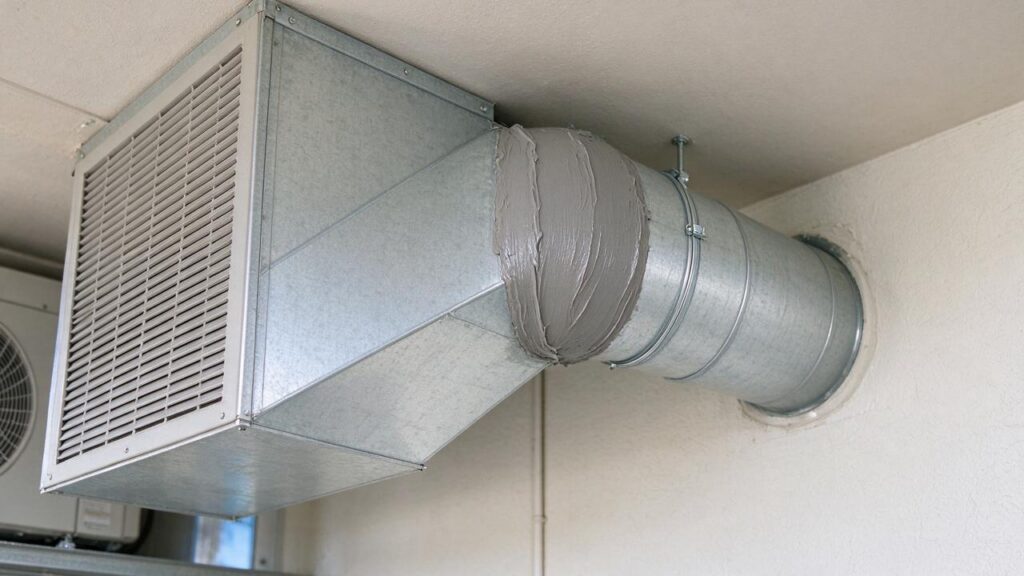
When your AC turns on but the fan does not, the system has power. But a fan — usually the indoor blower or the outdoor condenser fan — is not moving air. The cause could be a restricted filter, an electrical problem, or a failed part. The symptom alone does not tell you which. Check a few safe things first. Note any warning signs. Then decide whether to request qualified service.
What “AC Turns On But Fan Does Not” Actually Means
This symptom describes a specific condition. The air conditioner gets power and appears to start. But one of its fans does not spin, or it does not move air the way it should. That breaks the cooling cycle. An air conditioner removes heat from your home by moving air across coils. If a fan is not running, that heat transfer cannot happen. The rest of the system may still be energized.
It helps to know which fan is involved. The indoor blower pushes air through your ducts and vents. The outdoor fan pulls air across the condenser coil outside. Either one failing to run produces a version of this symptom. But they point to different parts of the system. Identifying which fan is silent is one of the most useful facts you can collect before calling for service.
Stop Signs: When to Shut the System Down and Call for Help
Some conditions should end your troubleshooting right away. Stop the system and request qualified help if you notice any of the following:
- Smoke or a smell of electrical burning
- Repeated breaker trips
- Unsafe contact between water and electrical parts
- Severe or grinding noise from the equipment
- An outdoor fan that is not spinning while the system runs
A non-spinning outdoor fan deserves special attention. When the outdoor fan does not run, the system cannot reject heat outdoors. Continued operation can stress the equipment. Treat that as a stop-and-call condition. Do not wait it out.
Safe Homeowner Checks Before Scheduling Service
You can make a few observations without opening equipment or touching electrical parts. These checks gather facts. They do not confirm a diagnosis.
- Check the air filter. A heavily loaded filter restricts airflow. That can contribute to fan and airflow problems. If the filter is visibly dirty, replacing it is a safe, routine maintenance step.
- Check supply and return vents. Make sure vents are open and not blocked by furniture, curtains, or debris. Restricted vents change how air moves through the system.
- Note which fan is silent. Stand near the outdoor unit — without opening it — and see whether the outdoor fan spins. Listen at a supply vent to check whether any air is moving.
- Check the thermostat setting and mode. Confirm the system is set to cool. Make sure the fan setting matches your normal preference. Simple setting errors sometimes mimic equipment problems.
- Listen and record. Note humming, clicking, or silence, and when the behavior started. These details help a technician narrow the cause faster.
What you should not do: open panels on energized equipment, test or touch capacitors, bypass any safety control, or handle refrigerant. Those tasks require qualified training and equipment.
Possible Causes — and Why They Are Only Possibilities
Several conditions can produce this symptom. Published guidance from manufacturers such as Carrier points to categories like capacitor and motor issues. It also covers electrical-safety boundaries for outdoor fans. Other possibilities include airflow restrictions from filters or blocked vents, control or thermostat issues, and problems elsewhere in the cooling cycle.
The key point is this: a symptom is not a diagnosis. Two homes with the same “fan does not run” behavior can have very different causes. Only measurements and tests by a qualified technician can confirm which cause applies to your system. Treat every item in this section as a possibility to be verified — not a conclusion.
What a Qualified Technician Measures and Verifies
When a technician arrives, the diagnostic work goes beyond what a homeowner can safely observe. Depending on the symptom, that work may include:
- Verifying electrical supply, controls, and safety switches
- Testing capacitors and fan motors with proper instruments
- Measuring airflow and checking the blower assembly
- Inspecting coils, drains, and filters as part of the cooling system’s condition — the homeowner-versus-professional split described in the ENERGY STAR maintenance checklist
- Checking refrigerant-related measurements, which must be handled under EPA-certified refrigerant practices when refrigerant work is performed
The technician’s findings — not the symptom alone — determine the next step. Ask for the measured evidence behind any recommended repair. That helps you make an informed decision.
How the Answer Changes: Three Decision Paths
The right next move depends on what the observations show. Three decision paths cover most situations:
| What you observe | What it may indicate | Reasonable next step |
|---|---|---|
| Dirty filter or blocked vents, fan behavior otherwise normal | Airflow restriction rather than an equipment fault | Safe maintenance: replace the filter, clear vents, and recheck |
| Air moves weakly or unevenly through the home | An air-distribution issue rather than a cooling-capacity issue | Collect observations and schedule an airflow evaluation |
| Fan silent, humming, tripping breakers, or outdoor fan not spinning | A possible equipment or electrical issue — unconfirmed until measured | Stop the system and request qualified service |
Florida’s long cooling seasons mean systems run hard for much of the year. That makes prompt attention to airflow symptoms practical. But conditions vary from home to home. No universal claim applies to every building or system.
Maintenance That Supports Fans and Airflow
Routine maintenance is the most reliable way to reduce airflow and fan problems over time. The U.S. Department of Energy describes cooling-cycle basics and the role of maintenance in keeping cooling systems operating as designed. In practice, that means:
- Replacing or cleaning filters on the schedule your system and household conditions call for
- Keeping supply and return vents unobstructed
- Scheduling professional maintenance that covers coils, drains, controls, and blower checks
- Keeping the outdoor unit clear of debris around it — without opening or disassembling anything
Warranty-aware repair practices apply when manufacturer coverage remains active. Warranty terms and registrations vary by equipment and documentation, so keep your records available.
Repair or Replace? How That Conversation Starts
A “fan does not run” symptom does not by itself answer the repair-versus-replacement question. That conversation depends on what the technician’s measurements reveal. It also depends on the age and overall condition of the equipment, and whether the issue is isolated or part of a broader pattern. Ask for the diagnostic evidence, the repair options it supports, and how each option relates to any remaining manufacturer coverage before deciding.
Frequently Asked Questions
How do I know whether this symptom needs service?
Stop the system and request qualified help if you see smoke, smell electrical burning, or experience repeated breaker trips. The same applies to unsafe water contact, severe noise, or a non-spinning outdoor fan. Otherwise, complete the safe checks — filter, vents, settings, and observations. Schedule service if the fan still does not run.
What information should I gather before calling?
Note which fan is silent and when the behavior started. Record any sounds you hear, whether the filter and vents are clear, your thermostat settings, and whether breakers have tripped. These safe observations give the technician a faster starting point.
Can a homeowner safely fix this problem?
Safe maintenance steps are appropriate for homeowners. These include replacing a dirty filter and clearing blocked vents. Anything involving energized equipment, capacitors, safety controls, or refrigerant must be left to a qualified technician.
What does a technician check for this symptom?
A technician verifies electrical supply and controls. They test capacitors and fan motors with proper instruments, measure airflow, and inspect coils, drains, and the blower assembly. Refrigerant-related work is performed under EPA-certified refrigerant handling practices.
When does this become a repair-versus-replacement conversation?
Only after diagnosis. The technician’s measurements, the equipment’s age and condition, and the confirmed problem determine whether a repair or a replacement makes more sense. The symptom alone cannot answer that question.
Get a Professional Airflow Evaluation
If your AC turns on but the fan does not, and the safe checks have not resolved it, the next step is a professional evaluation. Velocity offers 24/7 repair availability. Same-day dispatch may be available when a technician is available. Velocity does not add a separate night or weekend service charge. Request service or learn more about air conditioning repair and air conditioning maintenance.