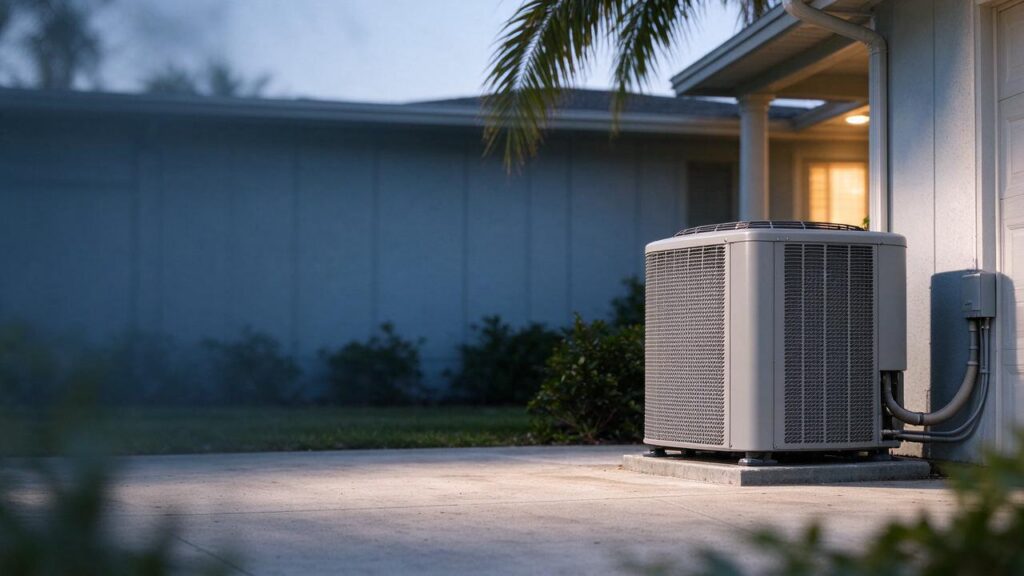
Ac temperature differential is the difference between the air going into your system and the air coming out. It can point to several conditions, from normal operation to a maintenance need or a repair issue. No single reading confirms a failed part by itself. A qualified technician must measure the system to find the cause. What you can safely do is make a few basic observations, stop the system if anything unsafe occurs, and gather facts that will help a technician diagnose the problem.
This guide explains what temperature differential means, which observations are safe before service, what conditions change the next decision, and what a technician will evaluate. It is written for Florida cooling contexts, where long cooling seasons put steady demand on air conditioning systems. Every building and system is still different.
What Temperature Differential Means
In cooling, temperature differential (sometimes called temperature split) is the gap between the air entering your return grille and the air leaving your supply vents. A healthy cooling cycle moves heat out of your home. The gap between return and supply air is one indicator technicians use to see how that process is working.
Here is the key boundary: the differential is an observation, not a diagnosis. A reading that seems high or low can have many causes. Airflow limits, coil condition, refrigerant concerns, thermostat behavior, or even how the measurement was taken can all play a role. The U.S. Department of Energy’s home cooling guidance stresses that cooling performance depends on the whole system working together. No single number tells the whole story.
A differential that seems unusual is a reason to gather information and schedule qualified help — not a conclusion about which part has failed.
Safe Observations Before Service
You do not need tools, open panels, or electrical access to collect useful facts. ENERGY STAR’s maintenance guidance draws a clear line between homeowner tasks and professional checks. The observations below stay on the homeowner side of that line:
- Check the filter. Look for dust buildup or a filter left in place far past its rated life. A restricted filter is one plausible cause of airflow problems, but only testing confirms it.
- Confirm vents are open. Note whether furniture, rugs, or closed louvers block supply vents.
- Review thermostat settings. Confirm the mode, fan setting, and setpoint are what you intend.
- Listen and look from a distance. Note odd sounds, water where it should not be, or an outdoor fan that is not spinning.
- Write down what you saw and when. A short timeline helps the technician.
What you should not do: open energized equipment, test capacitors, bypass a safety control, or handle refrigerant. Those tasks require qualified training and equipment.
Safety Stop Signs: Stop the System and Call for Help
Some observations end the information-gathering phase right away. Stop the system and request qualified help if you notice any of these:
- Smoke or the smell of electrical burning
- Repeated breaker trips
- Unsafe water contact with electrical parts
- Severe or sudden loud noise
- An outdoor fan that is not spinning while the system runs
These signs call for professional attention no matter what the temperature differential appears to be.
What Changes the Answer
The same observation can lead to different next steps. Conditions that change the decision include:
- Maintenance history. Overdue filter changes or skipped professional care points toward a maintenance visit first. ENERGY STAR’s checklist places filters, drains, coils, controls, and blower checks within professional maintenance boundaries.
- Recent work or events. A recent repair, power outage, or storm can change what a technician checks first.
- System age and condition. Older equipment with a pattern of issues may justify a broader evaluation. A newer system with a clean history may not.
- How the symptom behaves. A differential that seems off only sometimes differs from one that is always off.
Florida’s long cooling season means systems run heavily. But no universal claim applies to every home. Humidity, duct design, insulation, and equipment vary building by building. A technician’s measurements account for those differences.
What a Qualified Technician Evaluates
Moving from symptom to diagnosis requires checks only a qualified technician should perform. A professional evaluation for a differential concern typically covers airflow, coil condition, refrigerant circuit performance, and electrical components and controls. When refrigerant work is done, EPA-certified handling practices apply. If your equipment is still under manufacturer coverage, warranty-aware repair practices apply. Warranty terms and registrations vary by equipment and documentation.
This is the step where plausible causes become a confirmed diagnosis. The technician’s measurements — not the symptom alone — determine what is actually wrong.
Your Next Decision
Once observations and technician findings are in hand, the decision usually follows one of three paths:
- Schedule maintenance. If findings point to overdue care — filters, coils, drains, or blower condition — a maintenance visit is often the right next step.
- Schedule repair. If testing finds a failed or failing component, a targeted repair is the path. Velocity offers 24/7 repair availability, and same-day dispatch may be available when a technician is free. Velocity states that it does not add a separate night or weekend service charge.
- Consider replacement. If evidence supports it — such as findings that repair is not practical for the equipment’s condition — repair-versus-replacement becomes the conversation. That decision should rest on documented findings, not the symptom alone.
When you call, having your notes ready shortens the conversation. Note when the symptom started, what you checked, and any safety signs you saw.
Focused FAQs
How do I know whether ac temperature differential needs service?
You don’t decide from the reading alone. If the differential seems unusual along with weak airflow, warm supply air, or comfort problems, service is worth scheduling. If any safety stop sign appears — smoke, burning smell, repeated breaker trips, severe noise, or a non-spinning outdoor fan — stop the system and request qualified help right away.
What information should I gather before calling?
Stick to safe observations: filter condition, vent blockages, thermostat settings, when the symptom began, odd sounds or water, and whether the problem is constant or intermittent. Do not open panels or take electrical measurements.
Can a homeowner safely fix ac temperature differential?
Homeowners can safely replace a filter and clear vent blockages. But finding the cause of an unusual differential requires technician-level measurements of airflow, coils, refrigerant, and electrical parts. Opening energized equipment, testing capacitors, bypassing safety controls, or handling refrigerant is not safe for homeowners.
What does a technician check for ac temperature differential?
A qualified technician verifies airflow, inspects coil and drain condition, evaluates the refrigerant circuit with EPA-certified handling where applicable, and tests controls and electrical parts. Those measurements separate plausible causes and confirm the actual diagnosis.
When does ac temperature differential become a repair-versus-replacement conversation?
When a technician’s findings show that repair is not practical for the equipment’s condition or history, replacement becomes the discussion. That decision should rest on documented measurements and equipment condition — never on the differential observation alone.