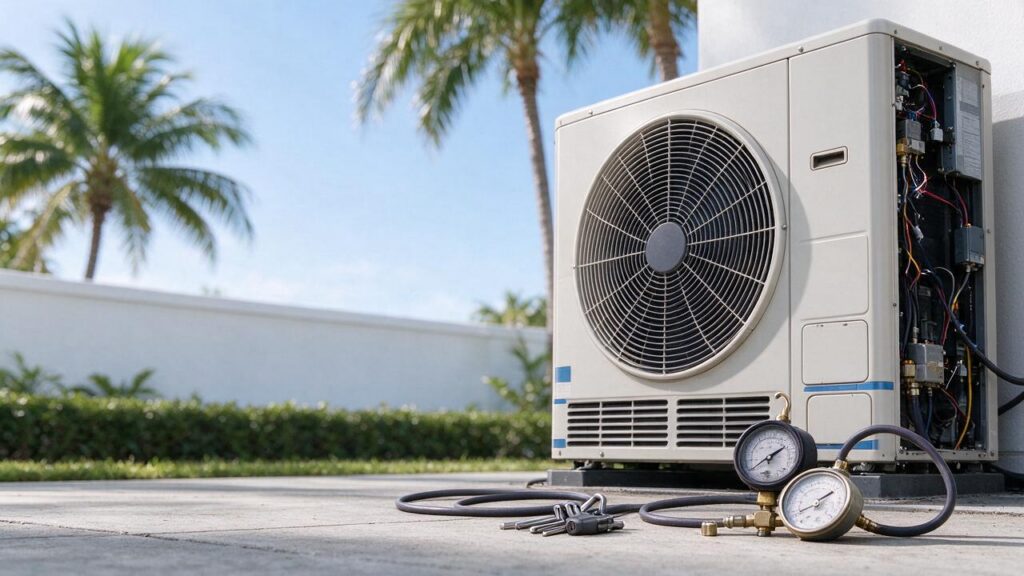
Ac system code requirements Florida are the state and local rules that govern how cooling systems get installed, serviced, and kept safe. They cover installation practices, electrical standards, refrigerant handling, and records for permitted work. Maybe you are researching these rules because of a cooling problem. Maybe you plan a replacement or question past work. Here is the honest answer: you can safely observe and document conditions. Only a qualified technician or permitting authority can confirm whether a system meets current requirements. This guide explains what those rules mean for your cooling decision, what you can safely check, and what evidence a professional needs first.
What Code Requirements Mean for Your AC System
Building and mechanical codes exist to keep cooling equipment safe and functional. For an air conditioning system, these rules generally touch a few areas. They cover how equipment is installed. They cover how electrical connections are made. They cover how refrigerant is handled. They also cover how condensate drainage is managed. Florida’s cooling demand means systems run long hours for much of the year. So installation quality and steady upkeep have a big effect on performance.
It helps to separate three questions that often get blended together:
- Compliance: did the installation and any recent work meet the rules that applied when the work was done?
- Condition: is the equipment currently operating safely and effectively, no matter when it was installed?
- Maintenance: have filters, drains, coils, controls, and blower parts been kept in good shape, as the U.S. Department of Energy’s cooling guidance and the ENERGY STAR maintenance checklist describe?
A system can be compliant but poorly maintained. It can also be well maintained but installed in a way that no longer matches current expectations. Knowing which question you are really asking changes who you call and what you ask for.
Safe Observations You Can Make Before Service
You do not need to open panels, test electrical parts, or handle refrigerant to gather useful information. In fact, you should not. Never open energized equipment, test capacitors, bypass a safety control, or attempt refrigerant work. Refrigerant handling requires EPA-certified practices. What you can safely do is observe and record:
- Whether cooling is uneven between rooms or weaker than you remember.
- Whether the outdoor unit runs, cycles oddly, or makes new or severe noises.
- Whether water pools near the indoor unit or drain line, or whether the drain looks clogged.
- Whether filters are visibly dirty or overdue for replacement.
- Whether energy bills have climbed without a change in how you use the system.
- Any documentation you have from past installations, permits, or service visits.
These notes describe symptoms and history. They are not a diagnosis. Two systems can show the same symptom for entirely different reasons. That is why the next section matters.
Stop Signs: When to Shut Down and Call for Help
Some observations should end your troubleshooting right away. Stop the system and request qualified help if you notice smoke. Do the same for a smell of electrical burning, repeated breaker trips, or water touching electrical parts. Severe or sudden noise counts too. So does an outdoor fan that is not spinning while the system runs. These are safety conditions, not comfort issues. They should not wait for a convenient appointment window. Velocity offers 24/7 repair availability, and same-day dispatch may be available when a technician is free. Velocity also states that it does not add a separate night or weekend service charge. So an after-hours safety concern does not need to be delayed over a surcharge question.
What Changes the Answer
The right next step depends on conditions that a symptom alone cannot reveal. Several factors shift the decision:
- System age and equipment type. Older equipment may raise questions about refrigerant type and parts availability that newer systems do not.
- Prior work history. Recent installations, repairs, or permit records change what a technician checks first.
- The specific observation. A clogged drain line, a dirty filter, and an electrical symptom lead to very different responses. Only measurement separates them.
- Whether safety stop signs are present. Any stop sign turns “should I service this soon” into “shut down and get help now.”
- Local amendments and permit rules. Requirements can vary by jurisdiction and by when work was done. What applied to an older installation may differ from what applies to new work.
This is why no responsible answer can come from a label, a symptom, or a photo alone.
What a Qualified Technician Evaluates
When a technician arrives, the evaluation goes well beyond what a homeowner can safely observe. A professional visit typically includes checking filters, drains, coils, controls, and blower operation. This matches the homeowner-versus-professional boundaries in the ENERGY STAR maintenance checklist. It also includes measuring system performance, inspecting electrical connections, and verifying refrigerant conditions. Refrigerant work requires EPA-certified handling practices.
If your question involves code compliance, a technician or estimator can also review installation conditions and documentation against the rules that apply to the work. If manufacturer coverage is still active, warranty-aware repair practices apply. Warranty terms and registrations vary by equipment and documentation. Having your records ready helps.
Choosing the Next Decision
Once evidence is in hand, the decision usually falls into one of three paths:
- Maintenance. If the system is healthy but upkeep has lapsed, restoring filters, drains, and coils is often the right step. Regular maintenance supports efficient cooling-cycle operation, as the Department of Energy’s cooling guidance emphasizes.
- Repair. If a specific component or condition is identified and the equipment is otherwise sound, a targeted repair guided by measurements is the typical path. Warranty coverage applies where it applies.
- Replacement. If evidence shows the system cannot be restored to reliable, efficient operation at reasonable cost, replacement becomes a legitimate conversation. That conclusion should come from measured findings, not from a single symptom.
Ask any provider to show you the evidence behind the recommendation. A diagnosis you can see explained is one you can act on with confidence.
Preparing for the Call
A short checklist makes any service visit more productive:
- Write down what you observed, when it started, and whether it is constant or intermittent.
- Note any stop signs you saw and whether you shut the system off.
- Gather installation records, permit paperwork, prior invoices, and warranty documents.
- Check or replace your filter if it is visibly dirty, since that is a safe homeowner task.
- Have your questions ready, including anything about past work or documentation.
Focused FAQs
How do I know whether ac system code requirements Florida need to be checked for my home?
Plan new installation or major work? Replacing equipment, buying or selling a property, or questioning past work also counts. Then it is reasonable to have a qualified technician or the relevant permitting authority review the installation and documentation. Routine comfort problems usually start with a condition evaluation rather than a compliance review.
What information should I gather before calling?
Collect your observations, the timeline of the problem, any stop signs you noticed, and all available documentation. That includes permits, invoices, installation records, and warranty papers. This gives the technician a factual starting point instead of a vague description.
Can a homeowner safely fix code-related AC issues?
Safe homeowner tasks are limited to checking or replacing filters and keeping the area around equipment clear. Anything involving electrical parts, refrigerant, or opening energized equipment requires a qualified technician. Refrigerant work specifically requires EPA-certified handling.
What does a technician check for ac system code requirements Florida?
A technician evaluates filters, drains, coils, controls, and blower operation. They measure system performance, inspect electrical and refrigerant conditions, and review installation documentation when the question is compliance-related. Every conclusion should come from measurement, not from the symptom you described.
When does this become a repair-versus-replacement conversation?
When measured findings show the equipment cannot deliver reliable, efficient operation through reasonable repair, replacement becomes a legitimate option. That call depends on the technician’s evidence, the equipment’s age and condition, and your documentation. It does not depend on any single symptom or label.
If you have observed a condition you cannot safely evaluate, or a stop sign that calls for immediate help, request service with Velocity. You can also learn more about air conditioning repair or air conditioning maintenance before you decide which path fits your system.