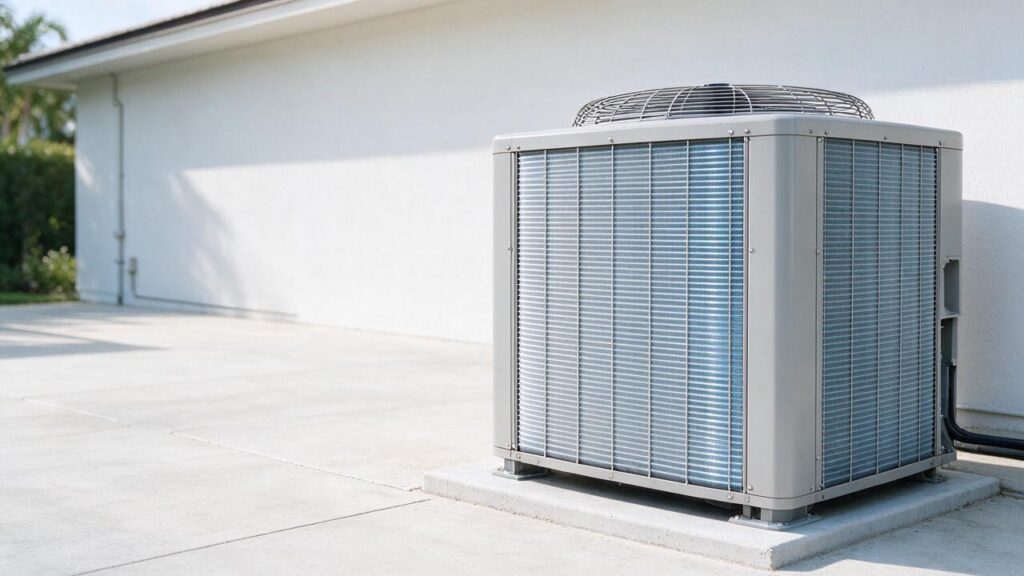
If your AC suction line is not cold, the refrigerant line between your outdoor unit and indoor coil is not absorbing heat the way it should. That can point to an airflow problem, a refrigerant condition, or a failing part. The symptom alone does not tell you which one. A suction line that should feel cold but does not is a sign your cooling system needs professional diagnosis. It is not proof of any single failed part.
This guide explains what the symptom means, what you can safely observe, what conditions change the next decision, and what a technician must measure. It is written for homeowners who want a sound next step without guessing at a repair.
What “Suction Line Not Cold” Means
In a typical AC system, the larger insulated copper line running from the outdoor unit to the indoor coil is the suction line. During normal operation, it carries cool refrigerant vapor back to the compressor. The line usually feels cold and may sweat with condensation.
When that line is not cold, the refrigerant is likely not moving heat out of your home as designed. The U.S. Department of Energy’s home cooling guidance describes a cooling cycle that depends on refrigerant absorbing indoor heat and releasing it outdoors. When any part of that cycle is disrupted, cooling drops. Possible reasons include restricted airflow across the indoor coil, a refrigerant charge condition, or a failing component. Each has a different fix. Only measurements can tell them apart.
Safe Observations You Can Make
You do not need tools or training to gather useful information. Before calling for service, note the following:
- How the system runs: Is the outdoor unit operating? Is the indoor blower moving air?
- Vent air: Is the supply air warmer than usual, or barely cool?
- The line itself: Is it warm, room-temperature, or only slightly cool? Is there frost or ice on the line or near the indoor coil?
- Filter condition: A visibly loaded filter is a safe, useful observation. ENERGY STAR’s maintenance checklist treats filter checks as a homeowner-level task.
- Recent history: Did the problem start suddenly or slowly? Was any work done on the system lately?
Write down what you see. These notes help a technician narrow the cause faster. They are observations, not a diagnosis.
Stop Signs: When to Shut the System Down
Stop the system and request qualified help right away if you notice any of these:
- Smoke or a smell of electrical burning
- Repeated breaker trips
- Unsafe water contact with electrical equipment
- Severe or unusual noise
- An outdoor fan that is not spinning
Do not open energized equipment, test electrical parts, bypass a safety control, or handle refrigerant. Refrigerant work requires EPA-certified handling. Electrical checks belong to qualified technicians.
What Changes the Answer
The same symptom can lead to different next steps depending on conditions around it:
- Airflow: A clogged filter, blocked return, or dirty coil can change how the system runs and how the line behaves.
- Refrigerant history: If the system was serviced for refrigerant before, or you suspect a leak, that changes what a technician checks first.
- Age and repair history: An older system with a pattern of repairs points to a different decision than a newer system with a first-time symptom.
- Recent work: If the symptom appeared right after service or installation, say so when you call.
Florida’s long cooling season means systems run heavy hours. Still, every home, building, and piece of equipment is different. Do not assume your situation matches a neighbor’s or an online example.
What a Qualified Technician Evaluates
A proper diagnosis requires measurements homeowners cannot safely take. A technician will typically verify:
- Refrigerant pressures and temperatures on both sides of the system
- Airflow across the indoor coil and filter condition
- Electrical parts and controls, with power safely off where needed
- Coil and drain condition, following the homeowner-versus-professional boundaries ENERGY STAR describes
- Whether any manufacturer warranty coverage remains active, since terms and registrations vary by equipment and documentation
Only after these measurements can a cause be confirmed. Until then, every explanation — low refrigerant, restricted airflow, a failing part — stays a possibility, not a diagnosis.
Your Next Decision
Once a technician has measured the system, your choice usually falls into one of three paths:
- Maintenance or simple correction: If the cause is restricted airflow, restoring normal conditions may resolve the symptom.
- Repair: If a specific part or refrigerant condition is confirmed, a targeted repair is often the path. Velocity offers 24/7 repair availability. Same-day dispatch may be available when a technician is free. Velocity states it does not add a separate night or weekend service charge.
- Repair-versus-replacement evaluation: If findings show extensive damage, repeated failures, or a case where repair no longer makes sense given age and history, the technician’s evidence should support that call — not a guess from the symptom alone.
How do I know whether ac suction line not cold needs service?
If the suction line is not cold and cooling has dropped, the system is not running normally and deserves a professional look. If you also see smoke, smell burning, hear severe noise, have repeated breaker trips, or see a non-spinning outdoor fan, stop the system and request qualified help right away.
What information should I gather about ac suction line not cold before calling?
Note when the symptom started, whether it came on fast or slow, the filter’s condition, whether the outdoor unit and indoor blower are running, whether the line or coil shows frost or ice, and any recent service. These safe observations speed up diagnosis without any tools.
Can a homeowner safely fix ac suction line not cold?
Homeowners can safely swap a filter and make observations. The underlying cause requires measurements a qualified technician must take. Do not open energized equipment, test capacitors, bypass safety controls, or handle refrigerant. Refrigerant work requires EPA-certified handling.
What does a technician check for ac suction line not cold?
A technician verifies refrigerant pressures and temperatures, airflow across the indoor coil, filter and coil condition, electrical parts and controls, and whether active manufacturer warranty coverage applies. These measurements separate the causes the symptom alone cannot.
When does ac suction line not cold become a repair-versus-replacement conversation?
That talk begins when technician findings — not the symptom itself — show major damage, repeated part failures, or a case where repair no longer makes sense given the system’s age and history. Warranty terms and registrations vary, so coverage should be confirmed with current information.
If your suction line is not cold and you want a diagnosis based on measurements, not guesses, air conditioning repair service is available around the clock. You can also learn about routine air conditioning maintenance to keep the cooling cycle healthy, or request service directly.