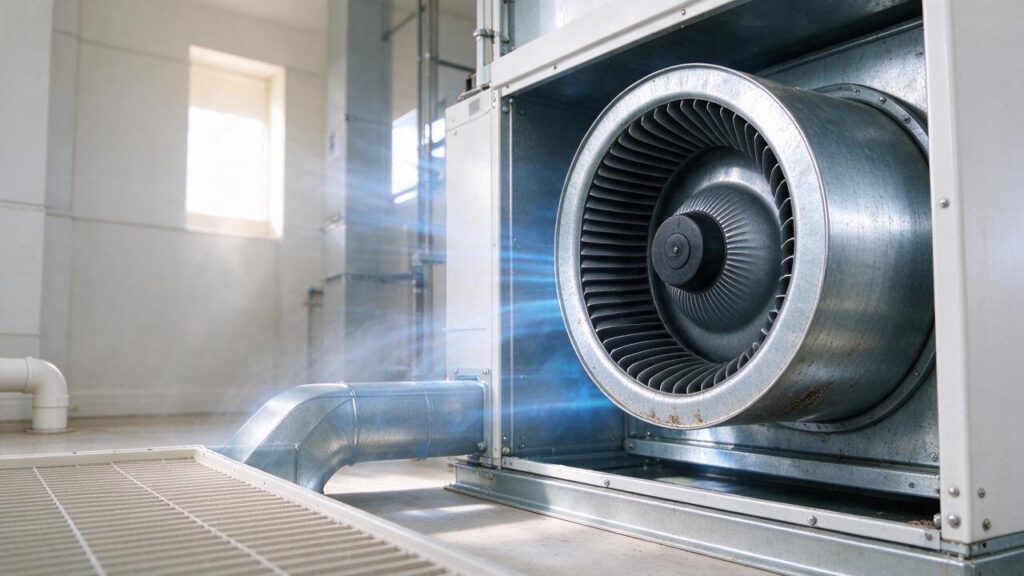
When an AC filter restricts airflow, it means less air is moving through your system than it should. That is a symptom, not a diagnosis. A clogged filter is one common cause, but duct restrictions, blocked vents, blower problems, or other equipment issues can produce similar signs. Start with a few safe observations at home. If you notice any safety warning signs, or the simple checks do not explain the problem, the next step is a qualified HVAC technician who can measure the system and confirm what is actually wrong.
How Airflow Affects Cooling
Airflow is the delivery system for cool air. Your air conditioner does not just make cold air; it moves indoor air across a cold coil, absorbs heat, and sends that cooled air back through your ducts. The U.S. Department of Energy describes this cooling-cycle dependence in its home cooling guidance: the system needs adequate airflow to transfer heat properly.
When airflow drops, several things can happen at once:
- Comfort suffers. Rooms far from the air handler may feel warm first because less cooled air reaches them.
- Efficiency drops. The system may run longer to reach the thermostat setting, using more energy.
- Components can be stressed. Restricted airflow means less air moving across the coil, which in some cases contributes to icing or other operating problems.
This is why a restriction is worth taking seriously even if the system still cools. In Florida’s hot climate, long cooling seasons mean your system spends more hours moving air than in milder regions, so a restriction can affect comfort and operating cost over many months. That said, every home and system is different; duct design, equipment size, and filter habits all vary.
Symptom Differences: What You Can Observe Safely
Not all airflow symptoms point to the same cause, and no symptom alone confirms a diagnosis. Here is how to separate useful observations from warning signs.
Common observations worth noting
- Weak or reduced airflow from supply vents in one or more rooms
- A filter that looks visibly loaded with dust or debris when you inspect it
- Rooms that cool slowly or unevenly compared with the rest of the home
- A return-air grille that seems to pull weakly
Safety stop signs
Stop the system and request qualified help right away if you notice any of the following:
- Smoke or an electrical burning smell
- Repeated breaker trips
- Unsafe water contact with electrical equipment
- Severe or sudden loud noises
- An outdoor fan that is not spinning
Carrier’s residential HVAC guidance emphasizes these electrical-safety boundaries for a reason: a non-spinning outdoor fan or electrical symptoms are not do-it-yourself items. Ice on the refrigerant line or coil is another sign to stop and call, since ice can indicate airflow or refrigerant issues that require professional measurement.
Safe Homeowner Checks
Before calling for service, there are a few non-invasive checks that can narrow things down. Turn the system off at the thermostat before inspecting anything inside the filter slot or opening grilles.
- Inspect the filter. Slide it out and hold it up to a light. If little light passes through, or if the media looks gray and loaded, restriction from the filter itself is plausible. Note the size printed on the frame.
- Check supply and return vents. Make sure furniture, curtains, rugs, or closed doors are not blocking grilles. A blocked return can restrict airflow just as much as a dirty filter.
- Verify thermostat settings. Confirm the system is set to cool and the fan setting is what you expect.
- Note what changed. Did airflow weaken gradually or suddenly? Gradual decline often points toward filter loading; a sudden change can point elsewhere. Write down what you observe.
If you replace the filter, use the size and type listed on the old filter’s frame or in your equipment documentation. Do not assume a higher-restriction filter is an upgrade; filters vary in how much they resist airflow, and what suits one system may not suit another. If you are unsure which filter your system is designed for, that is a good question for your technician.
What a Qualified Technician Measures
Safe checks can rule a filter in or out, but they cannot confirm a diagnosis. A qualified technician uses measurements and inspections that homeowners should not attempt, including:
- Static pressure testing. This measures the resistance to airflow in the duct system, which helps distinguish a filter or duct restriction from a blower problem.
- Temperature drop check. Comparing supply and return air temperatures shows whether the system is transferring heat as designed.
- Blower and coil inspection. A dirty blower wheel or loaded evaporator coil can restrict airflow even with a fresh filter.
- Duct evaluation. Collapsed, disconnected, or undersized duct sections can restrict airflow to specific rooms.
- Electrical and refrigerant checks. These require training and, for refrigerant work, EPA-certified handling practices. Homeowners should never open energized equipment, test capacitors, or handle refrigerant.
The bridge between what you observe and what a technician measures matters. Weak airflow at the vents leads naturally to a static pressure test; ice or poor cooling leads to coil and refrigerant checks. This is how a symptom becomes a confirmed diagnosis rather than a guess.
Decision Support: Three Questions That Change the Answer
| Question | If yes | If no or unsure |
|---|---|---|
| Is the filter visibly loaded or overdue for replacement? | Filter or vent restriction is plausible; replace the filter and recheck airflow. | The restriction may lie elsewhere; professional measurement is the next step. |
| Is the problem weak airflow only, or also poor cooling? | Air-distribution issue is more likely; ducts, blower, and filter are in scope. | Cooling-capacity issues may also be involved; a technician should evaluate the whole system. |
| Did the change happen gradually or suddenly? | Gradual change fits filter loading; keep up with replacement intervals. | Sudden change can indicate equipment or duct problems; schedule an evaluation. |
These questions separate safe maintenance from repair work. Replacing a filter is routine homeowner maintenance. Anything involving opening the equipment, electrical components, or refrigerant is professional work.
Maintenance and Prevention
ENERGY STAR’s maintenance checklist places filter care at the top of homeowner responsibilities for good reason: a clean filter supports airflow, and airflow supports everything else the system does. Practical habits include:
- Check the filter monthly and replace it when it looks loaded; replacement intervals vary by filter type, household conditions, and equipment, so visual inspection beats a fixed calendar.
- Keep supply and return grilles clear of furniture and debris year-round.
- Schedule professional maintenance so coils, drains, blower components, and controls get the inspection they need; ENERGY STAR and the Department of Energy both identify these as professional-boundary tasks.
- Keep notes on filter sizes and any airflow changes so patterns are easier to spot.
Warranty-aware repair practices also matter: if manufacturer coverage is still active, documented professional maintenance helps keep that coverage intact, and warranty terms vary by equipment and documentation.
Focused FAQs
How do I know whether ac filter restricts airflow needs service?
If a fresh filter and clear vents restore normal airflow, routine maintenance likely solved it. If airflow stays weak, cooling is poor, or you notice ice, burning smells, repeated breaker trips, severe noise, or a non-spinning outdoor fan, stop the system and request qualified service.
What information should I gather about ac filter restricts airflow before calling?
Note the filter size and condition, whether airflow changed gradually or suddenly, which rooms are affected, any unusual sounds or smells, and whether vents are blocked. This helps the technician move faster toward a confirmed diagnosis.
Can a homeowner safely fix ac filter restricts airflow?
Sometimes. Replacing a filter and clearing blocked vents are safe, non-invasive steps with the system off. Opening equipment, testing electrical parts, or handling refrigerant is not safe homeowner work and requires a qualified technician.
What does a technician check for ac filter restricts airflow?
Expect static pressure measurement, a supply-and-return temperature comparison, blower and coil inspection, duct evaluation, and electrical or refrigerant checks as needed. These measurements distinguish filter restriction from duct, blower, or capacity issues.
When does ac filter restricts airflow become a repair-versus-replacement conversation?
That conversation follows diagnosis, not the symptom. If measurements show a restriction from a repairable component, repair is usually the path. If the technician finds broader equipment limitations, age, or repeated failures, replacement may enter the discussion. No one can make that call from the symptom alone.
Velocity offers 24/7 repair availability, and same-day dispatch may be available when a technician is available. Velocity does not add a separate night or weekend service charge. If your checks point to a problem beyond the filter, request service or learn more about air conditioning repair and air conditioning maintenance.