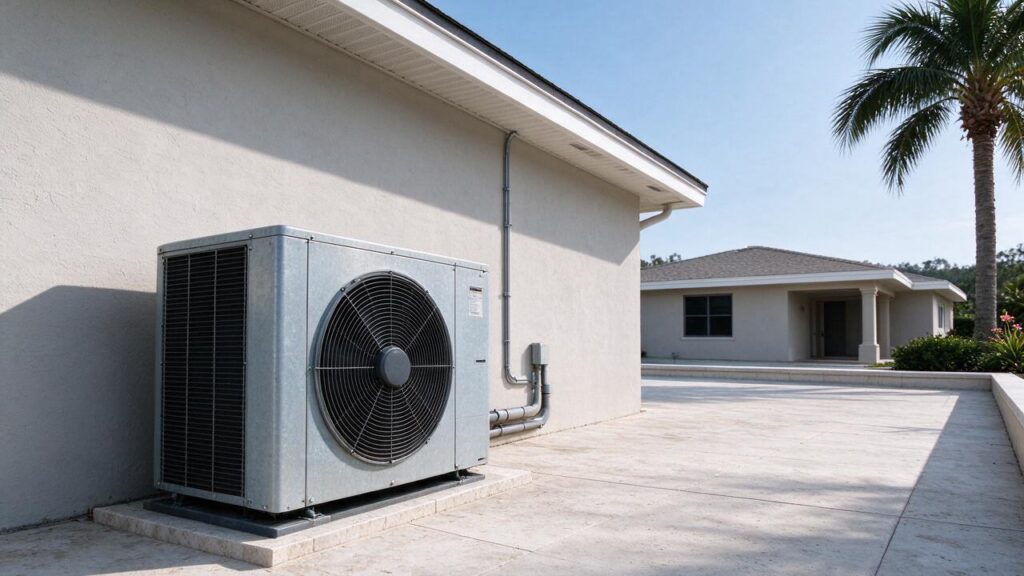
An AC energy audit is a structured look at where your cooling system loses or wastes energy. The cause can range from a clogged filter to duct leakage to aging equipment, so no single diagnosis should be assumed from a symptom alone. Safe observations include filter condition, airflow from the registers, unusual noises, and changes in cooling costs. Anything beyond that—electrical testing, refrigerant checks, or coil inspection inside the cabinet—requires a qualified HVAC technician.
What an AC Energy Audit Means for Your Home
In practical terms, an audit answers one question: where is cooling energy being lost, and what evidence explains it? The U.S. Department of Energy describes home cooling performance as a function of the cooling cycle, maintenance, and daily operation. An audit applies that idea to your system by gathering observations and measurements instead of guessing.
It helps to separate three things that often get blurred together:
- A symptom is something you can observe, such as weak airflow, long run times, or a higher bill.
- A possible cause is a plausible explanation, such as a dirty filter, a blocked drain, duct issues, or aging equipment.
- A diagnosis is a confirmed conclusion that comes only after a technician measures the system.
Keeping those categories separate is the point of an audit. A high bill could come from maintenance needs, duct leakage, thermostat behavior, insulation, weather, or equipment condition. The audit narrows those possibilities with evidence.
Observable Signs You Can Check Safely
You do not need tools or training to collect useful facts. ENERGY STAR’s maintenance guidance draws a clear line between homeowner tasks and professional tasks. The safe side includes filters, visible drain checks, and general observation. Before calling for service, note the following:
- Filter condition. Is the filter loaded with dust, or far past the replacement interval printed on it?
- Airflow. Does air from the supply registers seem weaker than usual, or weaker in some rooms?
- Sounds and odors. Note new rattling, grinding, or musty smells, and when they occur.
- Water where it should not be. Look for water near the indoor unit, a sign of a clogged condensate drain.
- Run behavior. Does the system run much longer than in past seasons, or struggle to hold the set temperature?
- Cost trend. Compare recent cooling bills with the same period in past years, allowing for weather differences.
Write these observations down with dates. They become the factual starting point for any technician, and they keep the conversation from starting with a guess.
Stop and request qualified help immediately if you notice smoke, a smell of electrical burning, repeated breaker trips, unsafe water contact with electrical equipment, severe noise, or an outdoor fan that is not spinning. Turn the system off at the thermostat and do not restart it until it has been evaluated.
What You Should Not Do During a Self-Check
Some evidence can only be gathered safely by a professional. Do not open energized panels, test capacitors, bypass a safety control, or handle refrigerant. Refrigerant work requires EPA-certified handling, and live electrical parts carry real risk. A safe self-check ends at observation: what you can see, hear, and feel without removing panels or using tools on the equipment.
What Changes the Next Decision
The same symptom can lead to different next steps depending on the facts around it. Several conditions shape what an audit will conclude:
- Maintenance history. Overdue filter changes and no recent professional service point toward a maintenance-first path. ENERGY STAR treats filters, drains, coils, controls, and blower checks as core items, with some tasks reserved for professionals.
- Age and repair history. Older equipment with a growing list of symptoms leads to a different conversation than a newer system with its first issue.
- Where the loss appears. Weak airflow in some rooms suggests a distribution question; long run times everywhere suggest other possibilities. Neither is a diagnosis on its own.
- Pattern over time. A sudden change after a storm tells a different story than a gradual decline across seasons.
- Warranty status. Terms and registrations vary, so whether manufacturer coverage remains active can shape the repair decision.
In Florida, heavy cooling demand means small inefficiencies can show up clearly on summer bills. That is context, not a rule. Every building has its own load, ducts, insulation, and equipment history, so no conclusion should rest on climate alone.
What a Qualified Technician Evaluates
The professional side of an audit goes beyond the homeowner checklist. Depending on the system, evaluation can include measuring airflow, checking refrigerant charge with proper instruments, inspecting coils, verifying electrical components and controls, examining the condensate system, and assessing duct performance. These measurements turn a list of possible causes into a confirmed diagnosis.
This is also where the audit protects you. Deciding on a repair based on a symptom alone risks paying for the wrong fix. Deciding on measured evidence—actual airflow, charge, and electrical readings—means the recommendation rests on data. If refrigerant work is needed, it will follow EPA-certified handling practices, and warranty-aware repair practices apply when manufacturer coverage is still active.
Maintenance, Repair, or Replacement?
An audit ends with a decision, not just a measurement. The evidence points toward one of three paths:
| Audit finding | Likely path | What supports it |
|---|---|---|
| Loaded filter, clogged drain, overdue maintenance | Maintenance first | Simple, correctable causes confirmed during evaluation |
| Measured electrical, airflow, or refrigerant fault | Repair conversation | A specific, confirmed problem with a defined fix |
| Older equipment with multiple confirmed issues | Repair-versus-replacement review | Evidence that repair costs and reliability no longer add up |
Only the third path should be discussed as a replacement decision, and only after measurements support it. If you reach that point, ask for the audit evidence behind the recommendation.
Preparing for the Call
A short checklist makes the visit more productive:
- Write down each symptom, when it started, and whether it is constant or intermittent.
- Note the filter’s condition and when it was last changed.
- Have recent cooling bills available if cost is part of the concern.
- Locate the equipment’s basic information, including age and any warranty documents.
- Describe any stop-sign events exactly as they occurred.
Frequently Asked Questions
How do I know if an AC energy audit issue needs service?
Weak airflow, long run times, water near the indoor unit, unusual noises, or a clear rise in cooling costs are signs worth having evaluated. Any stop-sign condition—smoke, electrical burning, repeated breaker trips, unsafe water contact, severe noise, or a non-spinning outdoor fan—means stop the system and request qualified help right away.
What information should I gather before calling?
Collect the safe facts: symptoms with dates, filter condition, airflow observations, sounds or odors, run-time changes, and bill comparisons. Add equipment age and warranty documents if you have them. This gives the technician a factual starting point instead of a guess.
Can a homeowner safely fix an AC energy audit problem?
Homeowners can handle basic items such as replacing a filter and making observations, following the homeowner-versus-professional boundaries in ENERGY STAR’s guidance. Anything involving opened panels, electrical parts, safety controls, or refrigerant must be left to a qualified technician.
What does a technician check during an AC energy audit?
A technician measures what a homeowner cannot: airflow, refrigerant charge, coil condition, electrical components, controls, the condensate system, and duct performance. Those measurements convert possible causes into a confirmed diagnosis and a supported recommendation.
When does an audit become a repair-versus-replacement conversation?
When measured evidence shows older equipment with multiple confirmed issues or repeated failures, the findings support weighing repair against replacement. That decision should rest on documented measurements and your equipment’s history—not on a single symptom or one high bill.
If your observations point toward a problem you cannot safely confirm, air conditioning repair service is available 24/7, and same-day dispatch may be available when a technician is available, with no separate night or weekend service charge added. For routine care that prevents many audit findings, see air conditioning maintenance, or request service to have a qualified technician evaluate your system.