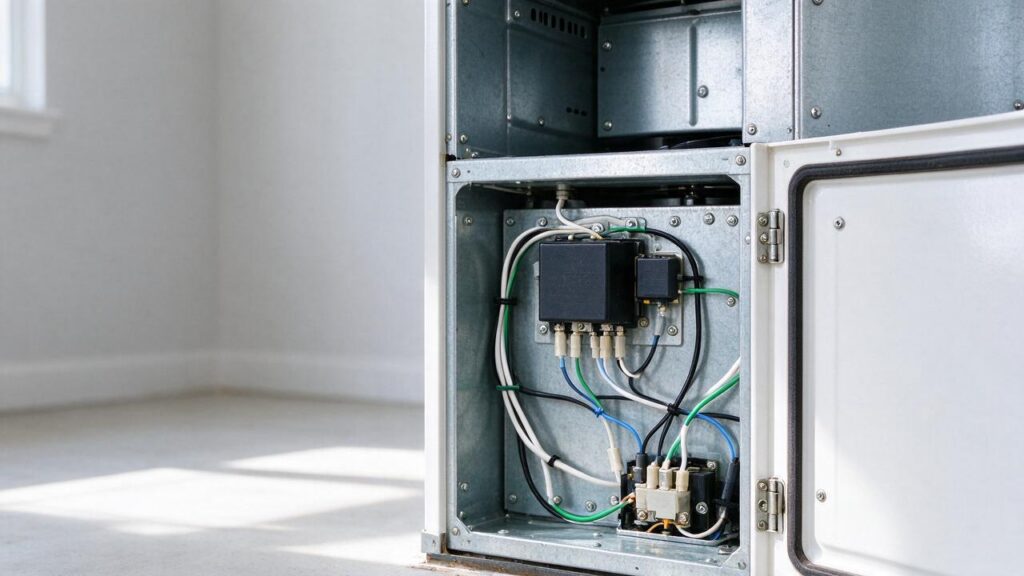
Pets and a failing air conditioner are a risky mix. In simple terms, ac emergency safety pets means keeping your animals safe while your cooling system shows signs of trouble. It also means knowing which signs mean stop the system, and when to ask for qualified help. There is often more than one possible cause, so nothing here is a diagnosis. This is a decision guide.
Florida heat makes this urgent. A home without cooling can become unsafe for pets fast. A system with an electrical or refrigerant problem can also put curious animals at risk. The goal is to tell an urgent safety issue apart from a comfort issue, then take the right next step.
When to Stop the System and Call for Help
Some signs should end the debate right away. If you see or hear any of the following, turn the system off at the thermostat and request qualified HVAC service:
- Smoke or a burning smell from any vent, indoor unit, or outdoor equipment.
- Electrical burning odors near the indoor air handler or outdoor unit.
- Repeated breaker trips when the cooling system starts or runs.
- Unsafe water contact — standing water near electrical parts, or water a pet can reach next to wiring or powered gear.
- Severe or sudden noise, such as grinding, banging, or screeching that is new.
- A non-spinning outdoor fan while the system runs.
These are stop signs, not diagnoses. Each one can have several possible causes. Only a qualified technician with the right tools can confirm what is wrong. Do not open panels, test electrical parts, or handle refrigerant. Those steps belong to trained pros, and refrigerant work needs EPA-certified handling.
What to Note Safely Before Calling
Once danger signs are handled, a few careful notes — all made from outside the equipment — help a technician:
- Where your pets are and what they can reach. Note whether animals can get to the outdoor unit, wiring, refrigerant lines, or drain lines. Chewed insulation or damaged wiring is a real risk in homes with pets. Tell the dispatcher what you see.
- What the system is doing. Is it running but not cooling? Cycling on and off? Silent at the thermostat? Ice or frost on the indoor coil or lines? Write down what you see, not what you think it means.
- Filter condition, if easy to see. A loaded filter can add to airflow problems. But it is one possibility among many, not a confirmed cause.
- Thermostat settings and recent changes. Note the mode, the setpoint, and whether the problem began after a storm, a power cut, or a change in the home.
- Anything your pets have done. Knocked-over items, nesting near the outdoor unit, or debris pulled toward the fan area are all worth a mention.
Keep pets away from both indoor and outdoor equipment while you wait. Move them to a cooler room. If the home is warming fast, think about whether a pet needs a cooler place to stay. That call is yours and your vet’s, not something this page can make.
What Changes the Next Decision
Three questions shape what happens next:
- Urgent safety issue or comfort issue? Smoke, burning odors, repeated breaker trips, unsafe water near powered gear, severe noise, or a stopped outdoor fan point to an urgent safety issue. Weak cooling with no danger signs is more likely a comfort issue. Only a technician can confirm which is which.
- Shut down or keep running? If any stop sign is present, shut the system off and leave it off. With no danger signs, running it while you gather notes is usually fine. Ice is one exception. If you see ice, it is reasonable to stop cooling and let the technician advise on next steps.
- Dispatch or a phone call? With a safety stop sign, request dispatch. Without one, a phone call can still help. But a remote talk is not a diagnosis. It only helps organize what the technician should check.
What Urgent Service Evaluates
When a technician arrives, the visit moves from guesses to measurements. A typical urgent visit covers electrical parts, airflow, refrigerant pressures, coil condition, and drainage. Manufacturer guidance from Carrier covers no-cooling checks and frozen-coil response, and it reserves electrical and refrigerant work for trained technicians. Cooling-cycle basics from the U.S. Department of Energy explain why airflow, heat transfer, and system condition all interact. But the fault in your home is confirmed only by measurement, never by a symptom alone.
Velocity offers 24/7 repair availability, and same-day dispatch may be available when a technician is available. Velocity does not add a separate night or weekend service charge. When refrigerant work is done, EPA-certified handling practices apply, and warranty-aware repair practices apply when manufacturer coverage remains active.
After Repair: Prevention Around Pets
Once the system is fixed, a few habits lower the chance of a repeat emergency:
- Keep a clear zone around the outdoor unit. Keep pets, toys, and yard debris away from the fan cabinet and wiring.
- Protect lines and wiring your pet can reach. If your pet has shown interest in the equipment, say so at the next service visit. The technician can check whether anything needs attention.
- Keep up with maintenance. Regular filter changes and routine professional care support airflow and system condition. That lowers the odds of many no-cooling situations.
- Save your records. Warranty terms vary by equipment and paperwork. Keeping records helps if a covered repair comes up later.
Call Preparation Checklist
- Stop signs seen (yes or no, and which ones)
- What the system is doing now, in plain words
- Any ice, water, smells, or noises you noticed
- Filter condition, if visible
- Whether pets can reach the equipment
- Thermostat settings and when the problem started
Focused FAQs
How do I know whether ac emergency safety pets needs service?
If any stop sign is present — smoke, burning odors, repeated breaker trips, unsafe water near powered gear, severe new noise, or a stopped outdoor fan — shut the system down and request qualified service right away. If the issue is weak cooling with no danger signs, service is still the right goal. The difference is urgency. Only a technician’s measurements can confirm the cause.
What should I gather about ac emergency safety pets before calling?
Stick to safe notes: what the system is doing, any ice or water you can see, odd smells or sounds, filter condition if visible, thermostat settings, whether pets have reached the equipment, and when it began. Do not open panels or test parts.
Can a homeowner safely fix ac emergency safety pets?
Safe homeowner steps are limited. Shut the system down when stop signs appear. Keep pets away from equipment. Gather notes. Opening powered equipment, testing capacitors, bypassing safety controls, or handling refrigerant is not safe for a homeowner. Refrigerant work needs EPA-certified handling.
What does a technician check for ac emergency safety pets?
A qualified technician measures rather than guesses: electrical parts, airflow and filters, coil condition, refrigerant pressures, drainage, and overall operation. The technician also checks whether anything about the setup or setting — including pet damage — played a part.
When does ac emergency safety pets become a repair-versus-replacement talk?
That talk follows a confirmed diagnosis, not a symptom. Once a technician has measured the system and found the actual fault, equipment age, condition, and warranty coverage — which vary by equipment and paperwork — shape whether repair or replacement makes more sense. Do not assume replacement from one symptom.
If you see a stop sign now, request service and keep the system off. For non-urgent cooling problems, air conditioning repair information can help you plan the next step.