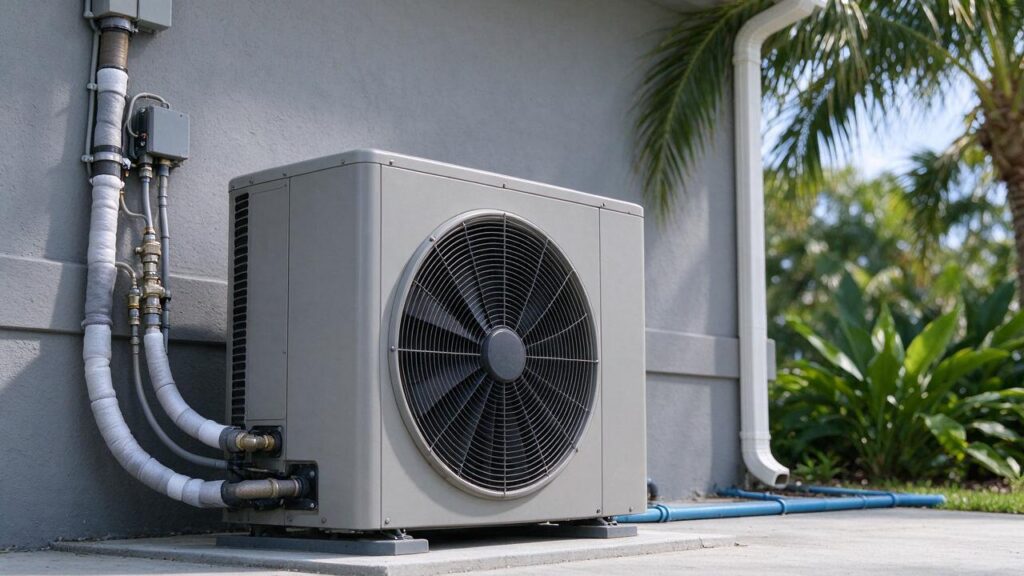
Ac emergency safety elderly refers to a cooling failure that puts an older household member at immediate risk. That risk can come from heat exposure inside the home or from an unsafe equipment condition. In hot weather, a comfort problem can become a health concern quickly. The right next step depends on which of those two risks you face. The answer starts with separating what you can safely observe from what only a qualified technician can measure.
This page covers when to stop the system, what to note before requesting service, what a technician will evaluate, and how to choose between an urgent dispatch request and a scheduled visit.
Why Cooling Failure Is Treated Differently in Elderly Households
Older adults are more sensitive to indoor heat than younger adults. Reduced mobility can make it harder to move to a cooler space. Some medications affect how the body handles heat. The feeling of overheating may also arrive later than it does for others. For those reasons, a broken air conditioner in a home with an elderly resident deserves more urgency than the same failure in a low-risk household.
Florida’s hot climate raises the stakes. Indoor temperatures can climb quickly when cooling stops. Every home is different, though. Duct layout, insulation, equipment condition, and humidity all vary, so no single timeline fits every case. The principle still applies. When cooling fails for someone heat-vulnerable, treat the decision with urgency rather than waiting days.
When to Stop the System and Get Help Immediately
Some conditions call for shutting the system down and requesting qualified help right away. Stop the system and request service if you observe any of the following:
- Smoke or a burning smell from vents, the indoor unit, or the outdoor unit.
- Repeated breaker trips when the air conditioner starts or runs.
- Water contact with electrical components, or water pooling where it could reach wiring.
- Severe or unusual noise such as grinding, screeching, or loud banging.
- A non-spinning outdoor fan while the system runs.
These are stop signs, not diagnoses. Any of them can have more than one cause. If the indoor temperature is also climbing and an older adult is home, treat the combination as urgent. Velocity offers 24/7 repair availability, and same-day dispatch may be available when a technician is free.
What to Safely Observe and Note Before Calling
Once immediate dangers are ruled out, a few safe observations will make your service call faster and more useful. None of these require opening equipment, touching wiring, or handling refrigerant:
- Thermostat settings and display. Note the set temperature, the mode, and any error code or blank display.
- Air from the vents. Is air moving at all? If so, is it cool, lukewarm, or weak?
- Visible ice or frost. Look at the indoor unit, refrigerant lines, or outdoor coil. If you see ice, note it and leave the system off.
- Water or moisture. Note any leaking water and where it collects.
- Outdoor unit condition. Is it running, silent, or making unusual sounds? Is the fan spinning?
- Breaker behavior. If a breaker tripped once, note it. Repeated trips are a stop sign, not something to reset and retry.
- System details if easy to find. The equipment’s age or brand helps the office prepare. Do not disassemble anything to find it.
These notes describe symptoms. They do not diagnose the problem. Weak airflow, ice on a coil, water near the indoor unit, or a system that will not start can each have many causes. A symptom points to a category of possibilities, not to a confirmed failed part. That is why this page will not tell you which part has failed based on what you see. Do not open energized equipment, test capacitors, bypass a safety control, or handle refrigerant yourself.
What Urgent Service Evaluates
When a technician arrives for an urgent cooling call, the evaluation covers the areas your observations could not confirm:
- Electrical checks — verifying safe voltage, current, and control function.
- Refrigerant measurements — performed under EPA-certified refrigerant handling practices when needed.
- Airflow and cooling-cycle performance — confirming the system moves and conditions air as designed.
- Component condition — identifying which parts, if any, have failed.
The findings then shape the decision. Some problems are urgent repairs that restore cooling the same visit. Others can be scheduled promptly without the same urgency. In some cases, the conversation may turn toward repair versus replacement. That conversation should follow the technician’s findings, not the symptom alone.
Choosing Your Next Step: Three Decisions
For a reader managing this situation, the decision usually comes down to one of three paths:
- Urgent safety condition versus comfort issue. If a stop sign is present, or if indoor heat is building while an older adult is home, treat it as urgent. If the system simply underperforms on a mild day with no safety signs, the urgency is lower.
- Safe shutdown versus continued operation. If you saw ice, water near electrical parts, repeated breaker trips, or severe noise, leave the system off. If none of those signs are present, you may keep it running while you arrange service, but monitor it.
- Dispatch request versus remote diagnosis. A phone description cannot confirm a diagnosis. Remote guidance can help you judge urgency, but the actual cause requires on-site measurement. When an elderly resident’s safety is part of the equation, requesting dispatch is the safer path.
When you are ready, you can request service online or learn more about air conditioning repair. Velocity offers 24/7 repair availability, states that it does not add a separate night or weekend service charge, and applies EPA-certified refrigerant handling practices and warranty-aware repair practices when manufacturer coverage remains active.
After the Repair: Reducing the Next Emergency
Once cooling is restored, a few habits reduce the chance of a repeat emergency. This matters most in households where a cooling failure is a health issue, not just a comfort one:
- Keep filters and vents clear. Restricted airflow strains the system and is one avoidable contributor to cooling problems. Follow the filter guidance for your equipment.
- Schedule professional maintenance. Routine maintenance supports cooling-cycle performance and helps catch developing issues early. The U.S. Department of Energy’s home cooling guidance emphasizes maintenance as part of keeping cooling systems operating as intended.
- Act early on small changes. Weaker airflow, longer run times, or new noises are worth a service call before they become a no-cooling emergency in hot weather.
Frequently Asked Questions
How do I know whether ac emergency safety elderly needs service?
If an older adult’s home has lost cooling during hot weather, service is needed. It is urgent if you see smoke, burning smells, repeated breaker trips, water near electrical parts, severe noise, or a non-spinning outdoor fan. A system that runs but cools poorly also warrants a call, with urgency based on the resident’s heat sensitivity.
What information should I gather before calling?
Note the thermostat settings and any error display, whether air moves from the vents and whether it is cool, any visible ice or frost, any water leaks, whether the outdoor unit runs and its fan spins, and any breaker behavior. If you know the system’s age or brand, have it handy. Do not open equipment to gather more.
Can a homeowner safely fix ac emergency safety elderly?
Safe homeowner actions are limited to observing, noting, adjusting the thermostat, and shutting the system down when a stop sign is present. Electrical work, refrigerant handling, opening energized equipment, testing components, and bypassing safety controls should only be done by a qualified technician. Attempting those steps risks injury and can worsen the problem.
What does a technician check for ac emergency safety elderly?
A qualified technician measures what symptoms cannot confirm: electrical readings, refrigerant levels under EPA-certified handling practices, airflow and cooling-cycle performance, and the condition of individual components. Those measurements distinguish between the plausible causes behind the same symptom and identify the actual repair needed.
When does ac emergency safety elderly become a repair-versus-replacement conversation?
That conversation follows the technician’s findings, not the symptom. Factors include what the evaluation reveals about system condition, whether the problem is repairable, part availability, and whether manufacturer warranty coverage remains active. Coverage terms vary by equipment and documentation, so confirm them during the visit rather than assuming beforehand.