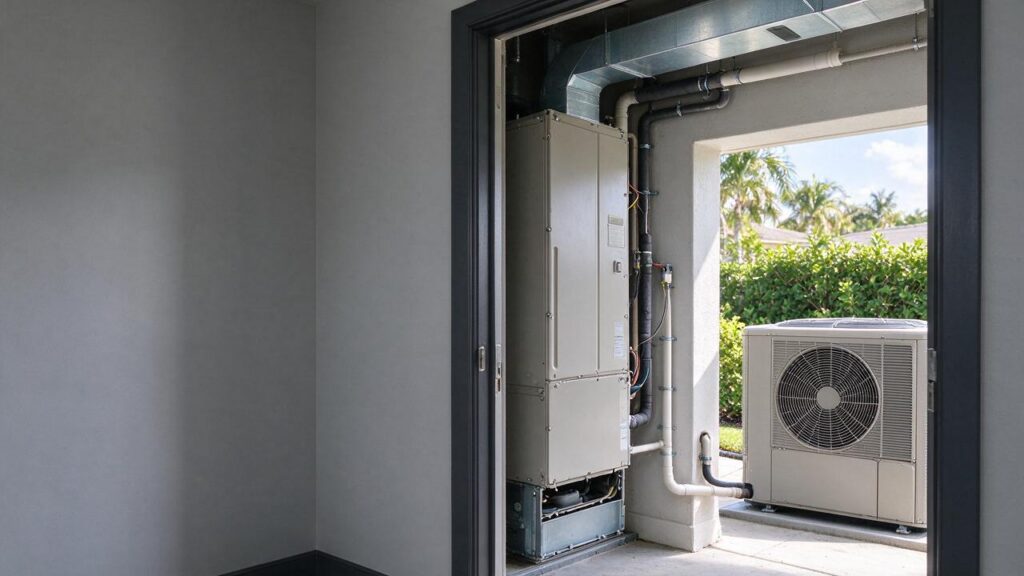
Ac emergency heat exposure describes a situation where an air conditioner cannot keep up with cooling demand during high heat. Indoor temperatures rise to a level that may affect comfort, health, or the equipment itself. More than one cause is possible, and it does not always mean a part has failed. Some causes are simple, such as a clogged filter that blocks airflow. Others involve electrical or refrigerant issues that only a qualified HVAC technician should check. The safe path is to make a few careful observations, stop the system if danger signs appear, and then decide whether to request urgent service.
What Ac Emergency Heat Exposure Means in Practice
This condition shows up when outdoor heat is high and the indoor temperature keeps climbing even though the air conditioner is running. It can also mean the system has stopped cooling during a heat event. An air conditioner does not add cool air to a home. It moves heat from inside to outside through a cooling cycle. When any part of that cycle is restricted or failing, the system loses ground against extreme outdoor heat. The gap between the thermostat setting and the actual indoor temperature then grows.
Florida cooling demand makes this situation more common during long hot stretches. Systems run for extended periods, so any weakness in airflow, maintenance, or parts becomes easier to notice. That said, no two homes have identical loads, ductwork, humidity, or equipment. The same symptom can point to different causes in different buildings.
Safe Observations You Can Make Before Calling
Before requesting service, a few observations are safe and useful. None of these require opening equipment, removing panels, or touching electrical parts:
- Air at the vents. Note whether the air from supply vents feels cool, barely cool, or warm compared with the room.
- Visible ice. Look for ice or frost on the indoor unit, the refrigerant line, or the outdoor coil. A frozen coil is a known no-cooling condition. The safe response is to stop cooling at the thermostat and let the system thaw.
- Filter condition. If you can see the filter, note whether it looks heavily loaded with dust. A restricted filter is a possible cause of weak airflow, but it is not a confirmed diagnosis on its own.
- Outdoor fan. From a distance, note whether the outdoor fan is spinning. A non-spinning fan is a stop sign, not a DIY project.
- Sounds and odors. Note any severe or new noises, or any smell of electrical burning.
- Thermostat and breaker status. Note the set temperature, the actual indoor temperature, and whether a breaker has tripped more than once.
Write these observations down with rough times. This record gives the technician a starting point and shortens the diagnostic talk.
When to Stop the System and Get Help Now
Some conditions change the decision from “keep observing” to “stop the system and get qualified help now.” Stop the system and call for service if you notice any of these:
- Smoke or a smell of electrical burning
- Repeated breaker trips after one reset
- Severe or grinding mechanical noise
- An outdoor fan that is not spinning while the system runs
- Unsafe water contact with electrical equipment
These signs can point to hazards a homeowner should not investigate. Do not open energized equipment, test capacitors, bypass a safety control, or handle refrigerant. Electrical and refrigerant work is technician-only work. Refrigerant handling requires EPA-certified practices.
What Changes the Next Decision
Not every heat-exposure event is an urgent safety condition. Three questions help separate the paths:
Urgent safety condition or comfort issue?
If danger signs from the list above are present, treat it as urgent. If the system is simply losing ground against extreme heat with no burning smell, repeated breaker trips, severe noise, or a stalled fan, it may be a comfort and performance issue. It still deserves prompt attention, but it does not involve an immediate hazard.
Safe shutdown or continued operation?
If you see a frozen coil, shut off cooling at the thermostat and let it thaw. This is the conservative step. If the system is running but cooling weakly with no danger signs, continued short-term use is a judgment call. Running a system with restricted airflow can add strain. When in doubt, cut runtime and request service.
Dispatch request or remote discussion?
A true diagnosis requires measurements a homeowner cannot take. A dispatch request is usually the productive next step. A phone or form chat can help describe symptoms, but remote talk cannot confirm refrigerant charge, electrical readings, or airflow.
What a Qualified Technician Evaluates
During an urgent visit, a technician checks what observations alone cannot. Typical work includes measuring airflow and temperatures, checking electrical parts with proper instruments, inspecting the outdoor unit and indoor coil, and following EPA-certified refrigerant practices when refrigerant work is needed. If the equipment is under manufacturer coverage, warranty-aware repair practices apply. Warranty terms and registrations vary by equipment and paperwork.
The goal of the visit is to replace plausible causes with a confirmed diagnosis. Weak airflow, a frozen coil, warm supply air, and short cycling each have many possible causes. Only measured evidence can tell them apart.
Availability and Scheduling
Velocity offers 24/7 repair availability. Same-day dispatch may be available when a technician is free. Velocity states it does not add a separate night or weekend service charge. When you request service, share your written notes, the equipment’s behavior over time, and any stop signs you saw. This helps the visit go smoothly.
After Repair: Lowering the Chance of a Repeat
After repair, prevention comes down to keeping the cooling cycle clear. Regular maintenance, including filter care and professional tune-ups, supports normal operation and helps catch restrictions before they become no-cooling events. During long hot periods, steady thermostat settings help too. Watch for early signs such as weaker airflow or longer run times. These give you time to schedule service before things turn urgent.
Frequently Asked Questions
How do I know whether ac emergency heat exposure needs service?
If indoor temperatures keep rising while the system runs, or the system has stopped cooling during high heat, service is warranted. If danger signs such as smoke, burning odor, repeated breaker trips, severe noise, or a stalled outdoor fan are present, stop the system and get qualified help right away.
What should I gather before calling?
Collect safe observations only: vent air temperature, visible ice, filter condition, outdoor fan behavior from a distance, odd sounds or odors, thermostat settings versus actual indoor temperature, and any breaker activity. Add rough times. This record helps the technician reach a confirmed diagnosis faster.
Can a homeowner safely fix ac emergency heat exposure?
A few basic steps are safe, such as replacing a visibly loaded filter or shutting down a frozen system to thaw. Beyond that, no. Do not open energized equipment, test capacitors, bypass safety controls, or handle refrigerant. That work requires a qualified technician.
What does a technician check?
A technician measures airflow and temperatures, inspects coils and the outdoor unit, checks electrical parts with proper instruments, and evaluates refrigerant using certified handling practices when refrigerant work is done. These measurements replace guesswork with a confirmed diagnosis.
When does this become a repair-versus-replacement talk?
That talk follows evidence, not the symptom alone. If measurements show a repair can reliably restore cooling, repair is the simple path. The system’s repair history and what the evaluation finds decide whether replacement deserves discussion. No one can make that call from the symptom label alone.